25 years North Macedonian peace: reconciliation in sight?
The guns fell silent in 2001, but North Macedonia is still grappling with the legacy of its ethnic conflict. Twenty-five years after the Ohrid Framework Agreement ended the fighting, ethnic Macedoni…
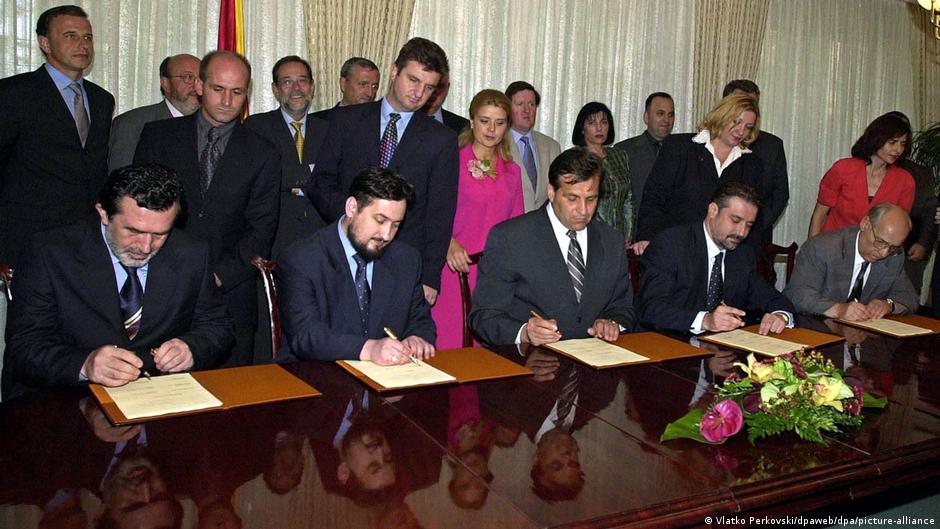
The guns fell silent in 2001, but North Macedonia is still grappling with the legacy of its ethnic conflict.
Twenty-five years after the Ohrid Framework Agreement ended the fighting, ethnic Macedonians and Albanians live in peace, yet analysts say genuine reconciliation remains unattained.
The six-month conflict that erupted in February 2001 is often described as the final chapter of former Yugoslavia's violent breakup.
But unlike the wars in Croatia , Bosnia and Herzegovina and Kosovo , it was contained before it could spiral into a larger tragedy, thanks in large part to a political compromise brokered by NATO , the United States and leading EU countries.
Тwenty-five years later, the political order that emerged from the Ohrid Framework Agreement is entering a new phase.
When the conservative Macedonian VMRO-DPMNE party returned to power two years ago , the Democratic Union for Integration (DUI), the main ethnic Albanian party, went into opposition.
This development ended two decades of governing influence for Ali Ahmeti, who transformed himself from leader of the ethnic Albanian National Liberation Army (NLA) during the 2001 conflict into one of the country's most influential political figures.
Ahmeti, who swapped his guerrilla uniform for tailored black suits and white shirts after the Ohrid Agreement, now argues that ethnic relations have deteriorated over the past two years.
Read Full Story at DW World →