40 years after the Lake Nyos disaster in Cameroon
"The Lake Nyos disaster took everybody by surprise. We had no warning signals before it ever took place," said Isaac Konfor Njilah, a Cameroonian geologist and head of a laboratory in the department …
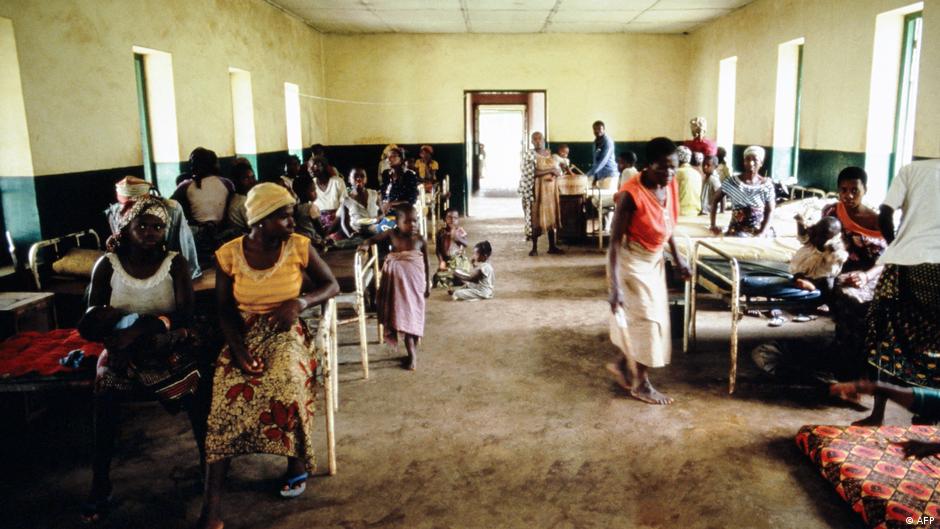
"The Lake Nyos disaster took everybody by surprise. We had no warning signals before it ever took place," said Isaac Konfor Njilah, a Cameroonian geologist and head of a laboratory in the department of Earth Sciences at the University of Yaounde.
On the night of August 21, 1986, Lake Nyos suddenly released a massive cloud of carbon dioxide that spread through nearby valleys and villages. The gas replaced oxygen, suffocating people and animals as they slept.
Located in Cameroon's Northwest Region, about 315 kilometers (196 miles) northwest of Yaounde, Lake Nyos sits inside an ancient volcanic crater in the Oku volcanic field. At the time of the incident, the area's population exceeded 3,000, with many families relying on farming and cattle ranching.
The disaster claimed the lives of about 1,700 people and some 3,500 head of livestock, making it one of the deadliest natural disasters in Cameroon's history.
Following the disaster, scientists from Cameroon and abroad launched extensive investigations to determine what had happened.
They concluded that carbon dioxide from deep underground had been accumulating at the bottom of the lake for years, trapped beneath more than 200 meters (656 feet) of water.
Before the disaster, the upper layers of the lake contained oxygen-rich water, while the deeper layers were saturated with dissolved carbon dioxide. Njilah explains that water has an insatiable appetite for carbon dioxide.
"So when carbon dioxide comes from the [Earth's] mantle, it is being dissolved continuously in the lake," Njilah told DW.
Read Full Story at DW World →


