Scientists warn humanity has breached seven planetary boundaries for survival
Humanity has breached seven of the nine planetary boundaries essential for a livable Earth, including limits on climate change and biodiversity loss. This puts food security and economies at risk, pr…
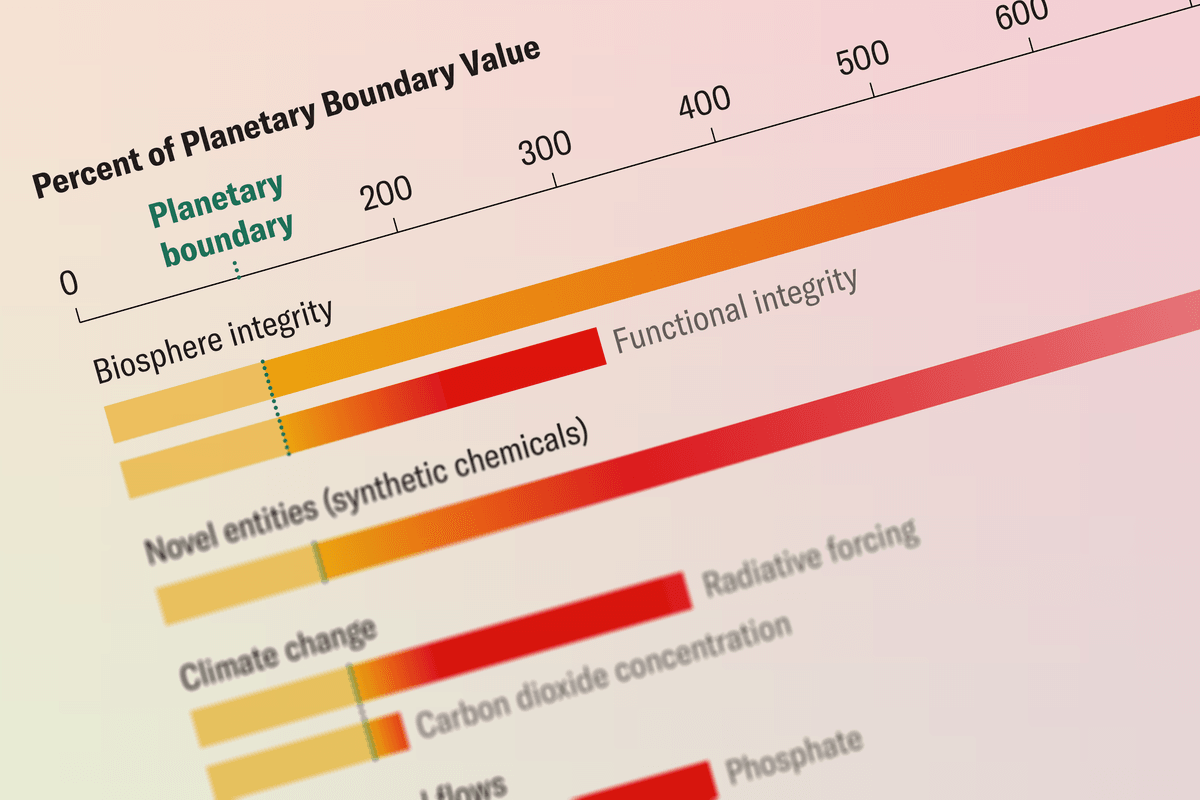
Scientists say humanity has crossed seven of the nine planetary boundaries that keep Earth livable, according to a new assessment released this week. The boundaries – limits on climate change, biodiversity loss, land‑use change, nitrogen and phosphorus cycles, freshwater use, and ocean acidification – define the safe operating space for humanity. The report, published by the Stockholm Resilience Centre and summarized in Scientific American, warns that the planet is now edging toward conditions it has never experienced in human history.
The planetary‑boundary framework was first introduced in 2009 to help policymakers see the Earth as a system with finite limits. Over the past decade, rapid industrialisation, population growth and intensive agriculture have pushed key metrics beyond their safe thresholds. Carbon dioxide levels topped 420 ppm in 2023, driving global temperatures toward 1.5 °C of warming. Species extinction rates are now estimated at 100 to 1,000 times the background rate, and forests have shrunk by more than 10 % since 1990. Synthetic fertilizer use has flooded rivers with nitrogen and phosphorus, creating dead zones in coastal waters. Freshwater withdrawals now exceed the replenishment rate in many river basins, while ocean acidity has risen by 30 % since the Industrial Revolution.
Scientists say the breach of these boundaries is not just an environmental issue but a socioeconomic crisis. Food security is threatened by soil degradation and water scarcity, while extreme weather events are costing economies billions each year. The United Nations has called the findings a “wake‑up call” for governments to accelerate climate mitigation, protect habitats, and reform agricultural practices. Environmental NGOs are urging immediate action on phasing out coal, restoring wetlands, and investing in regenerative farming.
The next steps will involve tighter international coordination and national policies that respect the planetary limits. Experts suggest a two‑track approach: rapid decarbonisation to bring CO₂ concentrations back within the climate boundary, and large‑scale ecosystem restoration to rebuild biodiversity and stabilize the nitrogen and phosphorus cycles. If the world can reverse the current trends, the remaining two boundaries – atmospheric aerosol loading and novel entities – may still be kept within safe levels. Failure to act could push the Earth into a new, unpredictable state, jeopardising the very conditions that allow human societies to thrive.
Read Full Story at Scientific American →