Researchers build 0.42nm transistor for faster chips
Researchers built a 0.42-nm transistor using tungsten diselenide and boron nitride, enabling faster, cooler, more energy-efficient chips than silicon. Scaling this tech could revolutionize computing …
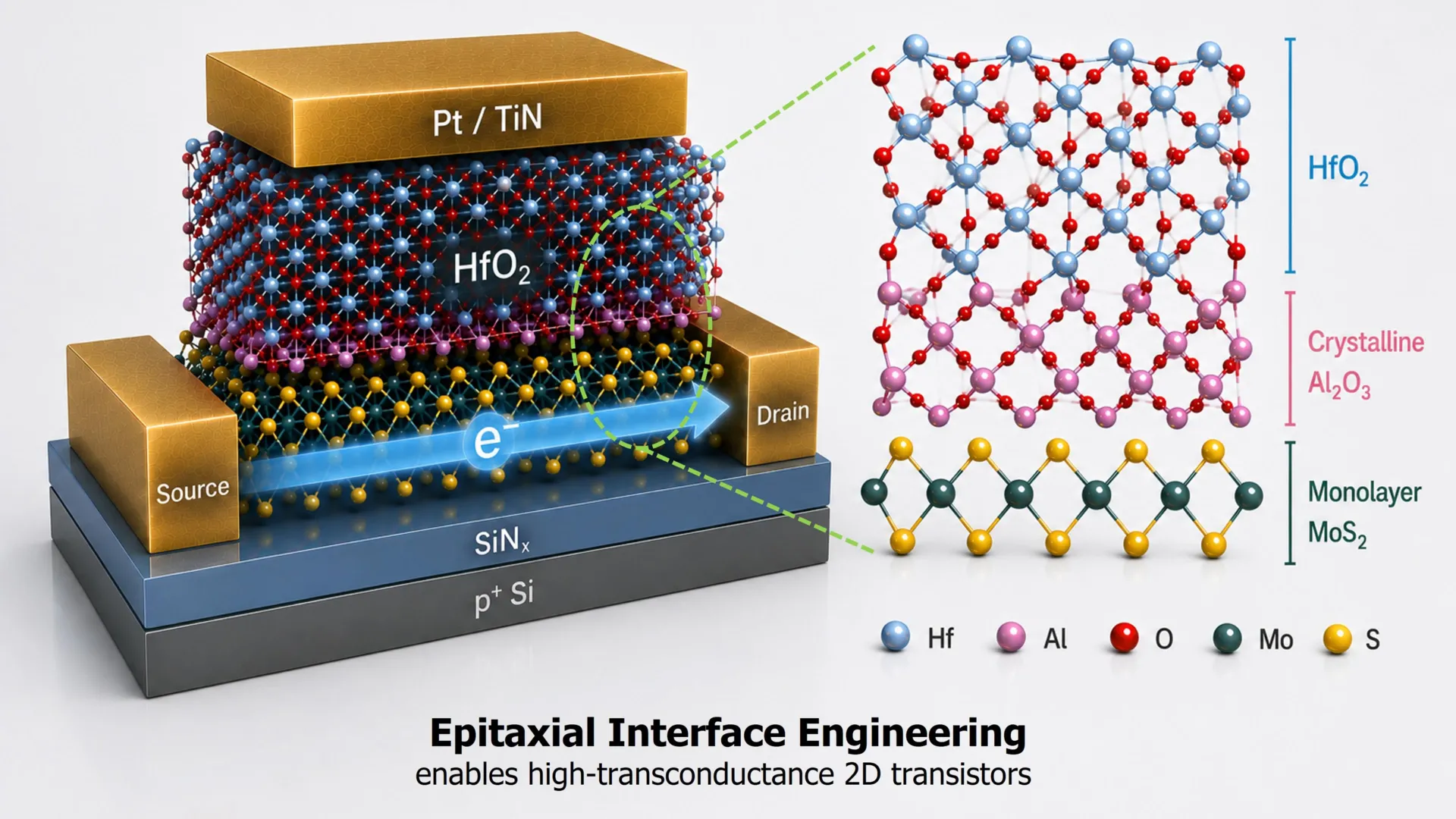
Researchers have built the world’s thinnest working transistor—just 0.42 nanometres high—using atomically thin semiconductors that could eventually replace silicon in computer chips. The breakthrough, reported today in ScienceDaily, was achieved by a team that re-engineered the atomic boundary between two layered materials so electrons can flow freely without leaking through. That interface used to be the weak spot; now it’s the strength.
The advance matters because silicon is approaching its physical limits. As chips get smaller, electrons escape through the barriers that keep them on track, wasting energy and heat. Atomically thin materials like tungsten diselenide can carry current with far less resistance, but their boundaries often trap or scatter electrons. The new design solves that by coating the interface with an ultra-thin insulator that is only a few atoms thick, preserving speed while stopping leaks.
In tests, the transistors showed unusually strong electrical control and performance, according to the researchers. They delivered sharp on/off switching and high current at just 0.7 volts—well below the voltages used in today’s silicon chips. The team used a 3-atom-thick boron nitride layer to sandwich the tungsten diselenide channel, creating an interface that is chemically stable and physically smooth at the atomic scale.
If the approach can be scaled up, it could lead to chips that are faster, cooler and far more energy-efficient than anything possible with silicon. The researchers next plan to integrate these ultra-thin transistors with existing manufacturing processes, a step that will determine whether they can leave the lab and enter real devices.
Read Full Story at ScienceDaily →