Fossil reveals ancient mammal gave birth to live young 236 million years ago
A 236-million-year-old fossil suggests that an ancestor of modern mammals gave birth to live young much earlier than previously thought, potentially pushing the timeline for the evolution of live bir…
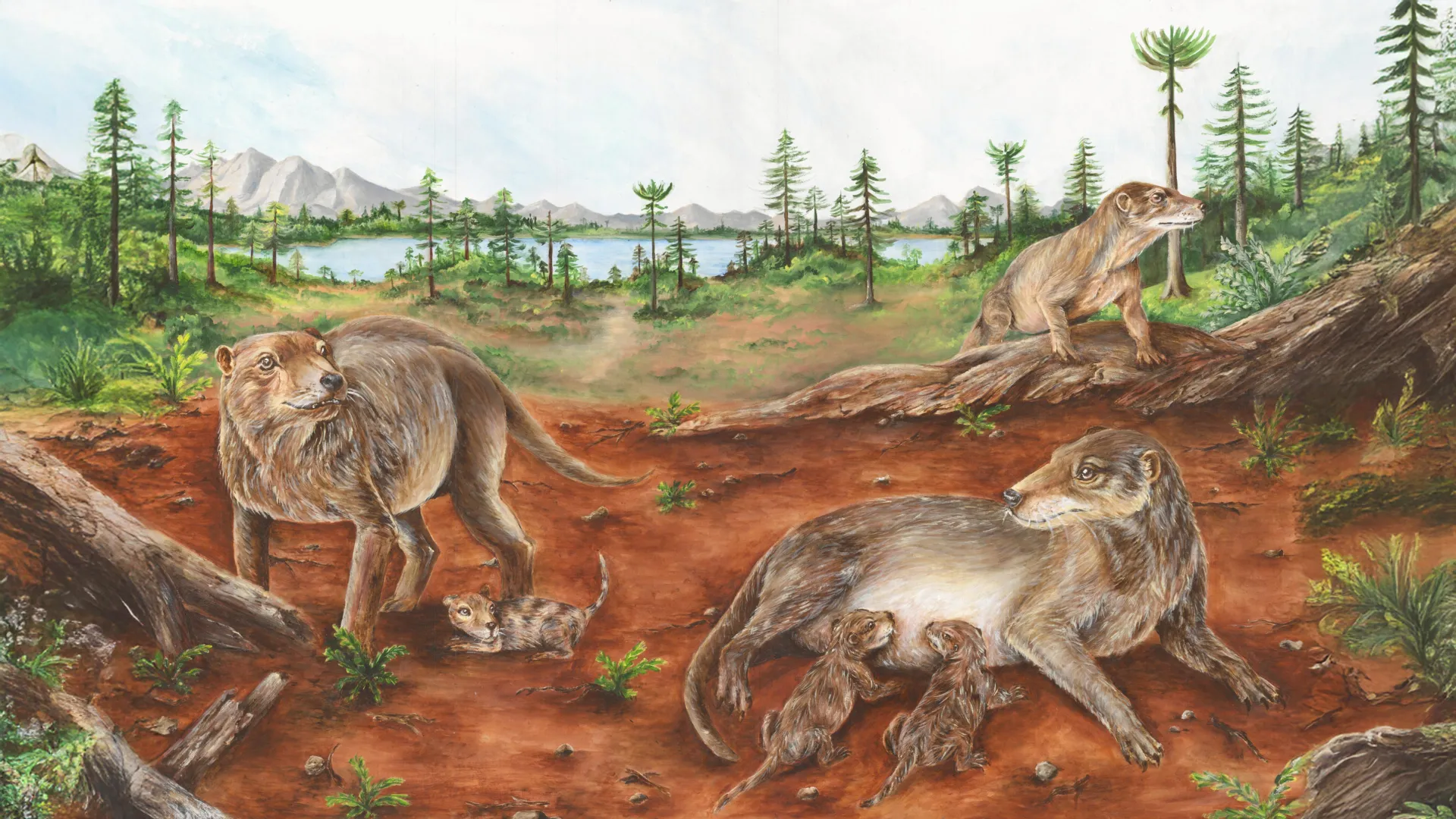
Scientists have discovered a fossil that may change our understanding of mammalian evolution, suggesting that an ancestor of modern mammals was giving birth to live young 236 million years ago. This fossilized cynodont, a type of mammal-like reptile, exhibited a neonatal growth line and an unusually large birth size, characteristics that align closely with those of contemporary mammals.
This finding comes at a time when researchers are examining the origins of live birth in mammals. Traditionally, the belief has been that live birth evolved around 140 million years ago, during the time of the dinosaurs. This new evidence could push that timeline back by as much as 95 million years, indicating that the ability to give birth to live offspring may have developed much earlier than previously thought.
The fossil's unique features provide insight into the reproductive strategies of ancient mammals. Neonatal growth lines suggest that this cynodont was capable of nurturing its young in a manner similar to modern mammals. The larger birth size also implies that these creatures had adapted to support the development of more advanced offspring, showcasing a complex reproductive system much earlier in evolutionary history than once believed.
This discovery has significant implications for our understanding of mammalian traits. If features we associate with modern mammals evolved earlier than expected, it may reshape the narrative of mammalian evolution. Researchers are now eager to explore how these findings will influence the study of other ancient species and the evolutionary path that led to the diverse array of mammals we see today.
Read Full Story at ScienceDaily →