Osaka fossils reveal new mosasaur species, enhancing Japan’s prehistoric marine knowledge.
Fossils collected in Osaka have revealed four bones from a giant Cretaceous mosasaur, including Japan's first confirmed premaxilla, suggesting the possibility of a new species. This discovery enhance…
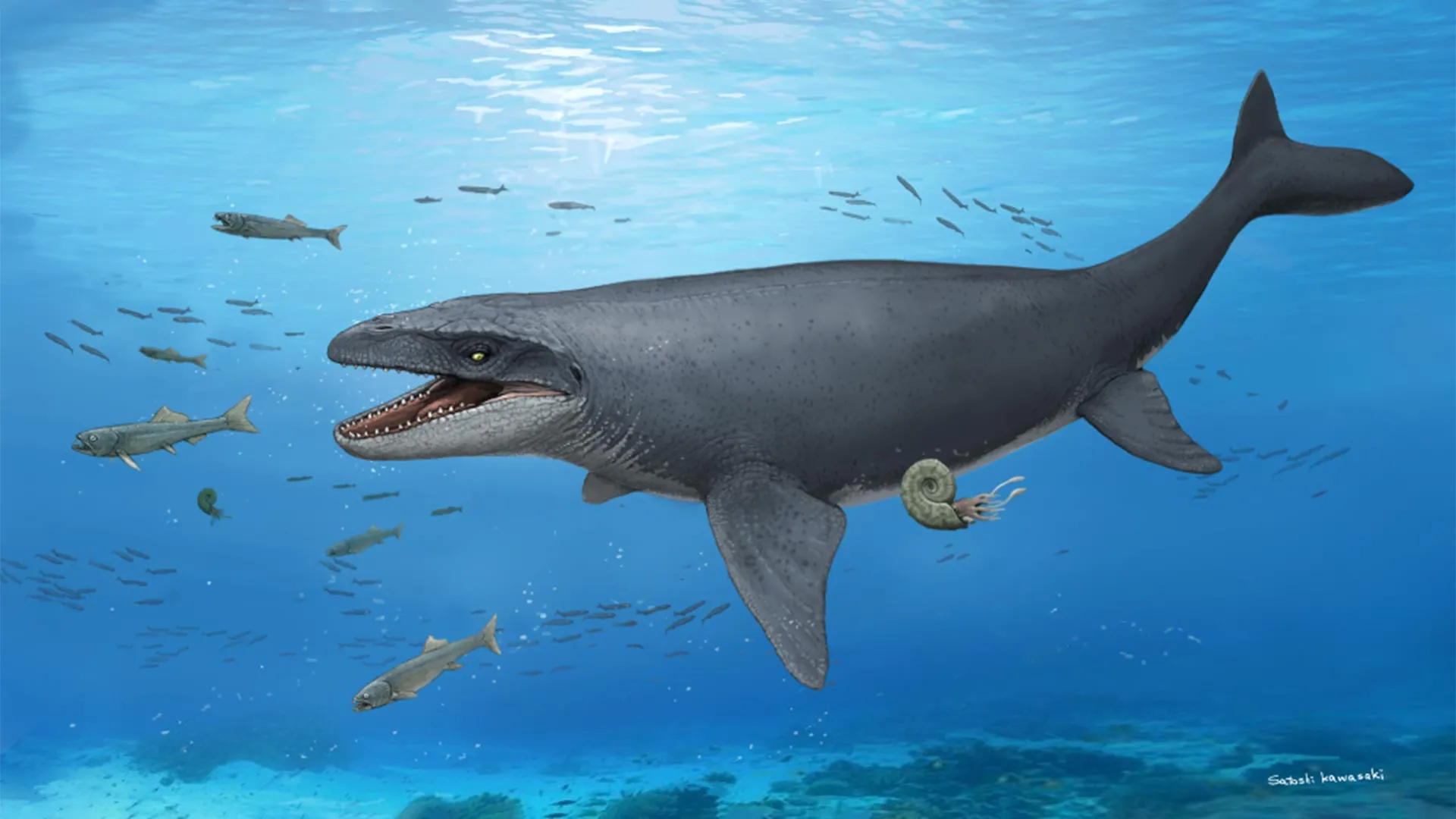
Fossils collected in Osaka over 30 years ago have unveiled a remarkable discovery: four bones from a giant Cretaceous mosasaur, including Japan's first confirmed premaxilla. This frontmost bone of the upper jaw offers new insights into these ancient marine reptiles and raises intriguing questions about their diversity.
The discovery comes at a time when researchers are increasingly focused on understanding prehistoric life in Japan. The bones were previously overlooked, but recent advances in technology and fossil analysis have allowed scientists to identify their significance. The unusual anatomical features present on parts of the skull suggest that these remains may not belong to any known mosasaur species, hinting at the possibility of an entirely new species.
Mosasaur fossils are relatively rare in Japan, making this find particularly noteworthy. Mosasaurs were dominant marine predators during the Late Cretaceous period, often reaching lengths of 50 feet or more. With this new evidence, scientists can better understand the diversity and evolutionary history of these creatures in the region, shedding light on their adaptations and ecological roles.
The implications of this discovery extend beyond mere classification. It could reshape our understanding of marine ecosystems during the Cretaceous period and how mosasaurs interacted with other marine life. As researchers continue to analyze these fossils, they may uncover further insights into the development of ancient marine environments and the evolutionary paths taken by these fascinating creatures.
Read Full Story at ScienceDaily →