Scientists identify new amphibian species from La Brea Tar Pits fossils
Scientists have identified a new extinct amphibian species, Spea labreae, from La Brea Tar Pits fossils, marking one of only two known Pleistocene amphibians in North America. This discovery highligh…
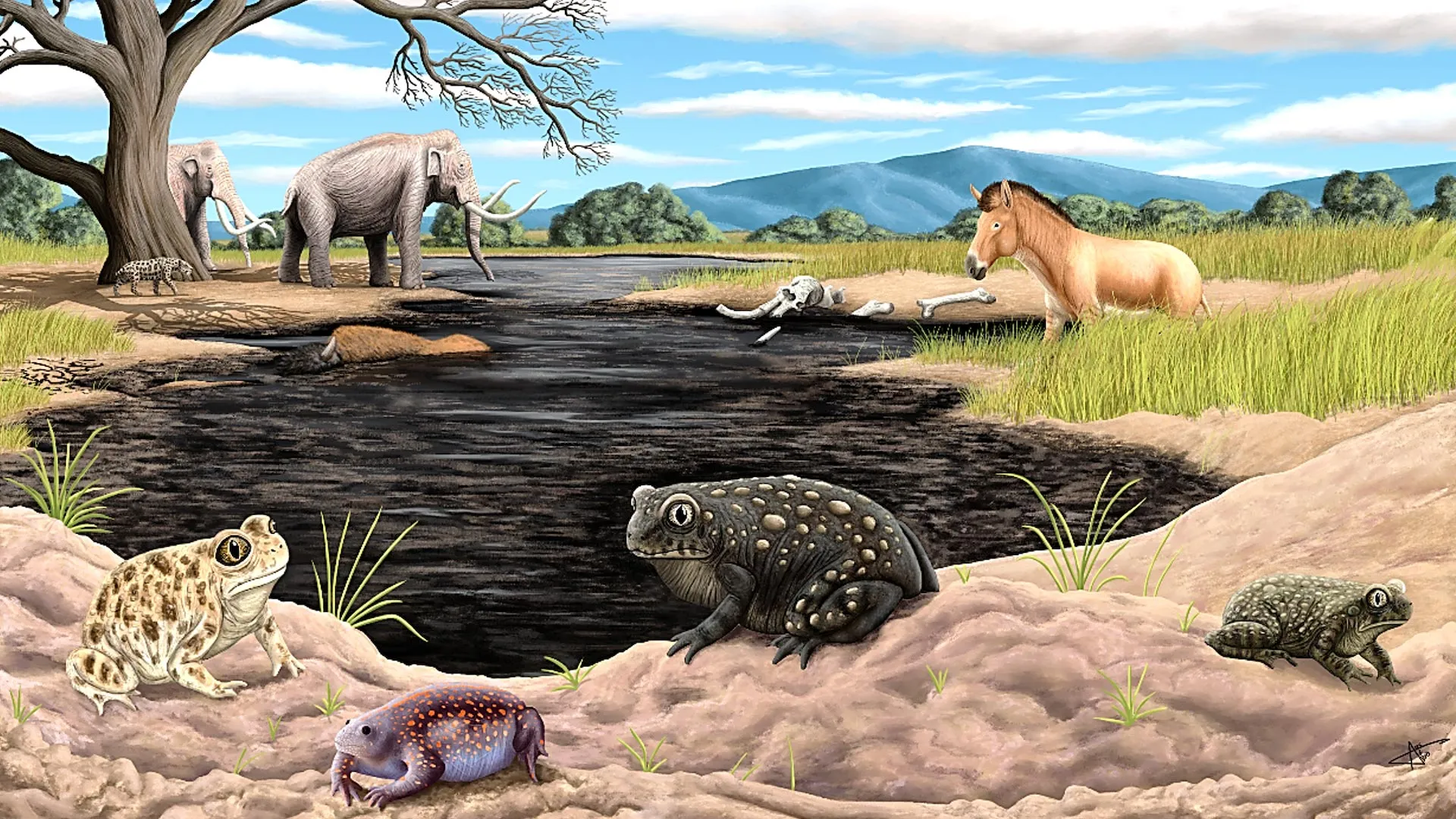
Scientists have identified a new extinct species of amphibian, named Spea labreae, from fossil collections at the La Brea Tar Pits in Los Angeles. This Ice Age spadefoot toad is a significant discovery, as it is one of only two extinct Pleistocene amphibians ever found in North America. The bones had been preserved in collections since the 1950s, waiting for a keen eye to recognize their unique characteristics.
The discovery comes at a time when paleontologists are keenly studying Ice Age fauna and their environments. La Brea Tar Pits is renowned for its rich fossil deposits, offering insights into the ecosystems that existed thousands of years ago. The identification of Spea labreae adds a new piece to the puzzle of North America’s prehistoric biodiversity. The rarity of such finds underscores the importance of revisiting old collections and re-evaluating specimens with modern techniques.
The process of identifying Spea labreae involved detailed examination of the fossilized bones, which revealed distinct features not seen in other known species. Researchers noted that this spadefoot toad likely occupied a niche in its ecosystem that has not been thoroughly understood. As only one other extinct amphibian has been documented from this era, the find is a rare glimpse into the past, highlighting the diversity of life that once thrived in North America.
Looking ahead, the discovery of Spea labreae may prompt further investigations into the La Brea Tar Pits collections. It emphasizes the potential for uncovering more hidden treasures in museum archives. Understanding the adaptations and lifestyles of these ancient species could provide valuable lessons for current biodiversity and conservation efforts as the planet faces environmental changes.
Read Full Story at ScienceDaily →