A SpaceX rocket is about to hit the moon—these videos show what could happen
A SpaceX rocket is about to hit the moon—these videos show what could happen Astronomers’ simulations predict what this lunar impact—and its aftermath—will look like By Claire Cameron edited by Cla…
A SpaceX rocket is about to hit the moon—these videos show what could happen
Astronomers’ simulations predict what this lunar impact—and its aftermath—will look like
An errant piece of a SpaceX rocket is on a collision course with the moon , and astronomers are eagerly awaiting the chance to observe the impact in real time. New simulations from a team at the University of Texas at Austin offer a glimpse of exactly what scientists might see when the crash occurs.
The object is the upper stage of a Falcon 9 rocket that launched in January 2025 to deliver two lunar landers—Firefly Aerospace’s Blue Ghost and Japanese company ispace’s Resilience, which was part of the HAKUTO-R Program. After the lunar delivery, the upper stage was supposed to fall back to Earth and burn up in the atmosphere. Instead the object, which is about the height of a five-story building, went AWOL: the rocket entered into orbit around Earth at a similar distance as the moon, setting up an eventual collision with our natural satellite.
Amateur astronomer Bill Gray, who first observed the stray rocket, has predicted that the crash will occur at around 2:35 A.M. EDT. on Wednesday. The impact is likely to hit close to the Einstein Crater, according to Gray. Because it will appear on the very edge of the sunlit side of the moon, as seen from our planet, Earthlings might get a glimpse of some of the ejecta plume—the cloud of dust and debris that the collision will create. The more than 8,800-pound piece of space junk will hit the moon at around 5,400 miles per hour and with similar energy to three tons of TNT.
If you're enjoying this article, consider supporting our award-winning journalism by subscribing . By purchasing a subscription you are helping to ensure the future of impactful stories about the discoveries and ideas shaping our world today.
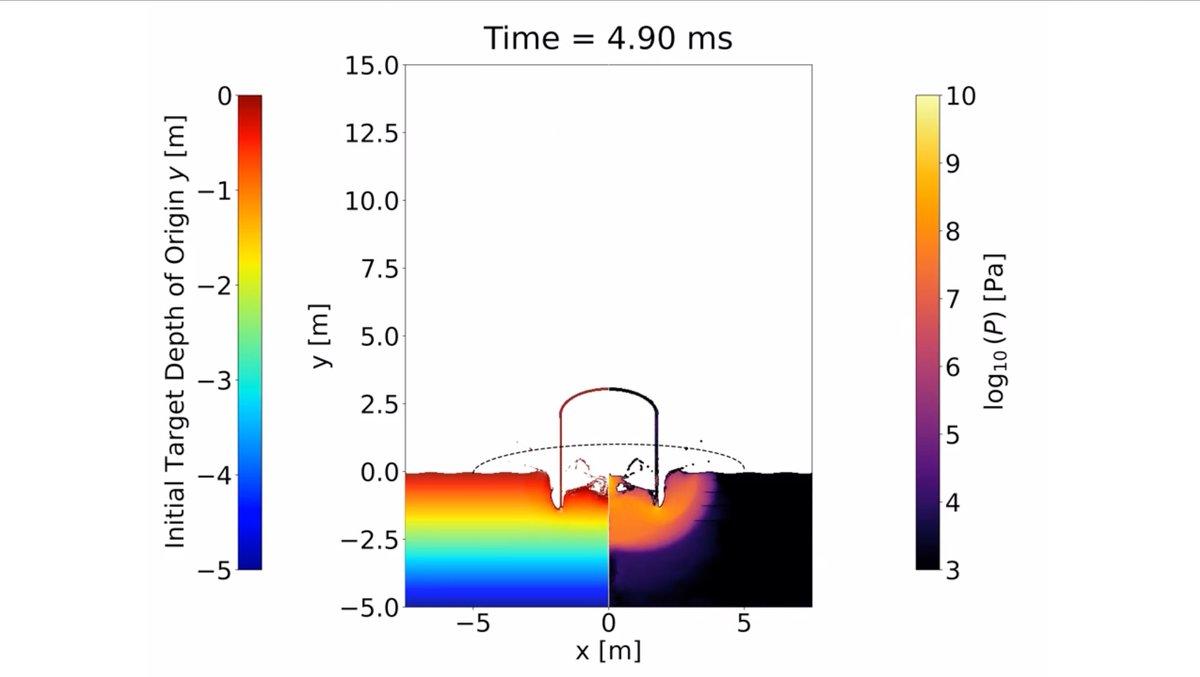
The new simulations from UT Austin’s Computational Fluid Physics Lab preview what the collision might look like when it happens.
Gray warned in a recent blog post, however, that viewers will almost certainly not be able to see the actual collision. In a recent preprint paper co-authored by Gray, astronomers explained that detecting the impact flash will likely be challenging because of the probable crash location on the moon’s sunlit hemisphere. Indeed, no artificial or natural impact flashes have ever been seen on the lit surface of the moon, they wrote.
Read Full Story at Scientific American →