Adobe embeds agentic AI workflows across Creative Cloud, shifting from media generation to production orchestration
Adobe has announced a major expansion of its "creative agent" across its flagship Creative Cloud suite and upgraded Firefly AI studio. Available in public beta starting today across Premiere Pro, Pho…
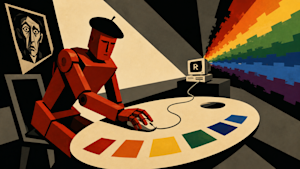
Adobe has announced a major expansion of its "creative agent" across its flagship Creative Cloud suite and upgraded Firefly AI studio. Available in pu
Read Full Story at VentureBeat →Adobe’s latest move to embed agentic AI workflows across Creative Cloud marks a quiet but seismic shift in how creative production could be redefined. By transitioning from isolated generative tools to a system of autonomous agents that orchestrate entire creative processes, Adobe isn’t just upgrading software—it’s reimagining the role of technology in creative workflows. This evolution matters because it signals a fundamental departure from AI as a "co-pilot" to AI as a "producer," one that doesn’t just suggest edits or generate assets but actively manages multi-step creative pipelines. For industries built on iterative design, video production, or branding, this could mean faster iteration cycles, lower cognitive load, and the potential for non-experts to orchestrate sophisticated creative tasks. Yet it also raises questions about agency, oversight, and the preservation of human judgment in a process increasingly delegated to algorithms. The shift comes at a time when Adobe’s Creative Cloud has already been deeply transformed by generative AI through Firefly, its licensed training model. But embedding agents that can autonomously plan and execute stages of production—from asset sourcing to versioning to compliance checks—extends AI’s footprint far beyond the edit bay. This builds on a quiet but growing trend in creative software: the rise of "agent-based workflows," where AI doesn’t just assist but coordinates. Adobe’s competitors, from Canva to Figma, are also exploring similar orchestration layers, but Adobe’s integration across Premiere Pro and Photoshop gives it a unique advantage in handling complex, time-based media. What’s still unclear is how much creative control will remain in human hands. While Adobe frames this as empowerment, the opacity of agent decision-making could become a flashpoint. Will clients trust AI-curated brand assets? Will editors accept auto-generated sequences? The answers may depend on how Adobe balances automation with transparency and user control. Meanwhile, the broader implications for the creative workforce remain unresolved. If agents can generate, edit, and deliver assets end-to-end, what does that mean for junior designers, video editors, and creative directors? This release is less about a new feature and more about a new philosophy—one that treats AI not as a tool, but as a collaborator with its own initiative. The question isn’t whether this will change creative work, but how quickly the industry can adapt to a world where the computer doesn’t just follow instructions—it writes the first draft of them.




