AI boom means US is now ‘investing more’ in fossil-fuel power than China
The U.S. is now investing more in fossil-fuel power than China due to AI-driven demand for data centers, reversing China’s long-standing dominance. Analysts warn this shift could increase global carbon emissions without stronger climate policies.
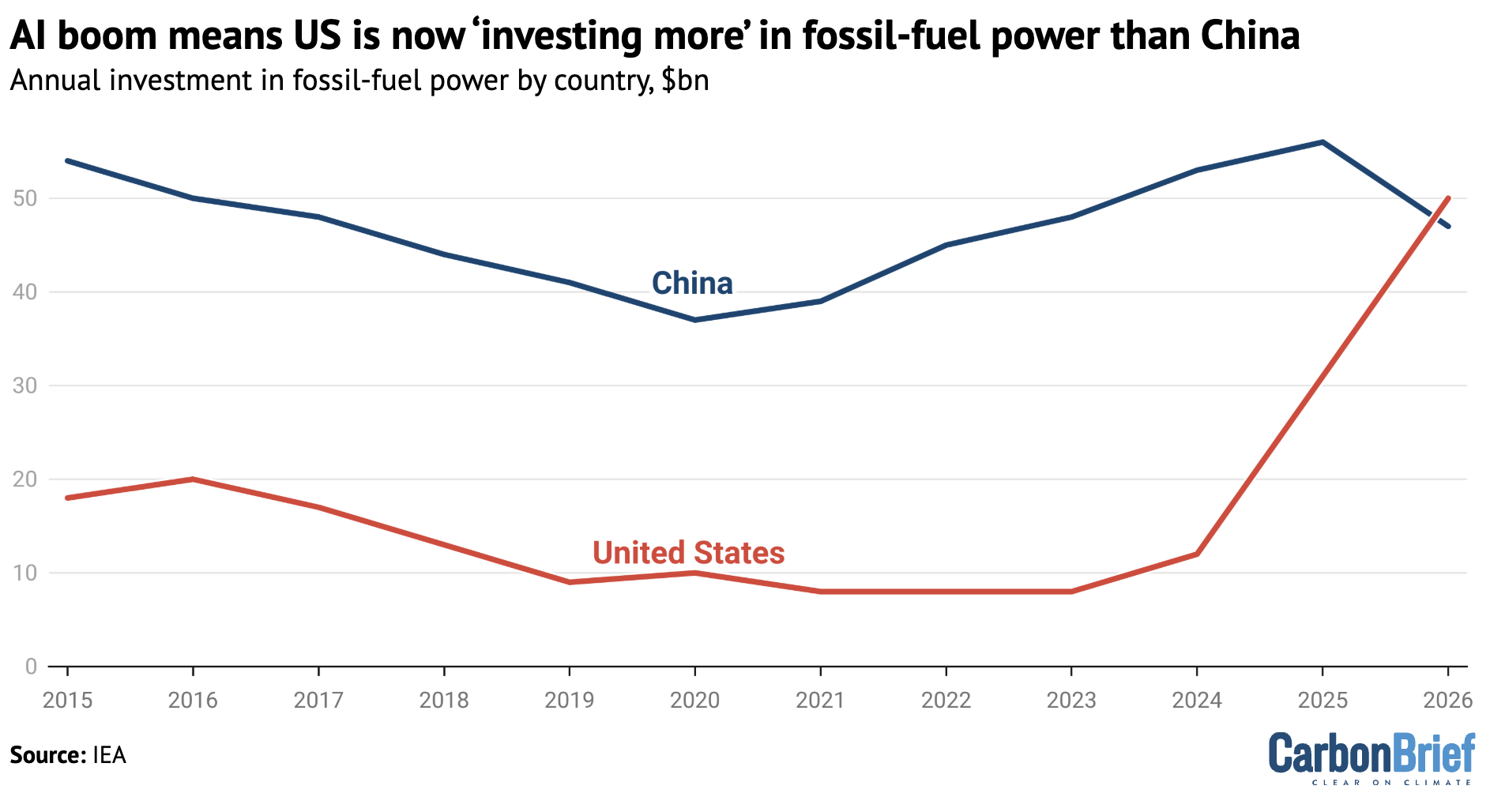
The rapid expansion of artificial intelligence infrastructure is reshaping energy investment priorities in the United States, with new analysis showing that American spending on fossil-fuel power generation now exceeds that of China for the first time in years. Driven by the soaring electricity demands of data centres supporting AI development, the US has accelerated investments in gas-fired power plants, pushing total fossil-fuel expenditure ahead of Beijing’s, despite China’s long-standing dominance in energy infrastructure spending. The trend underscores how technological change is not only accelerating energy transitions but also redirecting capital flows in ways that could reshape global climate and energy policy.
The shift comes as data centres—critical to AI training and cloud computing—consume vast and growing amounts of electricity. Analysts at Carbon Brief report that US utilities and energy companies are prioritising natural gas plants to meet this demand, citing their shorter construction timelines and grid-scale reliability compared to renewables alone. Meanwhile, China, though still the world’s largest investor in energy infrastructure overall, has maintained a broader focus on renewable energy expansion, including wind, solar and hydro, tempering its investment in fossil fuels even as it continues to build some gas facilities. The divergence highlights contrasting strategies: the US is leaning on fossil fuels to power its AI-driven economic ambitions, while China balances energy security with long-term decarbonisation goals.
This development matters because it signals a potential reversal in the global energy transition narrative, where technological innovation is outpacing policy intentions. The International Energy Agency has warned that without stronger climate policies, data centre growth could add significantly to global carbon emissions by 2030. Recent events such as Microsoft’s pledge to power its AI data centres with carbon-free energy by 2030, and Amazon’s expansion of renewable-powered cloud regions, suggest that corporate commitments may help offset some of the fossil-fuel surge. Yet the scale of AI expansion—projected to require as much electricity as entire countries within a decade—poses a major challenge to net-zero targets.
The widening investment gap between the US and China in fossil versus clean energy could also influence international climate negotiations, potentially weakening global consensus on phasing down coal and gas. With both nations locked in strategic competition, energy policy is increasingly viewed through the lens of technological and economic supremacy. The implications extend beyond energy markets, touching on geopolitics, climate justice and the pace of global decarbonisation. As AI reshapes industries, its environmental footprint is becoming impossible to ignore—and the choices made today will determine the energy landscape of tomorrow.