Protesters demand Rama resign in Albania
Protesters in Albania have held daily demonstrations for over three weeks against Prime Minister Edi Rama’s government, initially over a coastal development but expanding to broader grievances like co
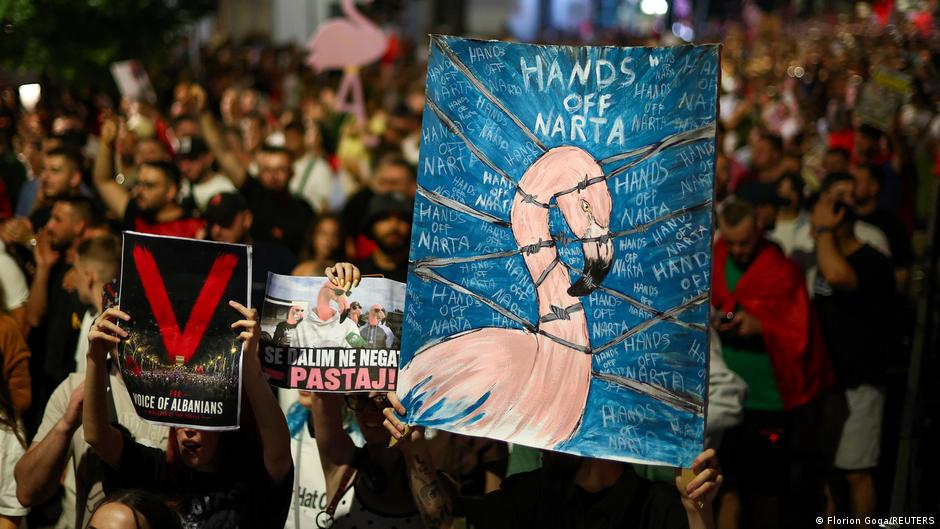
Every evening at 7 p.m., protesters gather in Tirana’s main square, waving the same banners and shouting the same demands. For more than three weeks,
Read Full Story at DW World →Why This Matters
Albania’s protests expose deep-seated frustrations with entrenched political power and the erosion of public trust in institutions, serving as a microcosm of broader discontent in the Balkans. The movement’s rapid escalation from a localized environmental dispute to a sustained uprising challenges the narrative of Albania’s democratic consolidation, raising questions about the longevity of Rama’s decade-long grip on power.
Background Context
Edi Rama’s government has faced criticism for years over corruption allegations and opaque deals with developers, but tensions peaked with the proposed construction of a luxury resort in Vlorë, threatening a fragile ecosystem. The protests echo Albania’s 2019 mass demonstrations against corruption, yet this time, the opposition is more fragmented, complicating potential outcomes.
What Happens Next
The government’s response will determine whether the protests escalate into a full-blown crisis or de-escalate through concessions, with regional actors like the EU likely to pressure for restraint. A key question is whether the opposition can unify around a coherent alternative to Rama, or if the movement will fracture under the weight of its own demands.
Bigger Picture
These protests reflect a regional pattern of citizen-led movements challenging post-communist elites, from Serbia to Montenegro, where economic stagnation and governance failures fuel unrest. Albania’s crisis also underscores the EU’s limited leverage in stabilizing the Western Balkans, despite its stated commitments to democratic governance and rule of law.








