Albanian youth protest for reforms in Flamingo Revolution against Edi Rama
Albanian youth are protesting in the "Flamingo Revolution" against Prime Minister Edi Rama's government, demanding his resignation and reforms in response to corruption and economic struggles. This g…
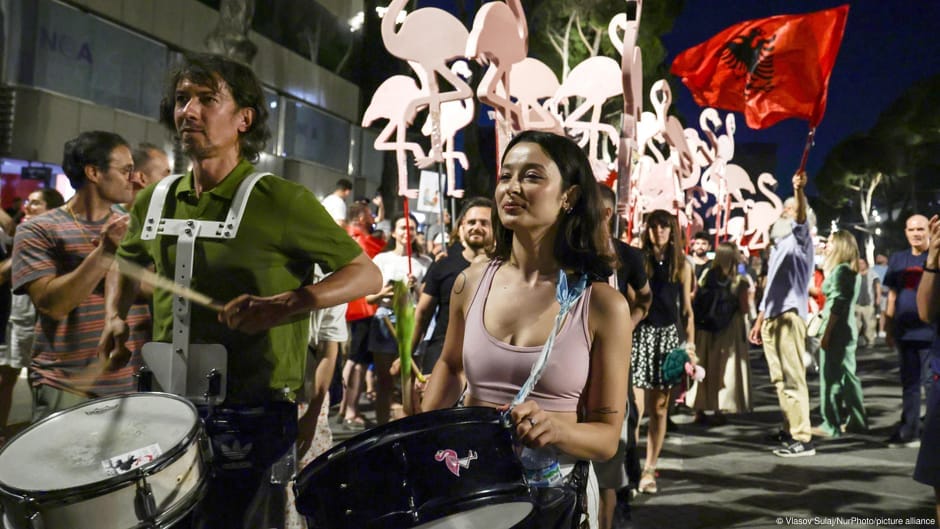
In mid-October, students in Tirana, Albania's capital, ignited a suitcase and tossed it into the courtyard of the Education Ministry, a potent symbol of their frustration. This act of defiance reflects a broader sentiment among Albania's youth, who are rallying against a system they feel has marginalized them for too long. According to the latest census, the country's population has decreased by about 420,000, or nearly 15%, from 2011 to 2023, largely due to emigration, particularly among young people seeking better opportunities abroad.
The protests, dubbed the "Flamingo Revolution," began in May in response to a luxury resort project linked to Donald Trump's daughter, Ivanka Trump, and her husband, Jared Kushner. Initially focused on environmental concerns, the movement quickly expanded to encompass widespread discontent with Prime Minister Edi Rama's government and the ruling Socialist Party. For the past four months, thousands have taken to the streets almost nightly, demanding accountability and change. However, tensions escalated on October 13 when a student protest turned violent, leading to clashes with police and prompting the use of tear gas, water cannons, and rubber bullets. There have been hundreds of arrests, injuries, and significant damage to property.
Protesters are now calling for Rama's resignation, a transitional government, electoral reform, and new elections. The movement is notable for its lack of a defined leader, drawing support from various political factions disillusioned with the current regime. While Rama has attributed the unrest to "foreign hands," there is scant evidence of external manipulation, although some online actors may be trying to exploit the situation. At the heart of the protests are domestic grievances: rampant corruption, soaring living costs, and stagnant wages. Recent high-profile corruption cases involving government officials have intensified frustrations, as has the stark contrast between economic growth and the uneven distribution of wealth.
Despite some achievements during his tenure, including a growing economy and a booming tourism sector, Rama has faced criticism for prioritizing projects that benefit a select few over the needs of the broader population. As the government channels resources into well-connected companies, essential services like healthcare and education remain neglected. Rama has rejected calls for his resignation and has proposed dialogue with the protesters, who have so far declined to engage. The outcome of this unrest could significantly reshape Albania's political landscape and determine whether the youth will choose to stay and fight for change or follow previous generations in seeking opportunities abroad.
Read Full Story at DW World →