Lake Mead and Lake Powell reach record lows, threatening water supply
Lake Mead and Lake Powell hit record lows, jeopardizing water supply for 40 million people and five million acres of farmland. This crisis stems from prolonged drought, climate change, and historical…
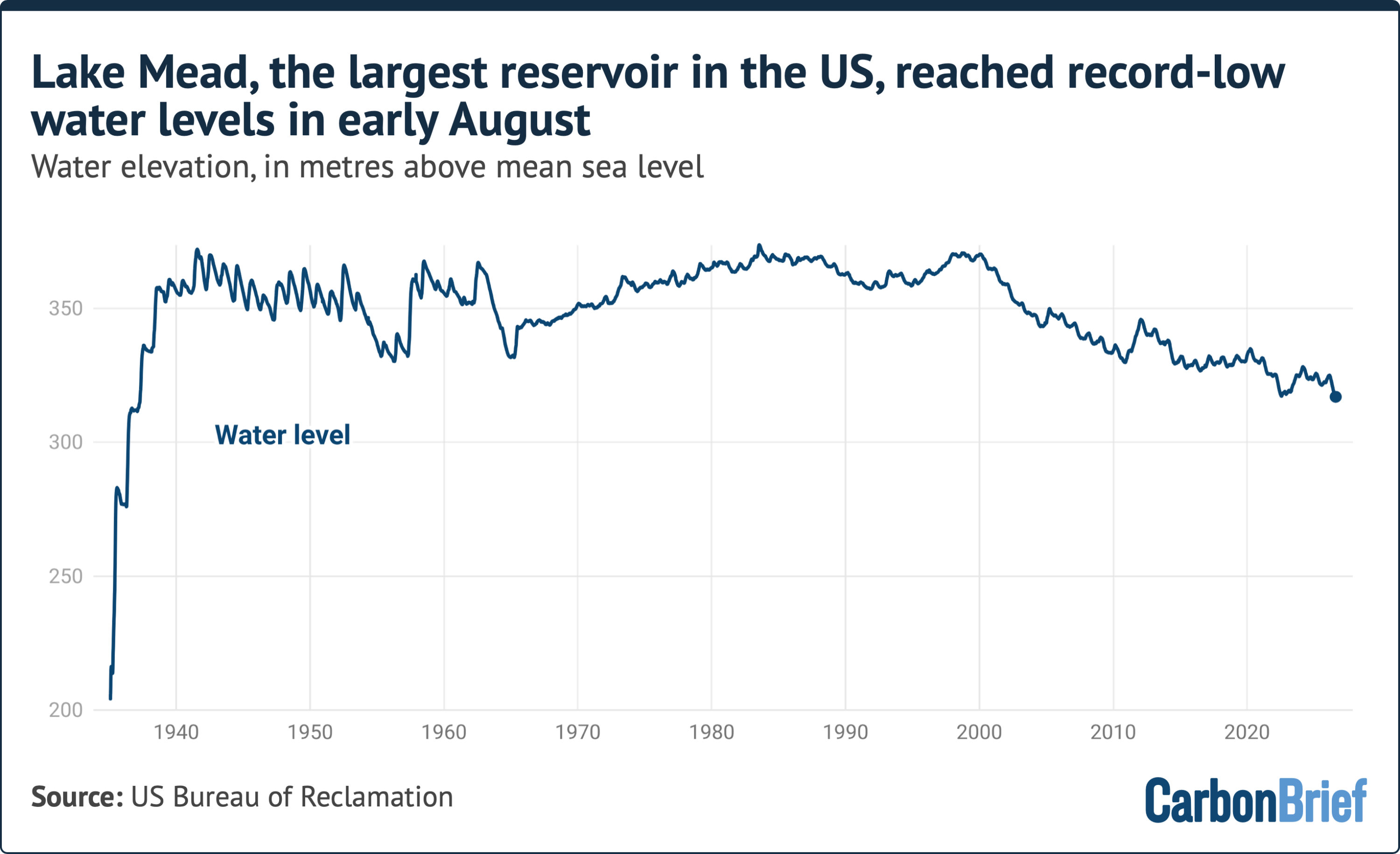
Lake Mead, the largest reservoir in the United States by capacity, and Lake Powell, the second largest, have both officially recorded their lowest water levels in history. This simultaneous milestone marks a critical failure point for the Colorado River system, which supports the water needs of forty million people and irrigates five million acres of farmland across seven southwestern states. The National Water Center confirmed that Lake Mead dropped below the 1,075-foot mark earlier this month, while Lake Powell followed suit just days later, signaling that the storage infrastructure designed for a wetter century is now operating in uncharted territory. These twin records are not merely statistical anomalies but represent a structural crisis in one of the most vital water resources in North America, forcing federal agencies to confront the reality that the river can no longer sustain the demands placed upon it by current population and agricultural models.
The primary driver behind this unprecedented drop is a combination of prolonged drought and rising temperatures associated with climate change. The southwestern United States has been experiencing a megadrought that began roughly two decades ago, characterized by significantly reduced snowpack in the Rocky Mountains and increased evaporation rates from the reservoirs themselves. Warmer air temperatures mean that more water is lost to the atmosphere before it can reach the dams, while declining precipitation means less water is flowing into the system to replace what is being used. Decades of over-allocation, where water rights were granted based on historically wet years rather than current climate realities, have left the system with no buffer against these drying trends. The Colorado River Compact of 1922 divided the river’s flow between upper and lower basin states, but the river was never as full as the negotiators believed, creating a legal and physical deficit that has only widened as the climate has warmed.
The consequences of these record lows are immediate and severe, triggering mandatory water cuts under the framework of the Colorado Drought Contingency Plan. States in the lower basin, including Arizona, California, and Nevada, are being required to reduce their water deliveries by significant percentages, often measured in billions of gallons. This forces difficult choices for municipal water managers and agricultural producers, who must decide whether to fallow crops, invest in expensive desalination or recycling technologies, or risk violating state water laws. For cities like Las Vegas and Phoenix, which have managed to reduce their per capita consumption significantly over the last decade, the cuts are manageable but costly. For agricultural regions in California’s Central Valley and Arizona’s Imperial Valley, however, the reduced allocations threaten livelihoods and food production, leading to increased costs for consumers and potential economic instability for rural communities.
Looking ahead, the situation is expected to worsen before it improves, as climate models predict continued warming and drying in the region. Federal agencies, including the Bureau of Reclamation, are now engaged in complex negotiations with the seven basin states to revise the existing compact and establish new guidelines for water sharing in a drier world. These talks are contentious, as each state is fiercely protective of its historical water rights. The long-term solution will likely involve a mix of technological innovation, such as increased water recycling and efficiency measures, as well as political compromise to reduce overall consumption. Without significant changes to how water is managed and consumed, the Colorado River system faces the prospect of becoming a seasonal stream rather than a reliable source of water for the growing population of the American West, fundamentally altering the economic and ecological landscape of the region.
Read Full Story at Carbon Brief →