UK wind and solar generation saves £5.9 billion in gas imports during Hormuz crisis
UK wind and solar generation prevented £5.9 billion in gas imports during the Hormuz crisis. This renewable surge reduced reliance on Middle Eastern energy and lowered carbon emissions.
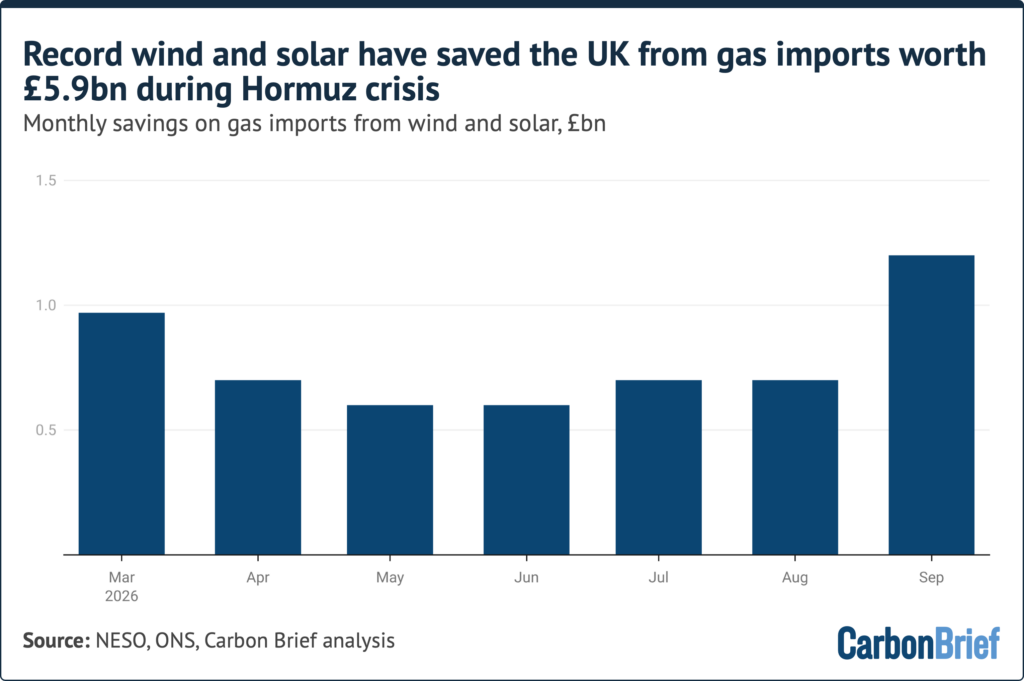
The United Kingdom has avoided importing £5.9 billion worth of natural gas since the start of the Gulf of Hormuz crisis, thanks to a surge in domestic wind and solar output. The spike in renewable generation has kept the UK’s gas demand below the level that would have triggered new imports from the Middle East, according to an analysis by Carbon Brief.
The crisis began in March when Saudi Arabia halted crude exports through the Strait of Hormuz, raising global energy prices and sparking fears of supply disruptions. Britain, which relies heavily on gas for heating and power, had already been tightening its reserves and boosting LNG imports. The sudden drop in demand, driven by the UK's record wind and solar production, meant the government did not need to turn to expensive foreign gas to keep the lights on.
The analysis shows that wind farms across the North Sea and solar arrays in the south supplied enough electricity to keep the national grid stable, reducing the need for gas turbines to fill gaps. This shift has saved the government and consumers a substantial amount of money, while also cutting carbon emissions. Industry insiders say the wind sector’s performance during the period was better than any other year in the last decade.
Looking ahead, the government plans to keep investing in offshore wind and solar capacity to reduce reliance on imported gas and to meet net‑zero targets. However, analysts warn that the UK’s energy security will still depend on diversifying supply routes and maintaining storage levels, especially if geopolitical tensions in the Gulf flare up again.
Read Full Story at Carbon Brief →