Android Auto messaging is useless, and it’s all because of one missing feature
Credit where credit’s due, Android Auto is jam-packed with features, and that’s all thanks to Google’s dedicated development push throughout the years. I remember how clunky and threadbare the drivin…
Affiliate links on Android Authority may earn us a commission. Learn more.
Credit where credit’s due, Android Auto is jam-packed with features, and that’s all thanks to Google’s dedicated development push throughout the years. I remember how clunky and threadbare the driving companion was a few years ago. Now, drivers and passengers can accomplish a wide array of tasks without ever having to get their phones out or even touch the car screen, with even more promised this year.
Despite my appreciation for Android Auto, especially as a daily user, I’m a realist. There are facets of the experience that Google can certainly improve, and one of the most glaring problem areas is its messaging system.
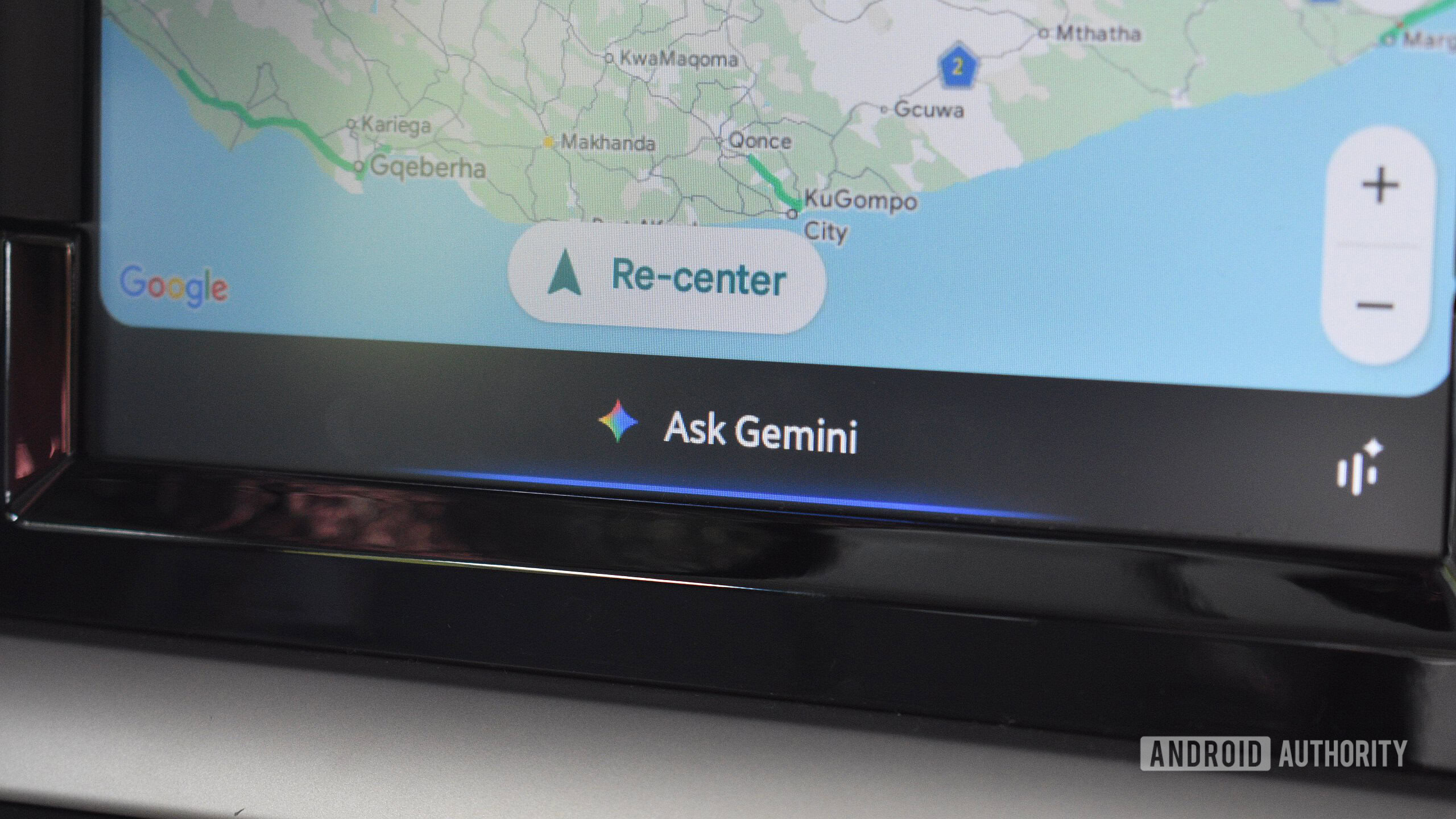
Android Auto, now with the help (or hindrance) of Gemini , makes texting contacts frustrating, distracting, and very often infuriating — and it’s all due to its reluctance to adopt the one feature that’ll remedy it.
Google encourages users to control Android Auto with their voices, whether it’s adjusting navigation plans or sending a message to a contact. Given the latter, you’d expect this to include sending voice messages — specifically audio messages recorded by the car or phone’s microphone — but this isn’t the case. Gemini force-transcribes any message sent to contacts, and this leads to all sorts of issues.
You see, Gemini’s dictation efforts are, in a word, dire. The next-generation voice assistant often misunderstands what I ask it to do, and this is exacerbated when I’m dictating a full message. This workflow usually involves multiple time-consuming steps.
First, I invoke Gemini to send a message to a contact. It’ll then ask for that contact, then ask me to verbalize the message. Gemini will then transcribe it and read it back for confirmation. At this point, after several minutes and multiple rounds of back-and-forth trying to correct the many glaring errors in it — punctuation written out as words, or incorrect names and capitalization — I just give up and say, “Send.”
Of course, it does work sometimes, especially when I’m parked and need to take pictures of its performance for this article. But while I’m driving, when I need it to perform at this level, I run into annoyances. This is when it matters. The in-car messaging experience really doesn’t have to be like this, yet it’s the only messaging capability Google offers through Android Auto.
Read Full Story at Android Authority →