💻 Technology
Live
Anthropic's Claude Code Artifacts update brings live, shared dashboards and interactive workspaces to enterprises
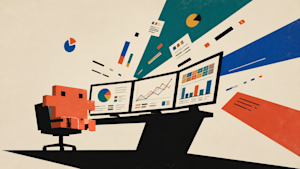
Anthropic announced a potentially game-changing new feature for users of Claude Code on the Claude Team and Enterprise subscription plans: Artifacts . This update turns a Claude Code session's work in
VentureBeat — 18 June 2026
Text:
20
0
0
Anthropic announced a potentially game-changing new feature for users of Claude Code on the Claude Team and Enterprise subscription plans: Artifacts .
Read Full Story at VentureBeat →
⚡ Quickyla Analysis
Original editorial context — not sourced from the article above
Anthropic’s latest update to Claude Code isn’t just another feature drop—it signals a fundamental shift in how enterprises interact with AI-driven development. By introducing live, sharable dashboards and interactive workspaces, the company is bridging the gap between static code generation and dynamic collaboration. This matters because, until now, AI coding tools have largely operated as black boxes, producing outputs that engineers must manually interpret and integrate. With Artifacts, Anthropic is turning those outputs into living documents that teams can manipulate in real time, effectively turning AI from a tool into a collaborative teammate.
The significance becomes clearer when considering the broader context of enterprise AI adoption. Organizations are increasingly investing in AI coding assistants, but many hit a ceiling when it comes to iteration and teamwork. A developer might ask Claude to generate a dashboard, but until now, the result would be static—requiring additional human effort to refine, test, and share. Anthropic’s approach mirrors trends in collaborative software development, where tools like Figma or Notion have blurred the lines between creation and iteration. By embedding this functionality directly into the coding process, the company is addressing a critical pain point: the handoff between AI generation and human collaboration.
What remains to be seen is how enterprises will adapt to this new dynamic. Will teams embrace the idea of AI-generated workspaces as living documents, or will concerns about control and accountability slow adoption? The legal and ethical implications are also worth watching. If dashboards and interactive elements are generated and modified by AI, who owns the final output? How do liability and intellectual property frameworks evolve in such a scenario?
On a broader scale, this update aligns with the growing movement toward "agentic" AI systems—tools that don’t just respond to prompts but actively participate in workflows. As companies like Microsoft and Google push deeper into AI-driven development, Anthropic’s move could set a new standard for what’s expected in enterprise coding environments. The question now is whether this feature will be a niche innovation or the catalyst for a fundamental rethinking of how software is built and shared.
Verified Source
Sources

💻 Technology
You can now beat ChatGPT Codex rate limits, if you have friends

💻 Technology
Meta is reportedly developing an AI pendant

💻 Technology
Cash App made a magic wand for contactless payments

💻 Technology
Coders are refusing to work without AI — and that could come back to bite them

💻 Technology
Hackers hijacked Instagram accounts by tricking Meta AI support chatbot into granting access

💻 Technology
Asus gives the ROX Xbox Ally the OLED screen it deserves

