Federal appeals court blocks Trump's White House ballroom
A federal appeals court blocked construction of a $90,000 square-foot White House ballroom because Congress—not the president—must approve major changes to White House property. The ruling reaffirmed…
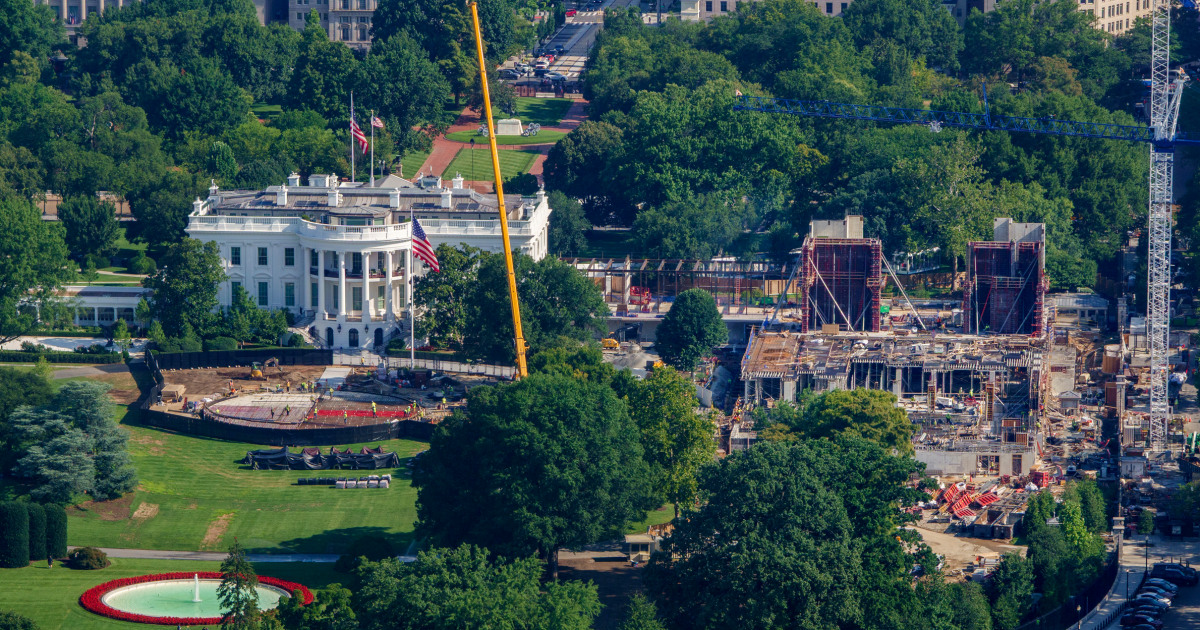
A federal appeals court on Friday blocked the Trump administration from building a new White House ballroom, siding with a lower court that said Congress—not the president—must approve such major changes.
The U.S. Court of Appeals for the D.C. Circuit upheld a modified injunction stopping construction of the 90,000-square-foot ballroom while allowing underground work to continue. The three-judge panel gave the administration 14 days to seek Supreme Court review before the ruling takes full effect. The White House had no immediate comment.
The decision, issued by two Democratic appointees, accused the Trump administration of overstepping constitutional limits by pushing ahead without congressional approval. The court called the White House a temporary residence, not a personal property, meaning the president has no unchecked power to alter it. The judges highlighted how, in October 2025, the administration demolished the East Wing in three days using private funds and no congressional input. “We are aware of no instance in American history,” the ruling stated, “in which a President unilaterally demolished substantial portions of the White House that Congress authorized and taxpayers paid for.”
U.S. Circuit Judges Patricia Millett and Brad Garcia stressed that the ruling isn’t about the ballroom’s design or necessity—just who has the authority to approve it. They said the president can still pursue the project, but not without Congress’s say-so. The dissenting judge, Trump appointee Neomi Rao, argued the lower court had wrongly interfered with presidential control over the White House. Meanwhile, District Judge Richard Leon, who first issued the injunction, had earlier allowed limited work but later accused the administration of exploiting a security exception to justify the entire project. His sharp rebuke—full of exclamation marks—highlighted the clash over executive power and institutional checks. The next step rests with the Supreme Court or Congress.
Read Full Story at NBC News →



