Are electric vehicles really bad for the environment?
"The EU's car lie" — Germany's Bild tabloid newspaper didn't mince words when it reported on what it called the European Union's "dangerous" claim that electric vehicles were carbon neutral . Markus…
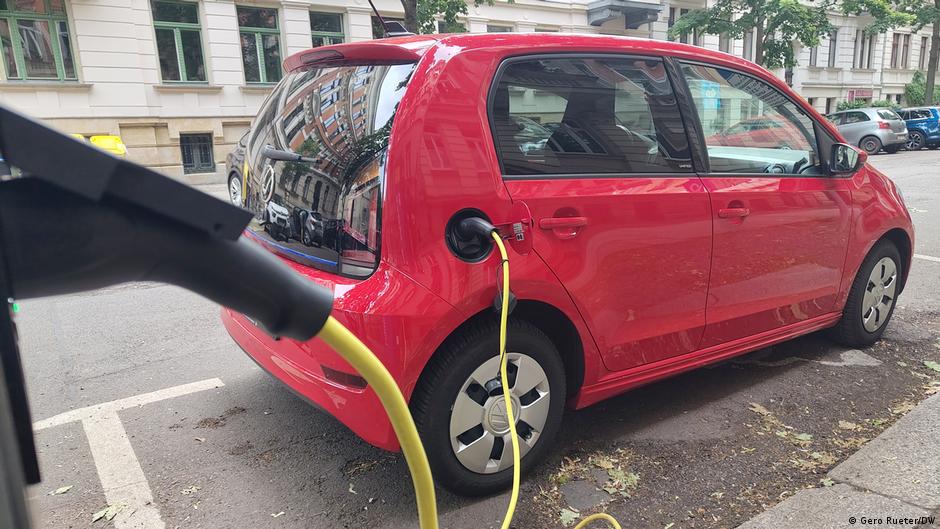
"The EU's car lie" — Germany's Bild tabloid newspaper didn't mince words when it reported on what it called the European Union's "dangerous" claim that electric vehicles were carbon neutral .
Markus Söder , the conservative state premier of Bavaria — home to major automotive brands like Audi , BMW and Mercedes-Benz — was equally direct. Writing on social media , he called for an end to "the EU's phaseout of internal combustion engines" set for 2035. Stepping away from the phaseout, he said, would now be backed by "science."
Söder and Bild were reacting to a new report by the Technical University of Munich (TUM) , which outlined what it considered to be a major flaw in the EU's climate strategy: the fact that its vehicle emissions regulation only focuses on CO2 emissions from exhaust gases and that battery-electric vehicles are considered "climate-neutral."
To view this video please enable JavaScript, and consider upgrading to a web browser that supports HTML5 video
The report stated that battery-electric vehicles reduce carbon emissions by only "41% on average" over combustion engine vehicles, with the EU regulation failing to take into account emissions generated by other factors like manufacturing and electricity mix.
Gas-powered vehicles were at a disadvantage, the report concluded, suggesting emissions should be counted over a vehicle's entire life cycle, from the materials used to build a car to the fuel that makes it run. Credit could be given for the use of green steel , for instance, or recovering raw materials through recycling.
It highlighted several major car manufacturers that support this approach, including BMW, Audi and Volkswagen — all major institutional donors at TUM .
Georg Bieker, who researches the environmental impact of electric and gas-powered cars at the US-based International Council on Clean Transportation (ICCT) think tank, said TUM's analysis didn't offer any new insights. He, and other climate and mobility experts, pointed out that the importance of life-cycle assessments was already well known.
Read Full Story at DW World →