Are the roots of consciousness hidden in the ancient deep brain?
Are the roots of consciousness hidden in the ancient deep brain? Some neuroscientists argue that the roots of experience lie deep inside the brain. If they’re right, the consciousness club will get a lot bigger By Cody Cottier edited by Allison Parshall Here’s one of the more
Are the roots of consciousness hidden in the ancient deep brain?
Some neuroscientists argue that the roots of experience lie deep inside the brain. If they’re right, the consciousness club will get a lot bigger
Here’s one of the more unsettling schemes to recently emerge from Silicon Valley: human clones grown without a conscious brain. At least one biotech start-up reportedly has quixotic ambitions of breeding spare, unfeeling meat sacks as a way to clear the ethical path for procedures called “body transplants”—and, hypothetically, immortality. The idea seems to be that if these surrogate bodies are wholly unconscious, without even the faintest awareness of the world or themselves, then there’s no harm done.
It isn’t clear how much—or how little—of a brain these clones would have, but they’d certainly lack a cerebral cortex, the wrinkly outer layer that’s responsible for sophisticated cognitive functions such as language, self-reflection and abstract thought. Most theorists have long assumed that the cortex is where consciousness, or our subjective experience of the world, arises . If they’re right, an organism without one would have no thoughts, sensations or emotions—no inner life at all.
But what if they’re wrong? A growing number of consciousness researchers are seriously considering the possibility that consciousness could originate deep within the brain’s most evolutionarily ancient realm: the sub cortex. They argue that, just as astronomy once labored under a false geocentric model, consciousness research is in thrall to the mistaken notion that cortical processing lies at the center of all experience—the corticocentric model. The idea is “as old as any attempt to relate brain to mind” in neuroscience, says Mark Solms, a neuropsychologist at the University of Cape Town in South Africa. “It’s a foundational theory about where the mind is.”
If you're enjoying this article, consider supporting our award-winning journalism by subscribing . By purchasing a subscription you are helping to ensure the future of impactful stories about the discoveries and ideas shaping our world today.
Yet over the past several decades, Solms and others have marshalled counterevidence in hopes of forcing a Copernican upheaval in their field. The subcortical revolution, should it come to pass, would have massive implications for how we define and measure consciousness—and for which creatures we deem worthy of moral consideration.
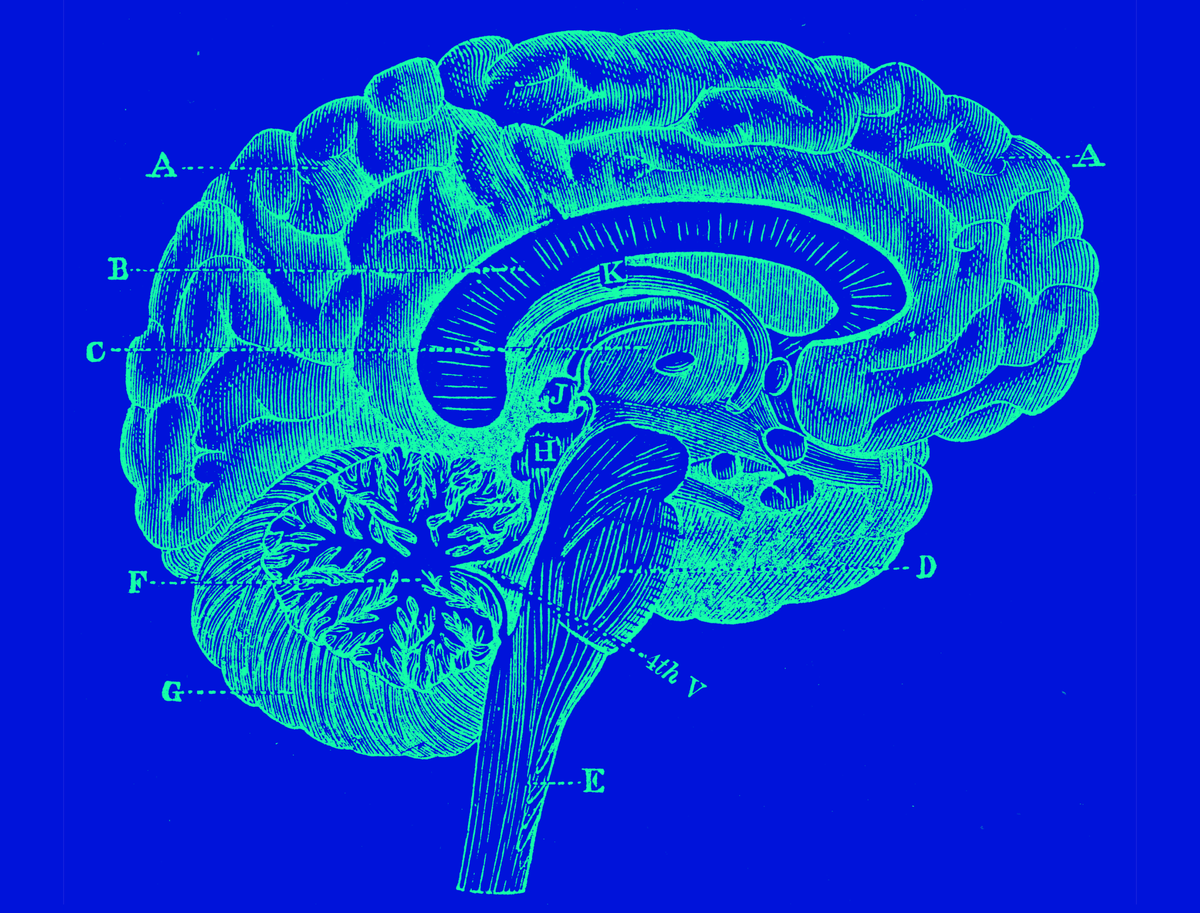
The cortex is neuroanatomy’s latest innovation, and it has done well for itself. Its size varies across species, but in humans and many other mammals, the cortex now swells to epic proportions—around 75 percent of brain mass , in our case—and envelops the older structures beneath it. The inmost region, the subcortex, holds more foundational responsibilities than the upstart upstairs: maintaining arousal, processing emotions, regulating the body and relaying sensory information.







