Armenia, once Russia's reliable ally, considers an EU future
Citizens of Armenia are not only electing a new National Assembly on Sunday: They are also voting on the future geopolitical direction of the country. On the table is either rapid EU integration or a return to Russia's sphere of influence. A preelection survey commissioned by th
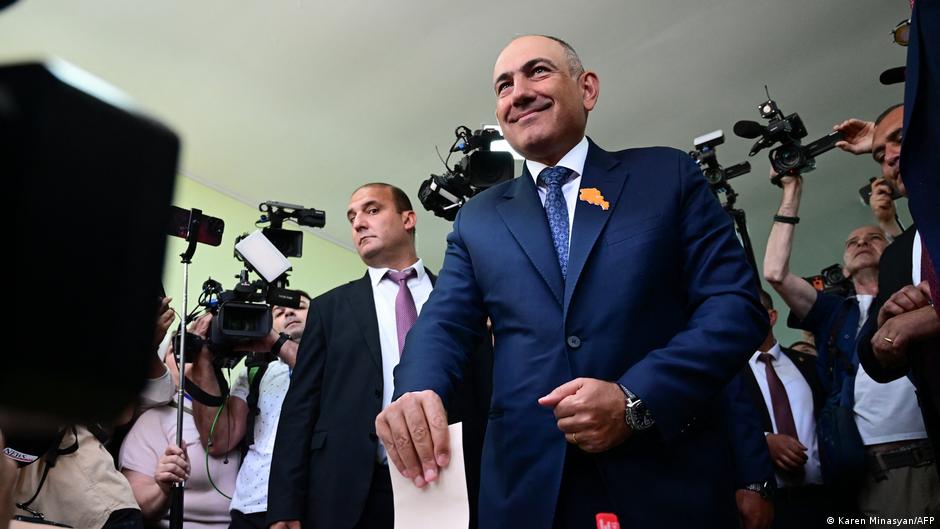
Citizens of Armenia are not only electing a new National Assembly on Sunday: They are also voting on the future geopolitical direction of the country. On the table is either rapid EU integration or a return to Russia's sphere of influence.
A preelection survey commissioned by the Washington based NGO International Republican Institute (IRI) puts Civil Contract, led by pro-EU Prime Minister Nikol Pashinyan, in first place, with 32% of respondents saying they would vote for the party.
The opposition traditionally has more pro-Russian views and is represented by three major forces that currently lag far behind the ruling party, according to the poll results. Some 7% of voters said they would support the "Strong Armenia" bloc run by a Russian billionaire of Armenian origin Samvel Karapetyan. He is currently under house arrest in Yerevan on charges of inciting a violent power grab as he publicly supported the Armenian Apostolic Church amid a bitter conflict between the church leaders and Prime Minister Pashinyan.
The political grouping "Armenia Alliance”, led by former president Robert Kocharyan who is reportedly a friend of Russian leader Vladimir Putin , is expected to garner 4% of the votes. The "Prosperous Armenia" party founded by business mogul Gagik Tsarukyan can likely count on the support of 2% of the Armenian citizens. Tsarukyan’s party is officially partnered with Russia's ruling 'United Russia' party.
To view this video please enable JavaScript, and consider upgrading to a web browser that supports HTML5 video
The remaining five political parties, including some new protest projects, are only polling around 1-2%.
Experts warn that these numbers should be treated carefully given the unprecedentedly low response rate with only 16% of respondents agreeing to participate in the poll. That is 19 percentage points lower than ahead of in the 2021 snap election. At the same time 92% of participants expressed their willingness to vote compared to 72% in 2021. Almost one in two respondents declined to name their favorite candidate or said they have not yet reached a final decision on how to vote.
However, other polls showed different results, giving Pashinyan’s "Civil Contract" party between roughly 26 and 34 per cent, suggesting it could have a slightly narrower lead against the opposition.