As the EU advances free trade with Southeast Asia, why is there no ASEAN-wide deal?
The EU and several Southeast Asian nations are nearing the finish line on bilateral trade deals , and if the current deadlines hold, the European bloc will have agreements in place with six out of 11…
The EU and several Southeast Asian nations are nearing the finish line on bilateral trade deals , and if the current deadlines hold, the European bloc will have agreements in place with six out of 11 ASEAN states by the middle of next year.
Free trade agreements with Singapore and Vietnam are already in force . Negotiations with Indonesia have concluded , and Jakarta aims to sign the agreement in October , with implementation targeted for early 2027.
To view this video please enable JavaScript, and consider upgrading to a web browser that supports HTML5 video
Talks with Thailand , relaunched in 2023, have reached nine negotiating rounds, while Malaysia resumed negotiations in early 2025 after a 13-year pause. Both are expected to be finalized by the end of the year or early 2027.
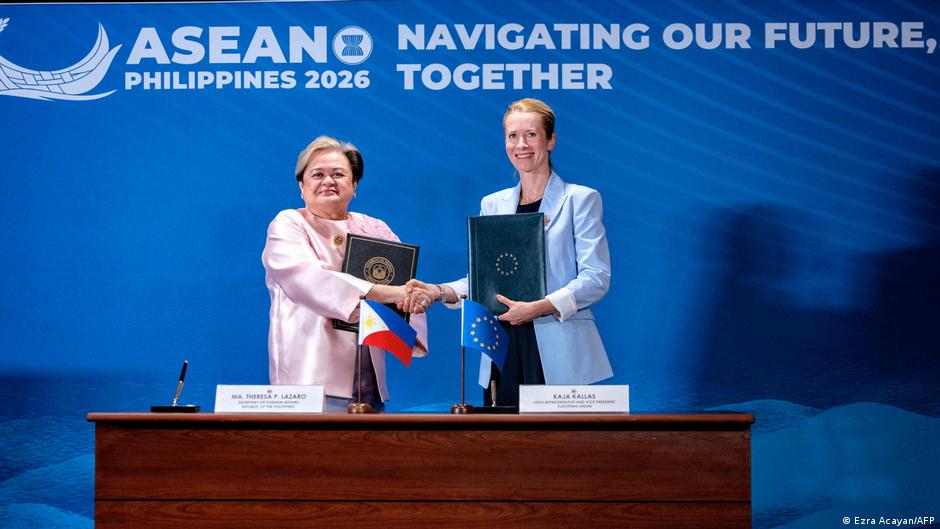
Earlier this week, the EU and the Philippines announced that they had reached "substantial agreement" on their free trade agreement, putting it on course for formal conclusion in the coming months.
Speaking to DW, Chris Humphrey, executive director of the EU-ASEAN Business Council, described EU engagement with ASEAN on trade and investment issues as "at an all-time high."
EU-Southeast Asia goods trade reached €274.9 billion ($313.7 billion) last year, up around 6% from the previous year and more than 50% from the €177.9 billion recorded in 2016, according to EU data.
The Association of Southeast Asian Nations (ASEAN) is now the EU's third-largest goods trading partner outside Europe, behind only the United States and China.
Read Full Story at DW World →