ASEAN nations unite against €98B cyber-scam threat
Southeast Asian governments are uniting to combat escalating cyber-scam cartels, with regional losses projected at €98 billion by 2025. Joint actions, like Thailand and Myanmar’s border crackdown and…
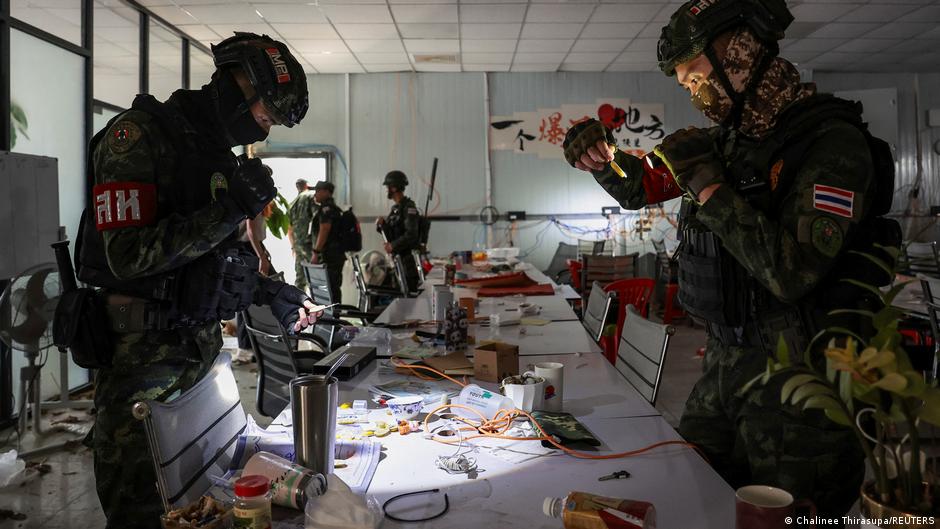
Southeast Asia’s governments are uniting to fight a surge in cyber-scam cartels that now stretch across borders, banking systems and digital currencies.
For years, regional police, anti-trafficking units and border agencies treated the problem as a local crime issue, but the gangs have grown too large and too mobile. They run call centres and fraud factories in lawless zones, move money through shell companies and cryptocurrencies, and bribe armed or politically connected protectors. The result is an industry whose global losses could reach €98 billion a year by 2025, according to a UN estimate released last month.
This week’s diplomatic moves signal a shift. Thai Prime Minister Anutin Charnvirakul and Myanmar’s junta chief Min Aung Hlaing agreed in Bangkok on August 6 to clamp down on scam centres along their shared frontier, exchange intelligence and jointly freeze criminal bank accounts. Thailand also offered to help Myanmar join the Egmont Group, the global network of financial-intelligence units, while Myanmar’s military-backed parliament has already voted to impose the death penalty on convicted scam bosses. In Cambodia, Indonesia’s deputy foreign minister proposed a joint task force with Phnom Penh. And last week Indonesia’s president and Thailand’s prime minister met in Jakarta to pledge that their two countries will lead a stronger ASEAN response to the threat.
The crackdown is driven by the gangs’ growing sophistication. Artificial intelligence, deepfake videos and encrypted communications let them run mass-fraud operations with lower costs and fewer traces. The pressure is also coming from outside the region: the United States has already labelled Cambodia’s Prince Group a transnational criminal organisation and sanctioned 146 people and firms tied to its online scam networks. Earlier this month Cambodia revoked the citizenship of Prince Group chairman Chen Zhi, who faces US charges of wire fraud and money laundering, and extradited him to China.
Regional officials now call cyber-scam cartels an economic security threat rather than just a crime problem. “These networks are no longer local nuisances—they are regional crises,” said Hai Luong, a criminology lecturer at Griffith University in Australia. With ASEAN economies under pressure and foreign governments tightening sanctions, the coming months will show whether the new alliance can dismantle the scam empires or merely push them to new hideouts.
Read Full Story at DW World →