Astronomers discover some of the most extreme primordial quasars in the universe
Astronomers just discovered some of the most primordial quasars in the universe Probing the dawn of the cosmos for clues to how the first galaxies and supermassive black holes formed is no easy feat
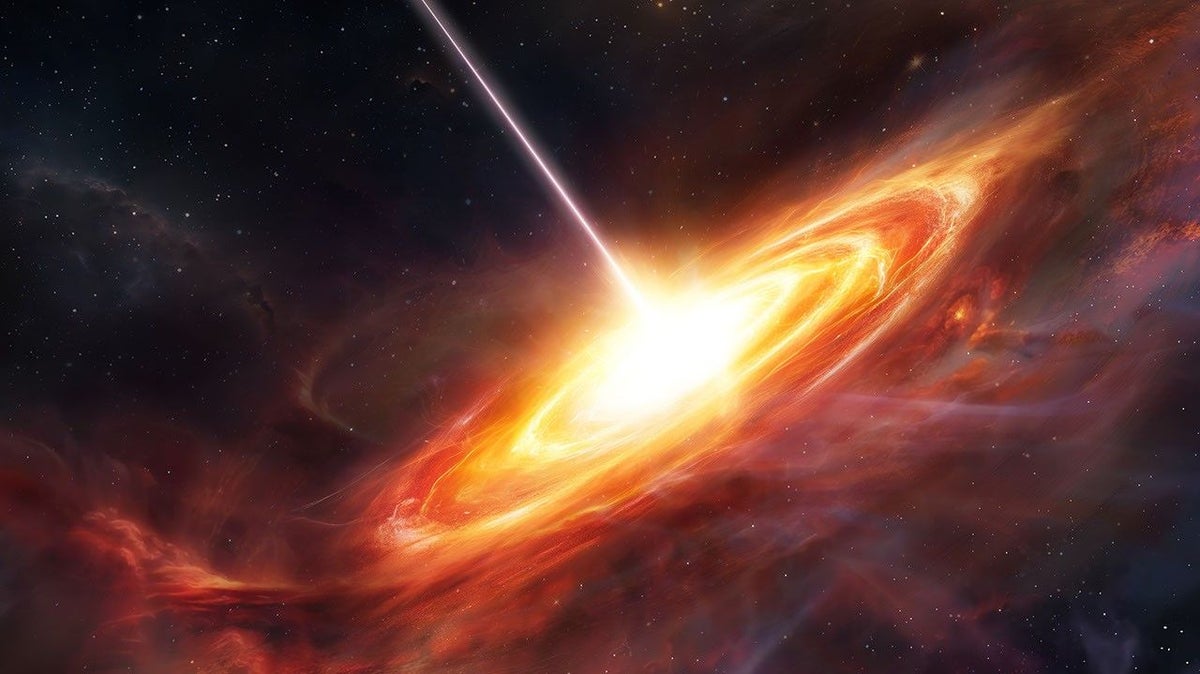
Astronomers just discovered some of the most primordial quasars in the universe Probing the dawn of the cosmos for clues to how the first galaxies an
Read Full Story at Scientific American →Why This Matters
The discovery of these primordial quasars cracks open a window into the universe’s infancy, offering a rare glimpse at the cosmic machinery that shaped the first galaxies and black holes. These celestial beacons act as time capsules, their ancient light carrying imprints of conditions that prevailed less than a billion years after the Big Bang—a period once thought too dark and chaotic to yield such clear signatures.
Background Context
Decades of theoretical modeling predicted the existence of supermassive black holes in the early universe, but direct observational proof remained elusive until advancements in infrared astronomy and deep-field survey telescopes. The James Webb Space Telescope’s recent capabilities have shifted the paradigm, revealing that these colossal objects may have formed and evolved far faster than conventional models allowed.
What Happens Next
Further spectroscopic analysis of these quasars will help refine simulations of early galaxy formation, potentially forcing revisions to theories of dark matter’s role in seeding cosmic structure. Upcoming missions like the Nancy Grace Roman Space Telescope and next-generation ground observatories are poised to hunt for similar objects, expanding the sample size to determine whether these findings represent outliers or a common pathway for black hole growth.
Bigger Picture
This discovery aligns with a broader trend of rewriting the early universe’s narrative, where rapid cosmic evolution appears more the rule than the exception. As detection methods improve, the line between the first stars, black holes, and galaxies blurs, challenging the traditional chronology of cosmic history and underscoring how little we still understand about the universe’s most formative epoch.