Astronomers just solved a 50-year-old mystery about the Milky Way’s black hole
Astronomers just solved a 50-year-old mystery about the Milky Way’s black hole A breeze is emanating from Sagittarius A* at the heart of our galaxy By Jeanna Bryner edited by Clara Moskowitz At the heart of our home galaxy lurks a gigantic black hole that’s more than a trillio
Astronomers just solved a 50-year-old mystery about the Milky Way’s black hole
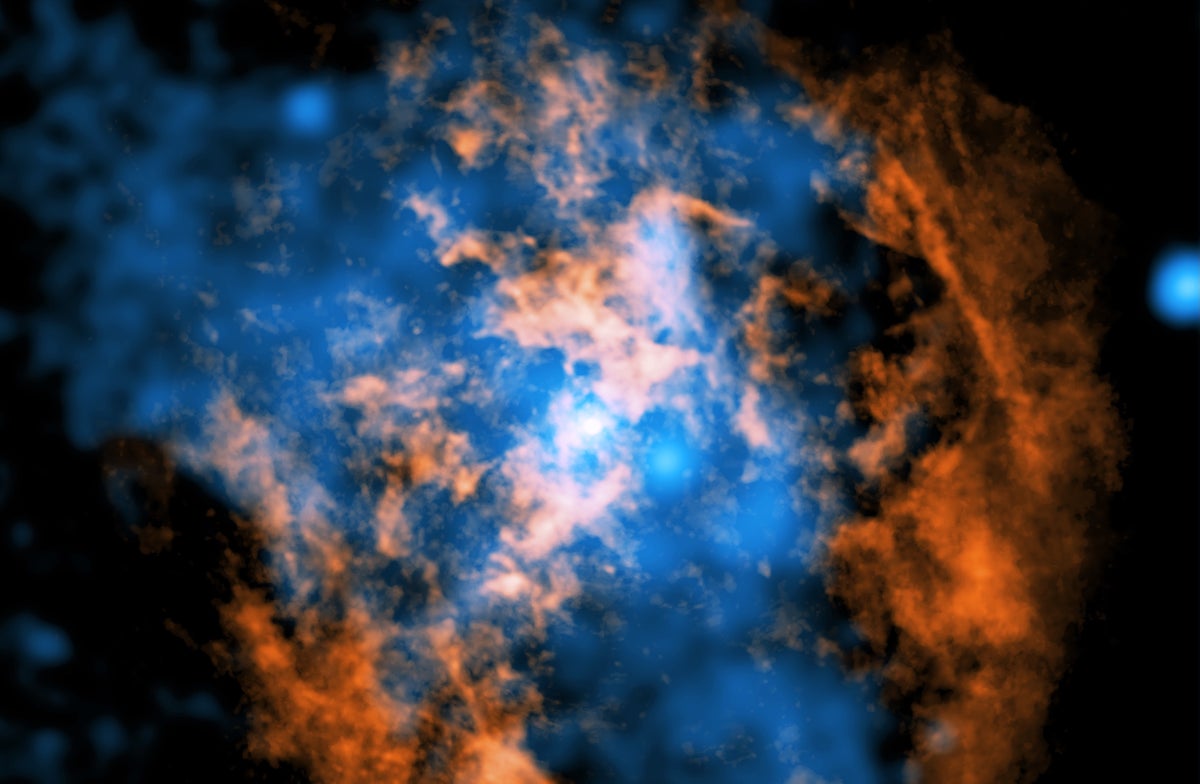
A breeze is emanating from Sagittarius A* at the heart of our galaxy
At the heart of our home galaxy lurks a gigantic black hole that’s more than a trillion times heavier than Earth, with all that mass stuffed into a region that is about 2,000 times wider than our planet. Now scientists have discovered the behemoth is throwing off a hot breeze.
The findings, detailed today in the Astrophysical Journal Letters, suggest not only that all black holes emit such a wind but also that these beasts are not total loners that are isolated from their environments.
“We have never seen a breeze from a black hole,” says study co-author Elena Murchikova of Northwestern University. “We usually see the consequences of outbursts or other violent activities. Seeing the black hole sitting there, being quiet but still dumping energy all over the region without doing anything violent, is terribly cute,” adds Murchikova, an assistant professor in Northwestern’s department of physics and astronomy.
If you're enjoying this article, consider supporting our award-winning journalism by subscribing . By purchasing a subscription you are helping to ensure the future of impactful stories about the discoveries and ideas shaping our world today.
Supermassive black holes are suspected to lurk at the centers of all galaxies. Despite plenty of investigations of our home galaxy’s monstrous resident, called Sagittarius A*, or Sgr A* for short, scientists have yet to detect gassy winds blowing from it—which they’ve long theorized to exist.
“To observe our own black hole, we have to look through the plane of our galaxy,” Murchikova said in a statement . “That means we have to peer through gas, dust and ionized structures, and you can’t really see through all of that easily.”







