Banning leftwing activists from entering Britain: an illiberal move with a long history in this country | DK Renton
The cancellation of Cenk Uygur’s and Hasan Piker’s visas tells us that the home secretary’s powers to police speech are too broad I n August 1967, the activist Stokely Carmichael was banned from entering Britain. An ally of Martin Luther King Jr and head of the Student Nonviolen
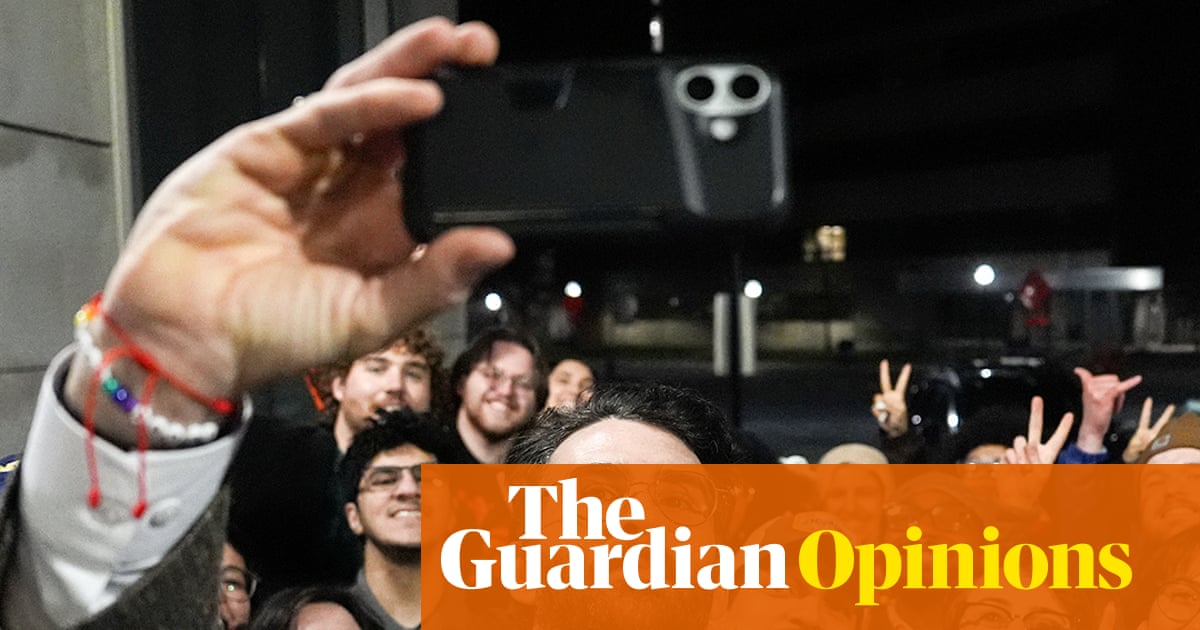
The cancellation of Cenk Uygur’s and Hasan Piker’s visas tells us that the home secretary’s powers to police speech are too broad
I n August 1967, the activist Stokely Carmichael was banned from entering Britain. An ally of Martin Luther King Jr and head of the Student Nonviolent Coordinating Committee, Carmichael was banned because that July he had visited London and given a rousing, militant speech about racism and black power at a leftwing festival in Camden alongside counterculture figures including the poet Allen Ginsberg and the philosopher Herbert Marcuse.
In the Commons, the Tory MP Patrick Wall – a member of the Monday Club, a pressure group that called for the “voluntary” repatriation of black people from Britain – claimed that Carmichael (later known as Kwame Ture) had been in Britain advocating racial violence. Wall asked Labour home secretary Roy Jenkins to rescind Carmichael’s visa. Jenkins agreed to do so. In retrospect, that decision – by a home secretary usually remembered as a liberal reformer – comes across as an act of petty authoritarianism, a more conservative generation trying to stop the circulation of subversive ideas associated with the 1960s left that it feared.
The Home Office decision announced on Monday to ban Cenk Uygur, of The Young Turks online news show, and his nephew, the streamer Hasan Piker, from entering the UK is history repeating itself. The government said that their presence in the country “may not be conducive to the public good” without providing its specific reasoning behind the decision. The event from which they were prohibited was the London offshoot of South by Southwest (SXSW) film, media and tech festival.
Often the public figures whose visa applications are refused are extremists with long histories of violence. By contrast, Uygur and Piker have each held, for most of their lives, relatively mainstream political views. Uygur was one of the most visible online supporters of President Barack Obama in 2010 , then backed the leftwing Democrat Bernie Sanders in 2016 . In April, Bhaskar Sunkara, the founder of Jacobin magazine, described Piker in the Opinion pages of this publication as “a socialist who talks about class politics, foreign policy and the failures of the American system with a directness that clearly resonates with millions ”. Uygur and Piker are also prone to speaking out recklessly, and in Piker’s case , in a manner likely to cause offence, including saying that Hamas is a “thousand times better than Israel” – the very behaviours that win people online audiences.
Uygur said he was banned for stating that “Israel controls the American government through donations to 94% of Congress”, which he says is “ factual ”. But clearly the ambiguity of the claim means it’s not: Israel itself doesn’t make donations, Congress isn’t the US government and that verb “control” contains a value judgment that goes beyond mere factual analysis. Still, if the government really believes that anyone whose speech could be considered antisemitic should be banned from addressing conferences, what’s it going to do about Boris Johnson or Nigel Farage ?
Uygur and Piker were not applying to live in Britain but rather to come here for a few days to speak at an event. In banning them, the home secretary was saying in effect that their views are so shocking that this country could not suffer even a few days of their company. Moreover, communication in 2026 is not what it was 60 years ago. Jenkins, by preventing Carmichael from entry, could actually prohibit the attenders of an event from hearing his voice or having a discussion with him. This time, all the conference organisers need to do is invite the speakers remotely and the event can go ahead unaffected. This is what the Oxford Union, where Piker was also meant to speak, is planning to do.
The Home Office has acquired ever-broader powers to make these decisions. Ministers now claim the right to refuse visas on a very wide set of grounds including national security, criminality and corruption, but also “unacceptable behaviour” and where admitting the person to the UK could unfavourably affect conduct of foreign policy (essentially, jeopardising relations with a British ally). From 2010 to 2022, home secretaries excluded about 30 people a year .






