🔬 Science
Live
Black hole winds may be robbing giant galaxies of their future stars
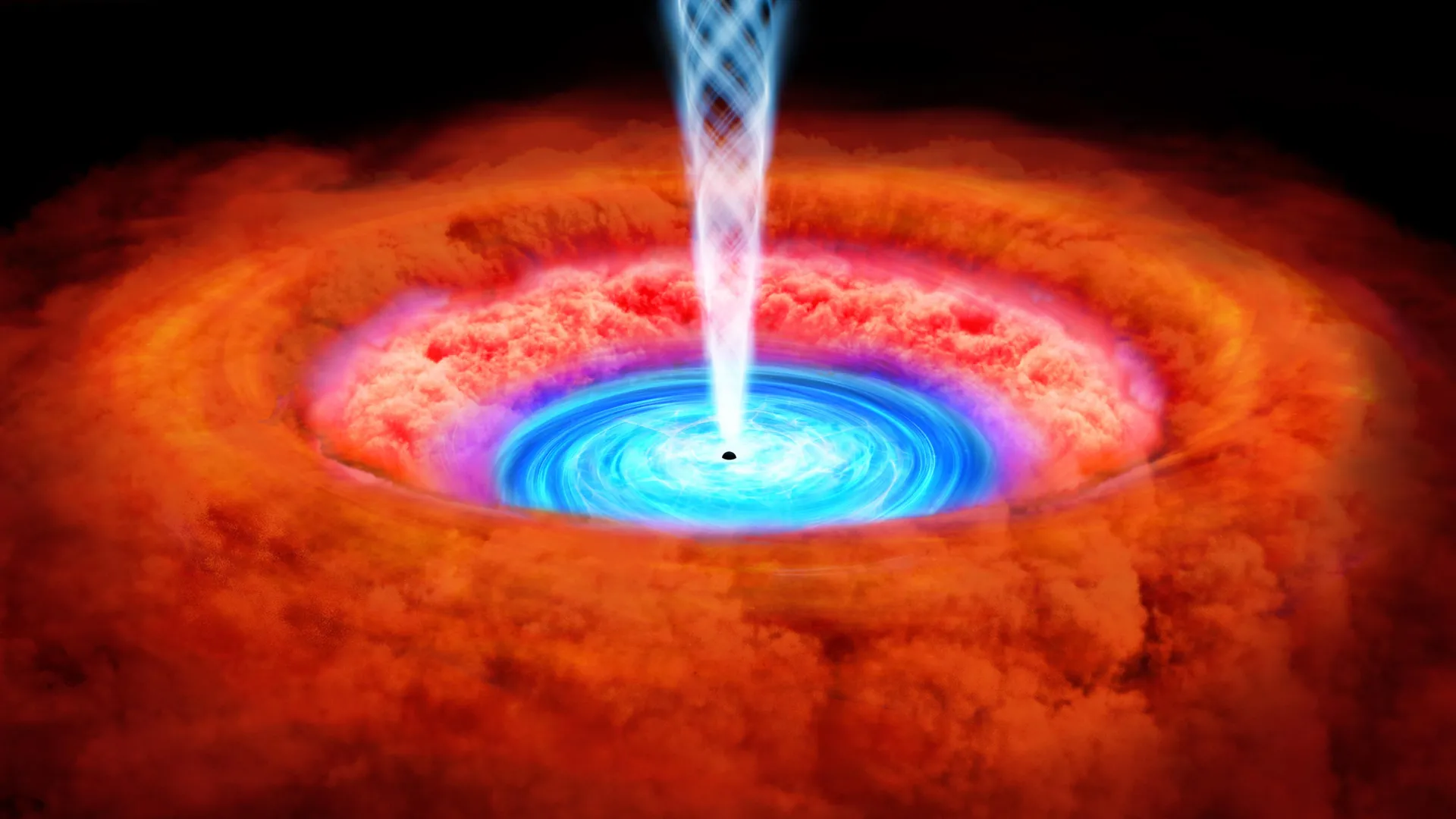
Astronomers may be closing in on a long-standing cosmic mystery: why some of the universe’s biggest galaxies seem to have far fewer stars than expected. Using NASA- and JAXA-supported XRISM observatio
ScienceDaily — 18 June 2026
Text:
18
0
0
Astronomers may be closing in on a long-standing cosmic mystery: why some of the universe’s biggest galaxies seem to have far fewer stars than expecte
Read Full Story at ScienceDaily →
⚡ Quickyla Analysis
Original editorial context — not sourced from the article above
The revelation that black hole winds may be suppressing star formation in massive galaxies offers a compelling piece of a long-standing cosmic puzzle. Galaxies like our Milky Way grow by converting gas into stars, but some of the universe’s largest elliptical galaxies appear unusually barren, with far fewer stars than their immense dark matter halos would suggest. Astronomers have long suspected that supermassive black holes at their cores could be involved, and new X-ray observations are lending weight to this theory. By detecting high-energy outflows from these black holes—winds that can reach millions of miles per hour—researchers are piecing together how such violent processes might quench star formation on galactic scales.
This phenomenon isn’t just a curiosity of distant, ancient galaxies; it speaks to the fundamental lifecycle of cosmic structures. In the early universe, massive galaxies were prolific star factories, but over time, many shut down prematurely. The role of black hole winds in this shutdown could reshape our understanding of galactic evolution, suggesting that active galactic nuclei (AGN) aren’t merely passive bystanders but active regulators of star birth. What’s particularly intriguing is how these winds interact with the surrounding interstellar medium. If they’re energetic enough, they could heat or expel gas before it has a chance to cool and collapse into new stars—a process known as "negative feedback." Yet questions remain: How widespread is this mechanism? Do all massive galaxies experience it, or only a subset? And how does this balance shift over cosmic time?
The broader implications are significant. If black hole winds are indeed the culprits, it would mean that the most luminous objects in the universe—quasars and blazars—play a direct role in shaping the galaxies around them, not just lighting them up. This challenges the traditional view of black holes as cosmic vacuum cleaners, passively consuming matter, and instead casts them as dynamic architects of galactic fate. Future observations with next-generation telescopes could clarify whether these winds are a universal feature or an occasional disruptor, potentially rewriting the narrative of how galaxies live and die.
Sources

🔬 Science
'Astonishing': James Webb telescope spots the most chemically primitive galaxy in the ancient universe

🔬 Science
El Niño Is Underway

🔬 Science
Astronomers gaze into the 'Crystal Ball Nebula' and see a vision of our dying sun — Space photo of the week

🔬 Science
Bacteria uncover distinct strategy to import rare sugar polymers, crystal structures show

🔬 Science
NASA Awards Contract for Johnson Space Center Infrastructure

🔬 Science
Repairing DNA damage: Scientists discover a surprising new benefit of melatonin

