Blue Origin rocket explodes into huge ball of flame on Florida launch pad
Blue Origin's New Glenn rocket suffered a catastrophic failure during a ground test at Cape Canaveral, exploding into flames but causing no injuries. The incident, described as an "anomaly" by the company, is under investigation by the FAA and Space Force, following previous setbacks for the rocket.
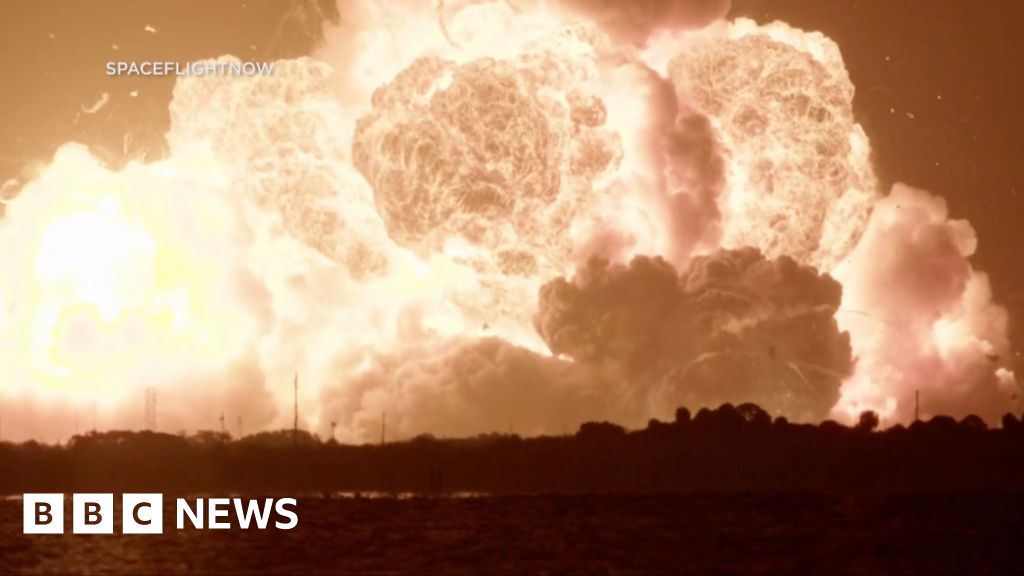
A rocket built by Blue Origin, the space technology company founded by Amazon billionaire Jeff Bezos, suffered a catastrophic failure on Tuesday evening as it exploded into a massive fireball during a ground test at Cape Canaveral Space Force Station in Florida. Video footage captured the moment the uncrewed vehicle burst into flames, engulfing the launch pad in thick black smoke and an intense orange blaze shortly after 9:00 p.m. local time. The incident occurred during a routine hotfire test of the New Glenn rocket’s BE-4 engines—a critical milestone ahead of its planned debut launch. According to a statement issued by Blue Origin, the company experienced “an anomaly” during the test, though all personnel were safely accounted for and no injuries were reported.
In a post on social media platform X, Bezos acknowledged the severity of the incident but struck a defiant tone, describing it as a “very rough day” while reaffirming the company’s commitment to spaceflight. “It’s too early to know the root cause, but we’re already working to find it,” he wrote. “Very rough day, but we’ll rebuild whatever needs rebuilding and get back to flying. It’s worth it.” The US Space Force confirmed that emergency responders were on site and collaborating with Blue Origin and the Federal Aviation Administration (FAA) to investigate the failure. The FAA, which regulates commercial space launches, noted that the test was not conducted under an active launch license and had no impact on air traffic, adding that it would continue to monitor the situation as part of the inquiry.
The explosion follows a string of setbacks for Blue Origin, including a failed satellite deployment mission last month when its New Glenn rocket experienced a “mishap” that prevented the AST SpaceMobile payload from reaching the intended orbit. Industry observers have noted that heavy-lift rocket development is inherently high-risk, with even minor technical flaws capable of triggering catastrophic outcomes. NASA Administrator Jared Isaacman echoed this sentiment in a statement on X, acknowledging the unforgiving nature of spaceflight and pledging support for a comprehensive investigation. “We will work with our partners to support a thorough investigation of this anomaly, assess near-term mission impacts, and get back to launching rockets,” he said. The incident underscores the technical challenges facing the commercial space sector as companies race to expand access to orbit and beyond.
While the loss of the rocket represents a significant financial and operational setback, Blue Origin has previously demonstrated resilience in the face of failure. The company successfully launched and landed a New Glenn prototype in November 2023, marking a key milestone in its reusable rocket programme. Analysts suggest that despite the setback, Blue Origin’s long-term ambitions—including plans for crewed lunar missions under NASA’s Artemis programme—remain intact. A full investigation is expected to take several weeks, during which time the company will likely pause further launch preparations while engineers work to determine the cause of the explosion and implement corrective measures.