Blue Origin’s New Glenn rocket explodes in massive fireball, imperiling NASA moon missions
Blue Origin’s New Glenn rocket exploded during a hotfire test at Cape Canaveral on Thursday, destroying the rocket and damaging the launchpad. The failure threatens NASA’s Artemis moon missions and Blue Origin’s Project Kuiper satellite deployment.
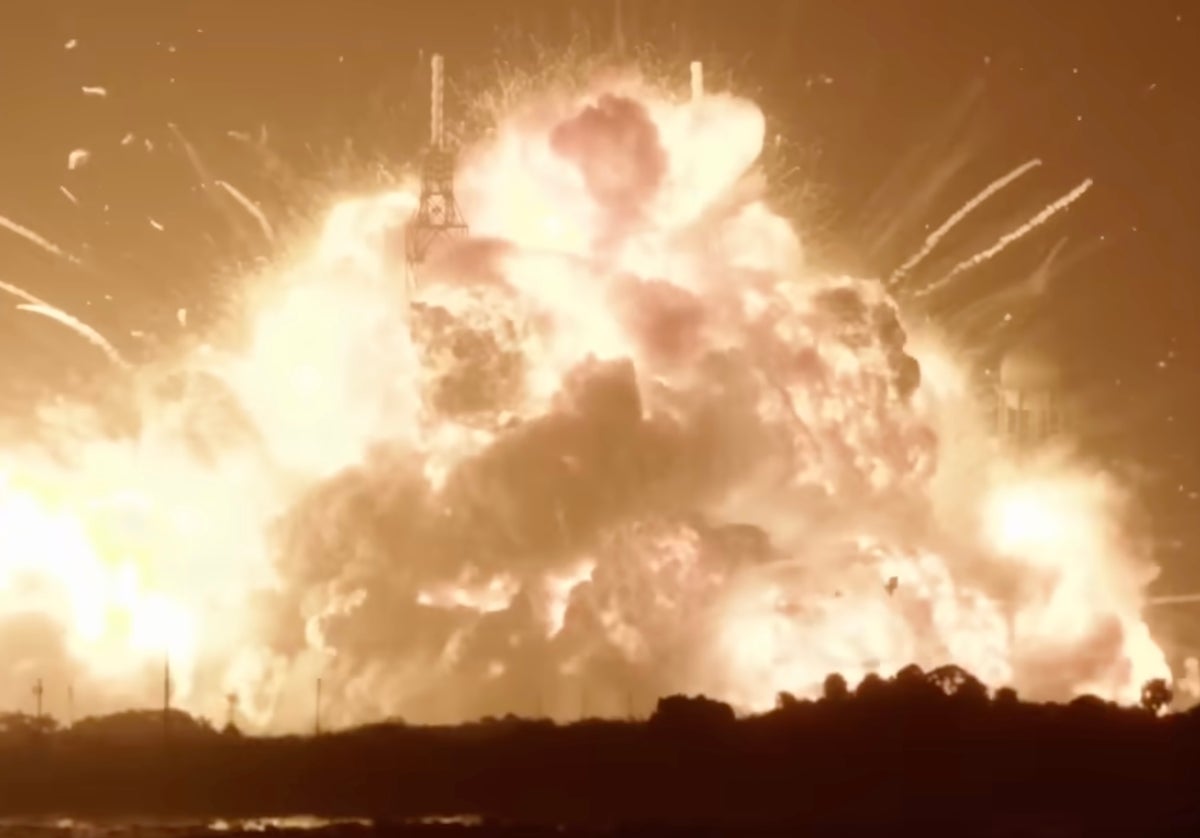
Blue Origin’s New Glenn rocket suffered a catastrophic failure on Thursday evening, erupting into a massive fireball during a pre-launch hotfire test at Cape Canaveral Space Force Station in Florida. The explosion, which occurred just before 9 p.m. EDT, destroyed the rocket and severely damaged its launchpad, raising serious questions about the future of the company’s NASA-backed lunar missions. The incident has cast a shadow over Blue Origin’s plans to support Artemis III and Artemis IV, key missions in NASA’s effort to return astronauts to the moon by 2028, as well as its role in delivering lunar rovers to the lunar surface. While no injuries were reported, the blast scattered debris across the surrounding area, prompting Blue Origin to warn the public not to touch any unidentified objects and to report findings to authorities.
Jeff Bezos, founder of Blue Origin, acknowledged the severity of the mishap in a post on X, stating that all personnel were safe but describing it as “very rough day.” He added that the root cause was not yet known but that the company was already investigating the failure. Blue Origin later confirmed the anomaly in a statement, noting that debris from the explosion may wash ashore in the coming days. The company’s sole operational launchpad has been rendered unusable, likely requiring months of repairs. This setback threatens to derail Blue Origin’s timeline for supporting NASA’s Artemis program, which is already under pressure from international competition, including China’s stated goal of landing astronauts on the moon by 2030.
The explosion comes at a critical juncture for Blue Origin, whose New Glenn rocket was slated to carry a payload of 48 satellites for Amazon’s Project Kuiper, a rival to SpaceX’s Starlink constellation. Although the satellites were not onboard at the time of the blast, the incident raises broader concerns about the rocket’s reliability and schedule. SpaceX CEO Elon Musk extended his support to Blue Origin in the aftermath, posting on X that he wished the company a speedy recovery. The rivalry between the two billionaires has intensified in recent years, with both firms vying for dominance in satellite-based internet and lunar exploration. However, the accident underscores the technical challenges and inherent risks of spaceflight, particularly for newcomers to the industry.
NASA has not yet commented on the long-term implications of the failure, but the loss of the launchpad and delay in New Glenn’s development could complicate the agency’s ambitious lunar plans. With Artemis III and IV already facing technical hurdles, the explosion further highlights the fragility of the current ecosystem. Blue Origin has pledged to rebuild and recover, but the path forward will require a thorough investigation, significant investment, and a renewed commitment to safety. For now, the space community watches closely as the industry grapples with the consequences of one of the most dramatic launch failures in recent memory.