Britain is a swamp of lies and disinformation – and we got here on the Brexit bus | Jonathan Freedland
Ten years after the vote, our economy is battered – and our national conversation darkens by the day. Still, there is reason for hope W hen the anniversary comes, later this month, few will be in the mood to look back. All the political talk will be of the Makerfield byelection,
Ten years after the vote, our economy is battered – and our national conversation darkens by the day. Still, there is reason for hope
W hen the anniversary comes, later this month, few will be in the mood to look back. All the political talk will be of the Makerfield byelection, of the future of this government and this prime minister. And yet, it would be wise to reflect on what happened on 23 June 2016 – if only because the choices Keir Starmer and his would-be successors face, indeed the entire political and cultural landscape we now inhabit, are informed or were shaped by that event. We are living in Brexit Britain.
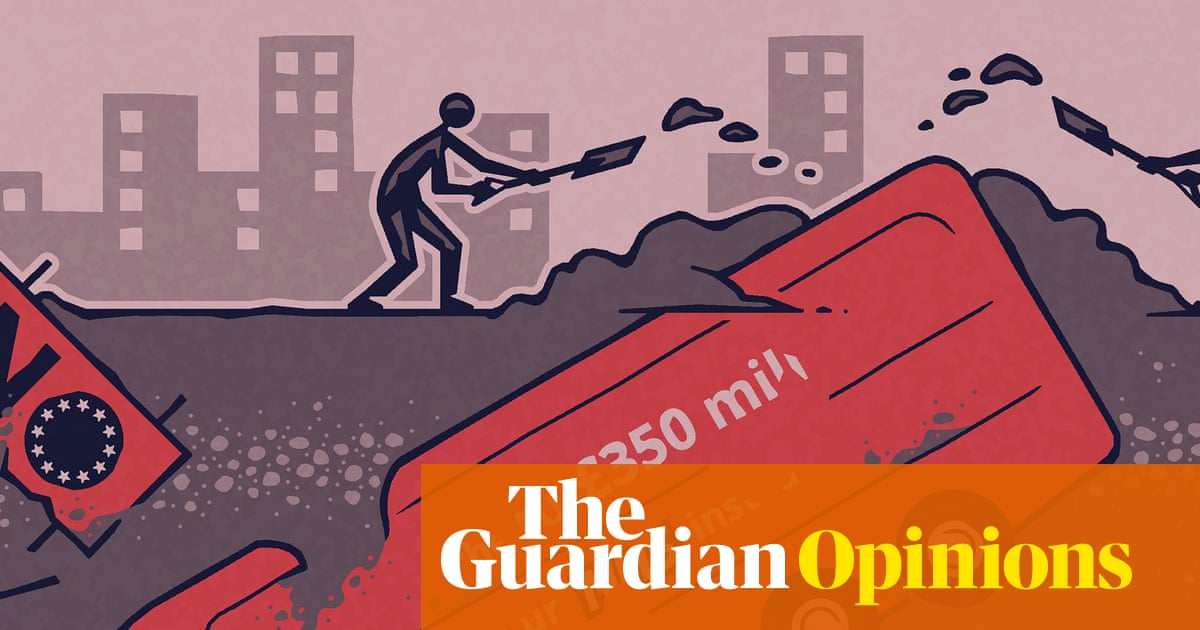
A useful prompt comes from the upcoming two-part BBC series Brexit: A Very British Civil War , made by the master documentarian Norma Percy. Speaking to (nearly) every key player, it brings it all back – the red bus , “take back control”, the pantomime river battle of Nigel Farage v Bob Geldof .
It reminds you of things some may have forgotten, including the extent to which this whole thing came about as a wheeze, a clever tactical ploy, plotted by the careless people who were then running the country. In 2013, David Cameron and George Osborne sought to placate noisy Eurosceptics in their own ranks by promising an in/out referendum after the next election – a pledge they assumed they’d never have to honour because they were sure they’d fail to win an outright majority in parliament, whereupon they would cheerfully trade the promise away as a concession to the Lib Dems.
As if that were not cavalier enough, Britain’s place in Europe became dependent on the soap-opera dynamics of the Notting Hill set: it was all tennis in Regent’s Park and weekends at Chequers, Michael (Gove) letting down Dave and what will Sam (Cameron) think of Boris. Johnson insists he didn’t “give a fuck about being prime minister,” while Osborne begs to differ : “It was nothing to do with the EU, Britain’s place in the world. It was Game of Thrones. That’s what Boris Johnson was playing. And he could see the Iron Throne right there about to be vacated.” This stuff was all-consuming at the time – and yet what was at stake, as these Etonians worked out their schoolboy rivalries, was nothing less than the destiny of the UK. That recklessness with the futures of 70m people remains unforgivable – and the guilt belongs to Cameron and Osborne almost as much as to Gove and Johnson.
More important than the origin story, however, is the legacy. We see that around us every day. Start with the economy. The remain campaign was mocked at the time as “project fear”, spreading gloom by warning that Britain outside the EU would be poorer, to the tune of 6% of GDP. Yet here we are a decade later and, if anything, remain was not pessimistic enough. The drop in GDP is now estimated to be between 6% and 8% , with investment down by as much as 18%. Trade is on course to be 15% less than it would have been had we stayed in the EU, according to the Office for Budget Responsibility, while a staggering 85% of those who import or export goods report problems that they didn’t have before. Remainers said that Brexit would be a slow puncture, as the air was let out of the British economy. So it has proved, except it’s not been that slow.
Brexit’s other legacy, besides upending the old Labour-Tory duopoly, is not measurable in pounds or percentages but is just as real. It is visible in the coarsening and darkening of the national conversation, in the aggression and even hatred that, previously pushed to the margins, now loiter in the centre of the public square. This week the leader of the party that brought us Brexit warned of civil war .
It would be wrong to cast the referendum as the sole cause of this shift – Brexit was, in part, a symptom of the change – and we can all see the role social media and the likes of Elon Musk have played in degrading the discourse . But Brexit both accelerated and intensified that process.





