Bumblebees use tools to solve complex problems—despite not being trained to do so
Bumblebees use tools to solve complex problems—despite not being trained to do so Bumblebees appear to be capable of coming up with creative solutions to new problems to get a sugary reward—and their strategies include cheating Contrary to their name, bumblebees are no bumbling
Bumblebees use tools to solve complex problems—despite not being trained to do so
Bumblebees appear to be capable of coming up with creative solutions to new problems to get a sugary reward—and their strategies include cheating
Contrary to their name, bumblebees are no bumbling oafs. A new study published in Science on Thursday found that these bees utilized tools to solve complex problems to win a sugary treat, even if they had never been trained to use the tools in any context. In fact, some of the bees even cheated—skipping the problem altogether—to reap the reward, the researchers found.
This isn’t the first time bumblebees have been seen to use tools to get what they want. A 2016 study, for example, found that such bees could learn to pull a string to receive a reward —and that untrained bees could learn this trick from their more educated peers. Still, it adds to the evidence that creative problem-solving and tool use aren’t just the domain of larger-brained animals, such as birds and apes. Bumblebees’ brains are relatively primitive—they have around one million neurons, compared with the 86 billion or so in human brains—yet the new experiment indicates that complex problem-solving doesn’t necessarily require complex gray matter.
“The number of neurons is not correlating with cognitive abilities,” says Olli Loukola, a behavioral ecologist at the University of Turku in Finland and a co-author of the new study. “It might be that animals with bigger bodies require bigger brains, or it could be that animals that need more long-term memory require bigger brains, whereas bees are living in rapidly changing environments.”
If you're enjoying this article, consider supporting our award-winning journalism by subscribing . By purchasing a subscription you are helping to ensure the future of impactful stories about the discoveries and ideas shaping our world today.
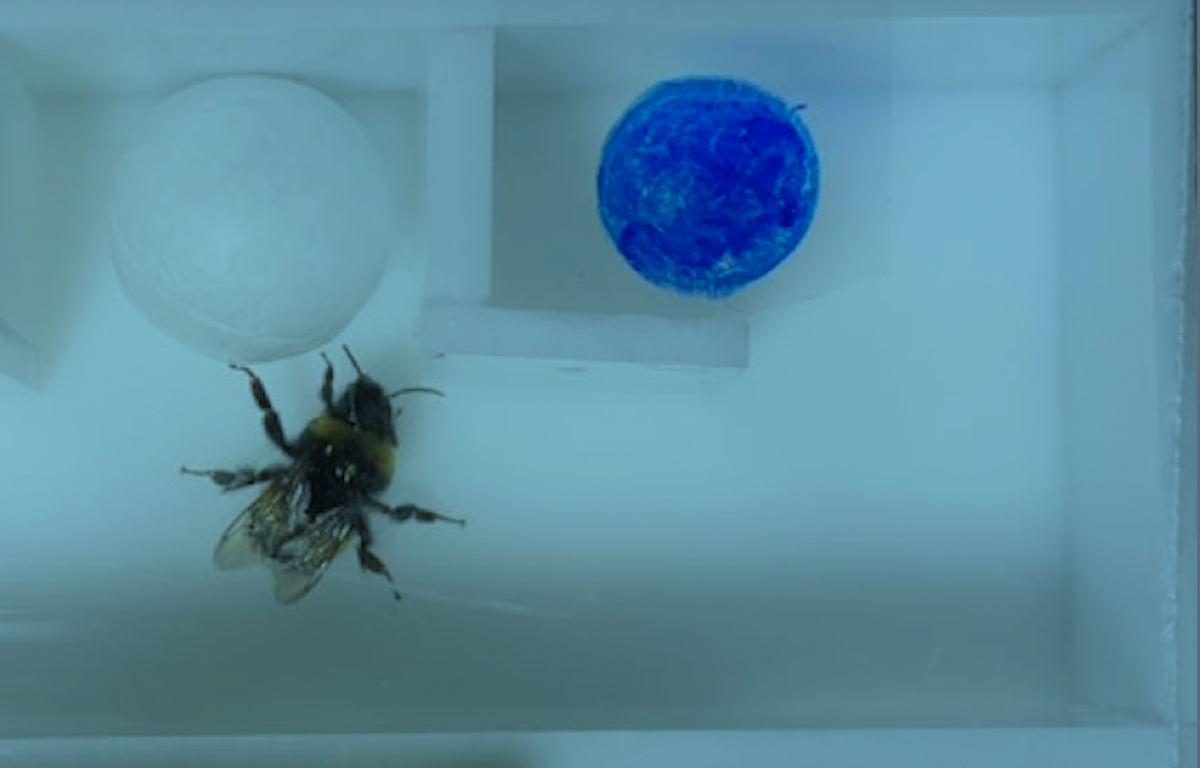
In a series of experiments, bumblebees were divided into groups and put through a series of tests, all involving the same basic setup: a small chamber with several pits in the floor. If the bees rolled a Styrofoam ball into the correct pit, they could climb onto it to drink from a sugar-filled fake flower on the ceiling of the chamber.
The chamber was built so the bees couldn’t hover under the flower to drink from it. Nor could they reach it from standing on the floor. Instead the bees had to get the ball into the right pit to climb on top and avoid all the other pits. The test was specifically designed to be unlike anything the bees would face in their natural environments. Apparently bumblebees really enjoy rolling balls for fun, but there is no evidence that bees in the wild might roll a ball into place to reach a flower for food.







