India and EU launch clean energy supply chain plan
Italy’s December 2025 solar auction used non-Chinese equipment at 17% higher costs, yet 90% of EU solar modules still come from China, showing supply chain dependence. India increased domestic solar m
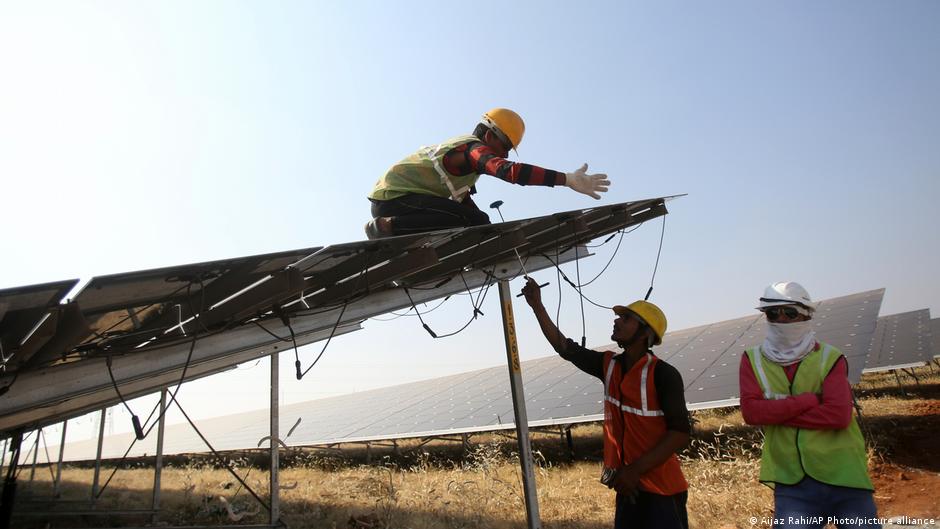
In December 2025, Italy awarded contracts for 1.1 gigawatts of solar power across 88 projects—all using equipment made outside China. The winning bids
Read Full Story at DW World →Why This Matters
Global energy security now hinges on breaking China’s near-monopoly over clean energy supply chains, forcing geopolitical realignments that could reshape industrial policy for decades. The EU’s willingness to pay a 17% premium for non-Chinese solar components—despite the economic strain—signals desperation to reduce vulnerabilities exposed by pandemic disruptions and geopolitical tensions.
Background Context
China’s dominance in solar supply chains wasn’t accidental; it emerged from state-directed industrialization, massive subsidies, and export-driven growth, leaving competitors scrambling to catch up. Meanwhile, India’s solar push faces hurdles like land acquisition, financing costs, and a fragmented domestic manufacturing base, despite policy incentives like production-linked schemes.
What Happens Next
Watch for whether India can leverage its scale and labor cost advantages to undercut Chinese prices, or if the EU’s high-cost experiments will force a retreat from green energy ambitions. Diplomatic efforts, like the EU-India trade talks or U.S.-led Indo-Pacific supply chain initiatives, may accelerate alternative sourcing—but only if financing and infrastructure gaps are bridged.
Bigger Picture
This isn’t just about solar panels; it’s a microcosm of a broader decoupling where nations prioritize resilience over cost efficiency, risking slower adoption of critical clean energy technologies. The scramble for supply chain diversification could fragment global markets into competing blocs, undermining the collaborative model needed to tackle climate change.