Archaeologists find 2,000-year-old Roman shipwreck off Sicily
Archaeologists discovered a 2,000-year-old Roman shipwreck off Sicily, carrying intact amphorae and anchors, revealing trade routes and shipbuilding techniques. The site, protected by Italian law, wi…
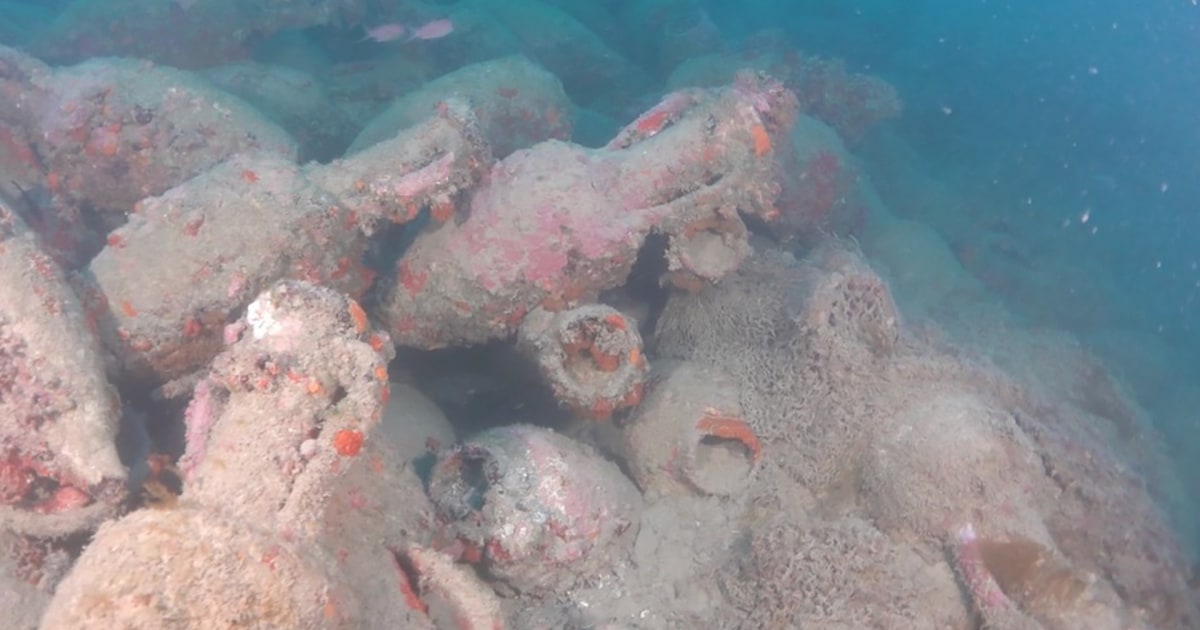
Divers working off the coast of Sicily have found a Roman shipwreck dating from between the second and first centuries B.C., roughly 2,000 years old. The wreck lies about three miles offshore near the port of Licata, at a depth of about 260 feet. Local fishermen first spotted amphorae — the distinctive clay jugs used to carry wine, oil, and grain — caught in their nets and alerted authorities. Underwater archaeologists from the Sicilian Superintendency for the Sea confirmed the discovery late last month, calling it one of the most significant Roman wrecks found in the central Mediterranean in recent years.
The wreck matters because Sicily sat at the heart of Rome’s grain trade during the late Republic, when Sicily supplied much of Rome’s bread. Ships like this one were the lifeblood of the empire, carrying staples from estates to feed a growing city. Lead anchor stocks — heavy, T-shaped pieces used to stabilize ships — and hundreds of intact amphorae suggest the vessel sank quickly, preserving its cargo and structure. Experts believe the cargo could reveal new details about trade routes, shipbuilding techniques, and daily life in the ancient Mediterranean.
Archaeologists plan to return to the site within weeks using remote-controlled cameras and robotic arms to document the wreck without disturbing it. They’ll also map the debris field and collect samples from the amphorae to determine their origin and contents. The wreck is protected under Italian law, so any salvage would require a formal archaeological excavation, likely involving international partners given the depth and complexity. Sicilian officials say the find underlines the untapped potential of the seabed around the island, which holds thousands of known and unknown wrecks from Greek, Roman, Phoenician, and Byzantine eras.
If confirmed through lab analysis, the wreck could rank alongside other major Roman shipwrecks like the one found off the island of Pantelleria in 2021, which yielded 1,000-year-old glassware and coins. Sicily’s underwater cultural heritage is vast but poorly explored due to funding limits and depth challenges. This discovery could push Italy to invest more in deep-sea archaeology and open new research opportunities for historians and archaeologists worldwide. For now, the wreck remains a silent testament to Rome’s maritime empire — and a promise of what still lies beneath the waves.
Read Full Story at NBC News →