China's Tianwen-2 captures first image of Kamo’oalewa
China’s Tianwen-2 spacecraft captured its first image of Kamo’oalewa, a 66-foot-wide asteroid orbiting Earth, after a 400-day, 621-million-mile journey to prepare for sample collection in 2027. The mi
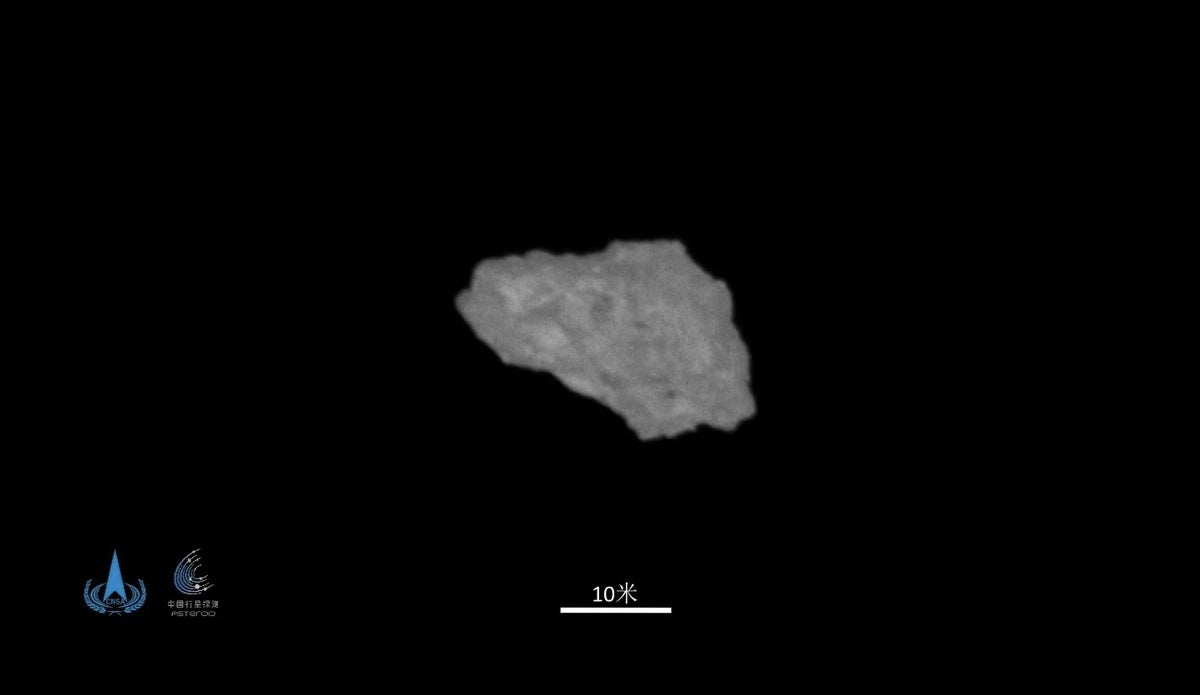
Chinese spacecraft Tianwen-2 has sent back its first photo of Kamo’oalewa, Earth’s “mini moon,” as it races toward the asteroid on a mission to grab s
Read Full Story at Scientific American →Why This Matters
The successful imaging of Kamo’oalewa by Tianwen-2 marks a critical step in China’s deep-space exploration ambitions, demonstrating the nation’s growing prowess in autonomous navigation and asteroid rendezvous—a capability that could redefine its standing in the global space race. Beyond technological bragging rights, this mission underscores the strategic importance of near-Earth objects as potential resource hubs and staging points for future interplanetary missions.
Background Context
Kamo’oalewa, discovered in 2016, has long puzzled astronomers due to its Earth-like orbit and mysterious composition, fueling speculation about its origin—whether it’s a fragment of the Moon or a captured asteroid. China’s Tianwen program, initially focused on Mars and the Moon, has expanded into asteroid science, signaling a broader shift in Beijing’s space priorities from lunar exploration to solar system-wide objectives.
What Happens Next
The 2027 sample collection phase will test China’s ability to execute complex robotic operations far from Earth, a prerequisite for eventual crewed missions to asteroids or Mars. If successful, Tianwen-2 could pave the way for more ambitious projects, including asteroid deflection strategies or in-situ resource utilization—areas where traditional space powers like the U.S. and Russia have yet to achieve dominance.
Bigger Picture
This mission aligns with a broader trend of spacefaring nations treating asteroids as both scientific curiosities and economic assets, with China now joining Japan and the U.S. in prioritizing their study. As geopolitical competition extends beyond Earth, control over asteroid data and resources may become a new frontier in international power dynamics, reshaping alliances and rivalries in the decades ahead.