Chrystia Freeland negotiated with Trump. Now she's watching a trade war unfold
Former Canadian Finance Minister Chrystia Freeland speaks at the Peterson Institute for International Economics in Washington on April 12, 2023. Kevin Dietsch/Getty Images hide caption Canada's late…
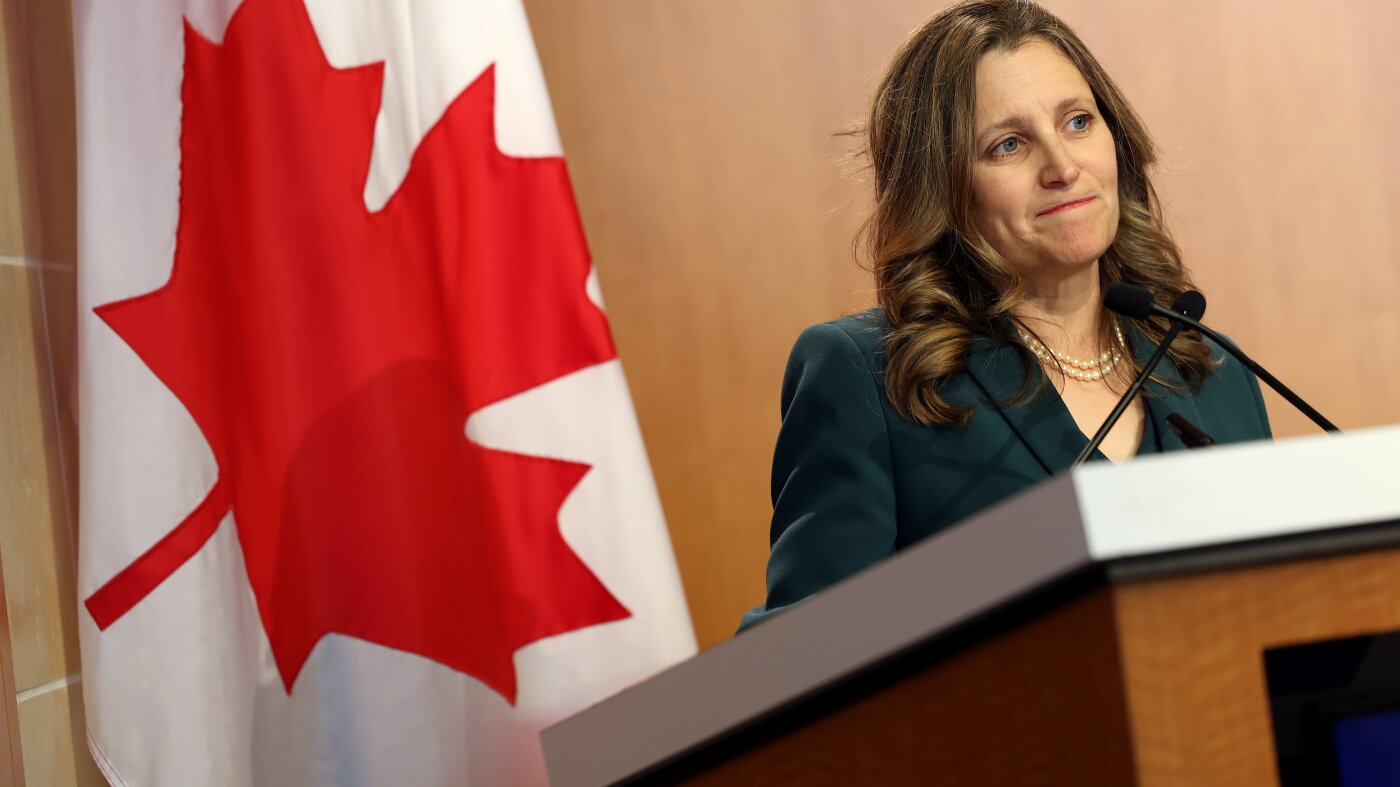
Former Canadian Finance Minister Chrystia Freeland speaks at the Peterson Institute for International Economics in Washington on April 12, 2023. Kevin Dietsch/Getty Images hide caption
Canada's latest tariffs on American goods took effect Tuesday. It's another escalation in a trade war that is raising costs and testing a relationship that, until recently, was among the closest in the world.
Prime Minister Mark Carney's government imposed tariffs of up to 50% on about $20 billion worth of U.S. goods in response to U.S. tariffs on Canadian products. The latest measures match U.S. tariffs dollar for dollar, though not product for product.
But in Canada, the fight has become about more than tariffs. Many Canadians say they feel betrayed by a longtime ally. President Trump has repeatedly suggested Canada should become the 51st state and has said he would use economic pressure, rather than military force, to make that happen. Canadians have cut back on travel to the United States and boycotted American goods as tensions have grown.
And the economic ties are hard to untangle. U.S. auto exports to Canada have fallen 22% since the trade dispute began. Canada is the largest customer for 26 U.S. states and a top-three customer for 45.
Chrystia Freeland understands the relationship from her time at the negotiating table. The former Canadian deputy prime minister and finance minister helped negotiate the U.S.-Mexico-Canada Agreement during Trump's first term. Trump once called it "the best trade deal ever."
Now, Freeland says, the U.S. risks pushing longtime allies away.
"If Americans are concerned about China in the world, which I am, the best way to act on China is with an alliance with America's traditional allies," Freeland told NPR's Morning Edition. "But it has to start with stopping punching your friends in the face, which is what Washington is doing right now."
Read Full Story at NPR News →