Costly fuel pushes more Indians to buy electric cars but challenges remain
Are electric vehicles finally going mainstream in India? A slew of indicators suggests the transition may finally be gathering momentum. The market for electric cars expanded by a solid 25% in the year ending March 2026, while EVs crossed the important 5% threshold in India's pa
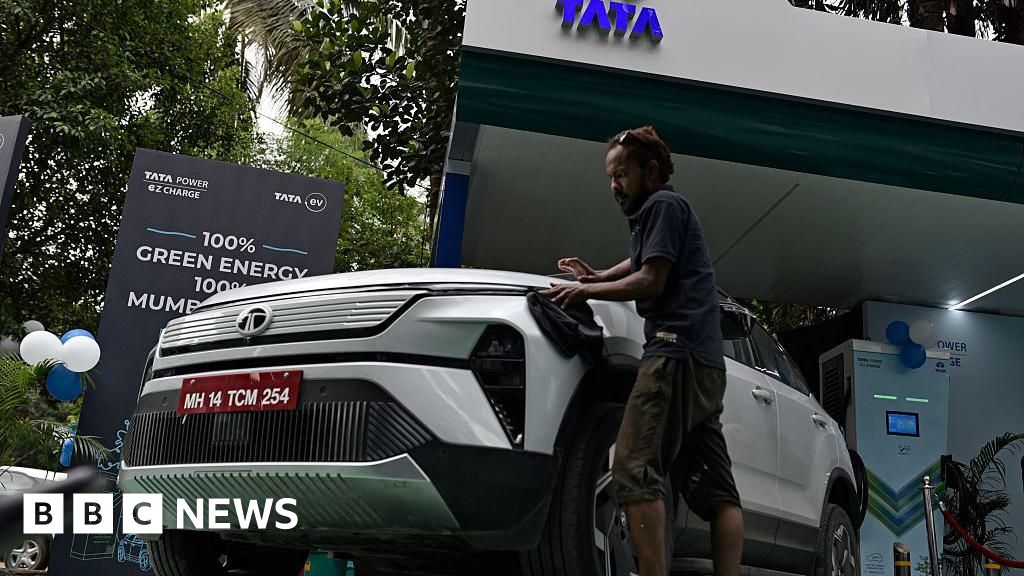
Are electric vehicles finally going mainstream in India? A slew of indicators suggests the transition may finally be gathering momentum.
The market for electric cars expanded by a solid 25% in the year ending March 2026, while EVs crossed the important 5% threshold in India's passenger vehicle market earlier this year - a figure often seen as a tipping point for mass-market adoption.
"The transition is no longer directional but substantive," India's automobile dealers association said in a press note recently.
Adoption is accelerating particularly in larger cars priced above one million rupees ($10,481; £7,777), where one in every 10 vehicles sold is now electric. Electric three-wheelers and motorbikes already account for more than 30% and 15% of sales in their respective categories.
Interest in electric cars has spiked sharply in the last few months, particularly against the backdrop of the Middle East conflict.
India imports nearly 90% of its oil, and state-run fuel retailers have been forced to raise pump prices after keeping them relatively stable for four years, as crude prices jumped by 50%.
Prime Minister Narendra Modi has also urged Indians to car pool, use public transport and work from home to conserve fuel.
"This rising uncertainty, alongside elevated fuel prices, acts as an incremental driver strengthening the case for EVs," says Nomura, the Japanese brokerage.