🌍 World News
Live
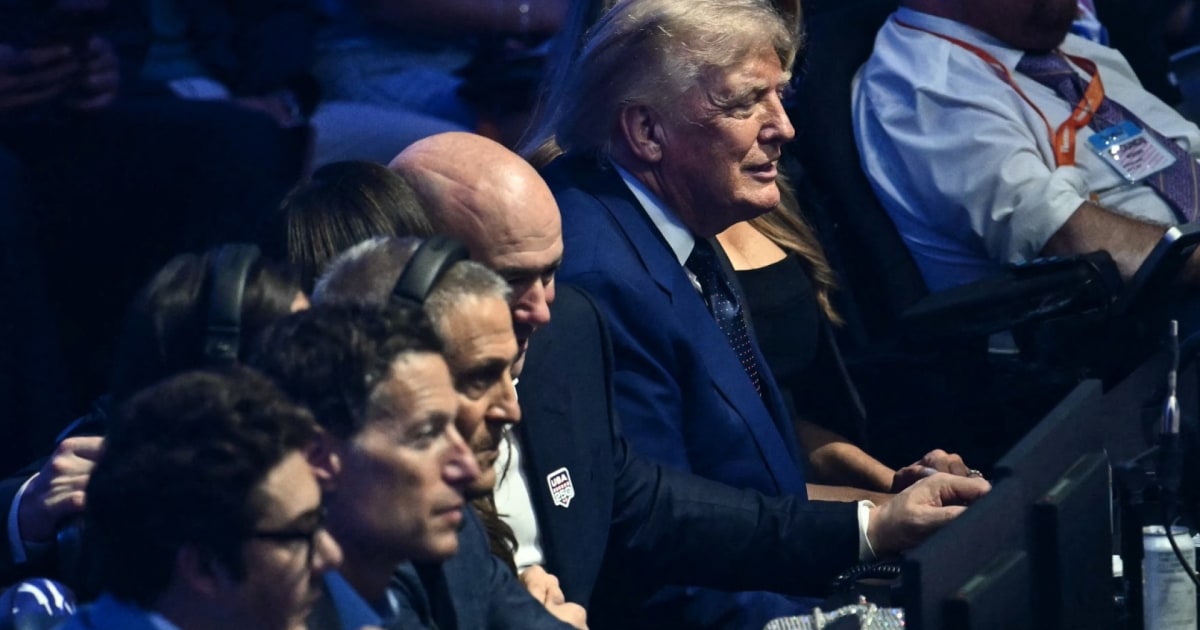
Crowd at UFC Freedom 250 sings ‘Happy Birthday’ to Trump
During UFC Freedom 250, the crowd sang “Happy Birthday” to President Donald Trump as the UFC hosted a fight card on the White House’s South Lawn.
NBC News — 14 June 2026
Text:
13
0
0
During UFC Freedom 250, the crowd sang “Happy Birthday” to President Donald Trump as the UFC hosted a fight card on the White House’s South Lawn. Thi
Read Full Story at NBC News →
⚡ Quickyla Analysis
Original editorial context — not sourced from the article above
The sight of a UFC audience serenading Donald Trump with "Happy Birthday" on the White House South Lawn is more than just a quirky spectacle—it’s a window into the evolving relationship between sports entertainment and political spectacle. While mixed martial arts has long courted crossover appeal with celebrity figures, this moment underscores how live sporting events are increasingly becoming extensions of political performance. The UFC’s decision to stage a major event on federal property, with a sitting president as an unmistakable presence, blurs the line between entertainment and statecraft in ways that raise questions about access, influence, and the commodification of political symbolism. For observers, the image is jarring not because of the singing itself, but because it normalizes a fusion of spectacle and governance that would have been unthinkable in earlier eras of American public life.
This isn’t the first time sports have intersected with Trump’s brand of populist politics. His presidency saw a concerted effort to court fight fans, particularly through high-profile endorsements of UFC personalities and a well-documented affinity for combat sports culture. But staging an event on the South Lawn—a space traditionally reserved for diplomacy, memorials, or ceremonial functions—elevates the encounter from mere symbiosis to something more deliberate. It signals a willingness among powerful institutions to leverage sports as a venue for political messaging, potentially normalizing such arrangements in the future.
For critics, the scene evokes concerns about the militarization of public space and the instrumentalization of entertainment for partisan ends. For supporters, it may represent a rare moment of cultural alignment between a grassroots fanbase and a political figure. What remains unclear is whether this is an isolated stunt or the beginning of a broader trend, where major sporting events become de facto campaign rallies. Either way, the optics of a UFC octagon ringed by White House columns will linger as a defining image of how sports, politics, and spectacle continue to merge in the public imagination.
Sources

🌍 World News
Man fleeing police attacked by alligator before continuing his getaway, Louisiana authorities say
🌍 World News
US crude exports hit record high in May as Iran war tightens global oil supplies

🌍 World News
Agitators outside Delaney Hall set up organized logistics operation before Newark protests began

🌍 World News
French doctors sound alarm over drinking water pollution

🌍 World News
Iran, Kuwait, Bahrain hit: Is the war in the Gulf escalating again?

🌍 World News
Four people trapped in flooded cave in Laos pulled to safety

