David Hockney depicted a 'peaceful, gay paradise' when homosexuality was a crime
One of David Hockney's early paintings depicts a couple wrapped in an embrace. Painted in 1961, this picture may sound like it captures a relatively traditional romantic scene. But at the time, it was a radical piece of work. That is because the couple in the painting are both
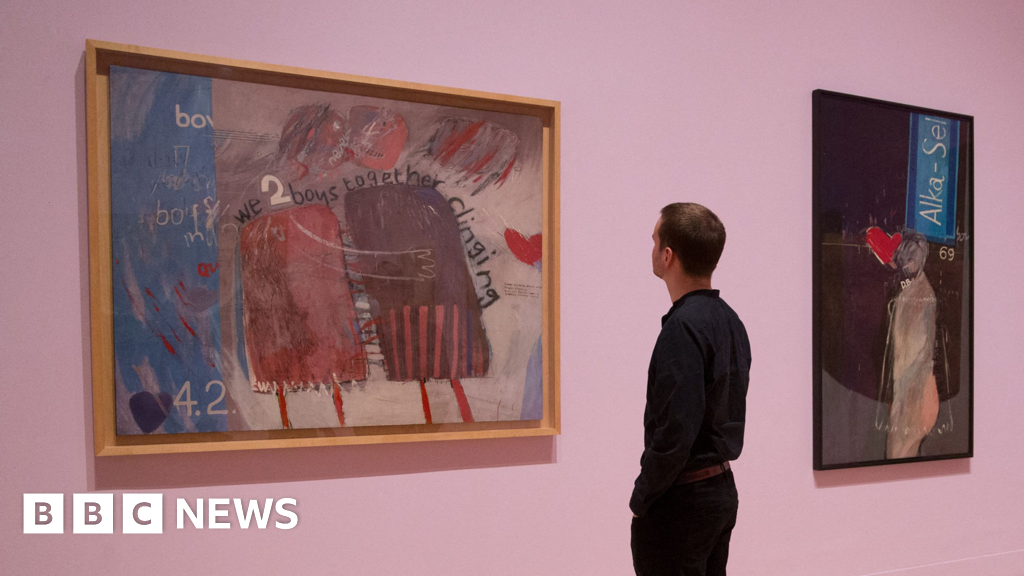
One of David Hockney's early paintings depicts a couple wrapped in an embrace.
Painted in 1961, this picture may sound like it captures a relatively traditional romantic scene.
But at the time, it was a radical piece of work. That is because the couple in the painting are both men, and in 1961 it was still illegal to be gay in the UK.
Hockney, who has died aged 88 , painted We Two Boys Together Clinging as a second-year student at the Royal College of Art.
Homosexuality was only partially decriminalised some six years later, in 1967 , when the law changed to allow sex between two men "in private", so long as they were both over the age of 21.
The 1961 painting, inspired by a Walt Whitman poem of the same name, was an early statement of intent by an artist who would go on to become a defining figure of British – and LGBT+ – culture.
Over the next decade, Hockney continued to break social taboos by celebrating same-sex relationships in his art - often by depicting the quiet, everyday moments of gay domestic life.
There is an underground quality to some of Hockney's early work. His pictures are reminiscent of graffiti: spiky, expressive and defiant, rendered in bold lines and block colours.





