Egypt uncovers 4th-century Byzantine city in western desert
Egypt revealed a preserved Byzantine city in the western desert, offering rare insight into daily life between the 4th and 6th centuries. This find proves the arid region was a vital hub for trade and
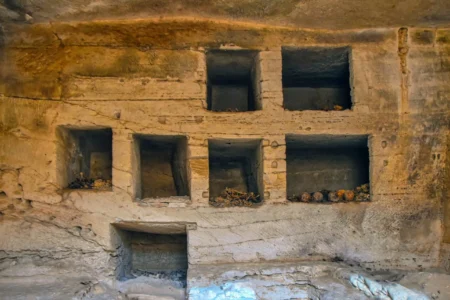
Egyptian archaeologists have officially unveiled a remarkably intact Byzantine-era residential city hidden deep within the western desert, marking one
Read Full Story at Crux Now →Why This Matters
This discovery reorients our understanding of Egypt’s economic geography during late antiquity, challenging the assumption that major urban centers were confined to the Nile Valley. By revealing a thriving Byzantine-era settlement in the western desert, archaeologists have exposed a previously overlooked network of trade and cultural exchange that linked the Mediterranean to Saharan Africa. For historians, it underscores how human ingenuity overcame environmental constraints long before modern technology.
Background Context
The western desert of Egypt, now synonymous with arid desolation, was once a crossroads of the ancient world. During the Byzantine era, this region hosted a mix of Roman, Coptic, and indigenous communities whose interactions shaped the religious and commercial landscape of North Africa. While Egypt’s Nile Delta and Valley have been extensively studied, the Sahara’s role as an active corridor rather than a barrier has only recently gained scholarly attention.
What Happens Next
This find will likely spur renewed excavation efforts in the western desert, where silt and shifting sands have long obscured earlier civilizations. Scholars will now scrutinize how this city’s economy functioned—whether as a seasonal trading post or a permanent hub—and whether similar settlements exist nearby. The discovery also raises questions about preservation: if one city survived this long, how many others might still be hidden beneath the dunes?
Bigger Picture
This breakthrough aligns with a growing trend of rediscovering “lost” cities in unexpected places, from the Amazon to the Arabian Peninsula. It reflects how climate shifts and human adaptation are reshaping our view of ancient history, where prosperity often hinged on resilience rather than proximity to rivers. For Egypt, it also bolsters the country’s archaeological narrative beyond the pharaonic era, offering a more nuanced story of continuity and transformation.