El Niño is here and could tip Earth to a new record hot year
El Niño is here and could tip Earth to a new record hot year Scientists have been expecting El Niño to set in for quite a while now—and it’s finally official By Meghan Bartels edited by Andrea Thompson El Niño is officially here—and the whole planet is likely to feel the brunt
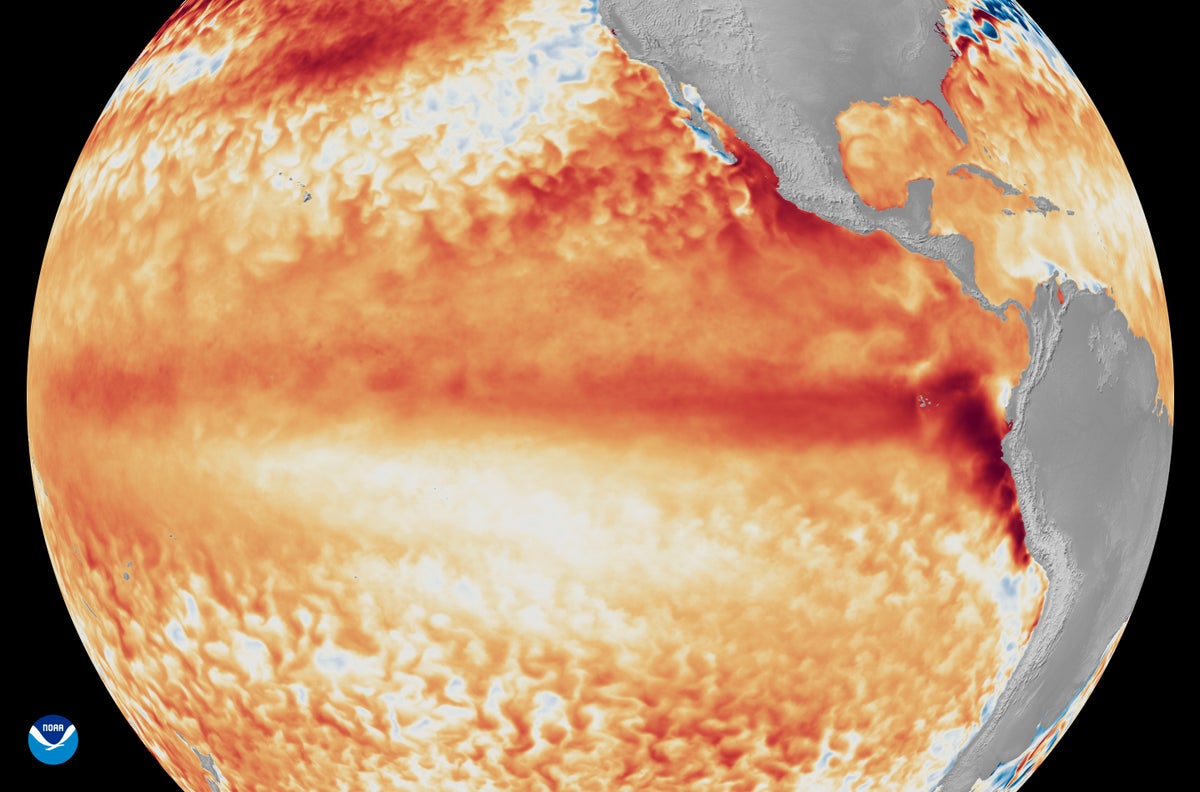
Scientists have been expecting El Niño to set in for quite a while now—and it’s finally official
El Niño is officially here—and the whole planet is likely to feel the brunt of it in the coming months.
The weather pattern officially took hold within the past month, according to a statement from the National Oceanic and Atmospheric Administration released on June 11. In addition, forecasts are very confident that this will be a strong El Niño throughout the fall and into the winter—possibly even among the strongest El Niños on record, which occurred during 1982–1983, 1997–1998 and 2015–2016.
The announcement is not a surprise—May’s installment of the forecast noted that models suggested El Niño would form this month , and scientists have long been seeing hints of it brewing . “The models started showing signs of it last November,” says Emily Becker, an atmospheric scientist at the University of Miami, who works on the official NOAA El Niño forecast.
If you're enjoying this article, consider supporting our award-winning journalism by subscribing . By purchasing a subscription you are helping to ensure the future of impactful stories about the discoveries and ideas shaping our world today.
The confirmation that El Niño is here, however, lets scientists warn communities around the world about what they might face throughout the rest of this year.
To understand what the planet is in store for, let’s start by explaining what El Niño is: The phenomenon is one phase of a global climate pattern that scientists call the El Niño–Southern Oscillation, which incorporates both the oceans and the atmosphere and has its roots in the Pacific Ocean around the equator. Under average conditions, this region’s surface waters are characterized by a “warm pool” in the west and a “cold tongue” stretching out to the east, says Antonietta Capotondi, a physical oceanographer at the University of Colorado Boulder.
During an El Niño, that cold tongue is completely overpowered, with warm waters stretching throughout the equatorial Pacific, sometimes aided by a planetary-scale ocean wave called a Kelvin wave, Capotondi notes. One such wave has been plowing across the Pacific. (During El Niño’s counterpart, called La Niña, which occurred last year , the cold tongue expands westward.)







