Europe’s summer of wildfires is just a taste of what’s to come
Europe’s summer of wildfires is just a taste of what’s to come The area of Europe affected by wildfires is due to triple, a new study finds By Jackie Flynn Mogensen edited by Claire Cameron Europe…
Europe’s summer of wildfires is just a taste of what’s to come
The area of Europe affected by wildfires is due to triple, a new study finds
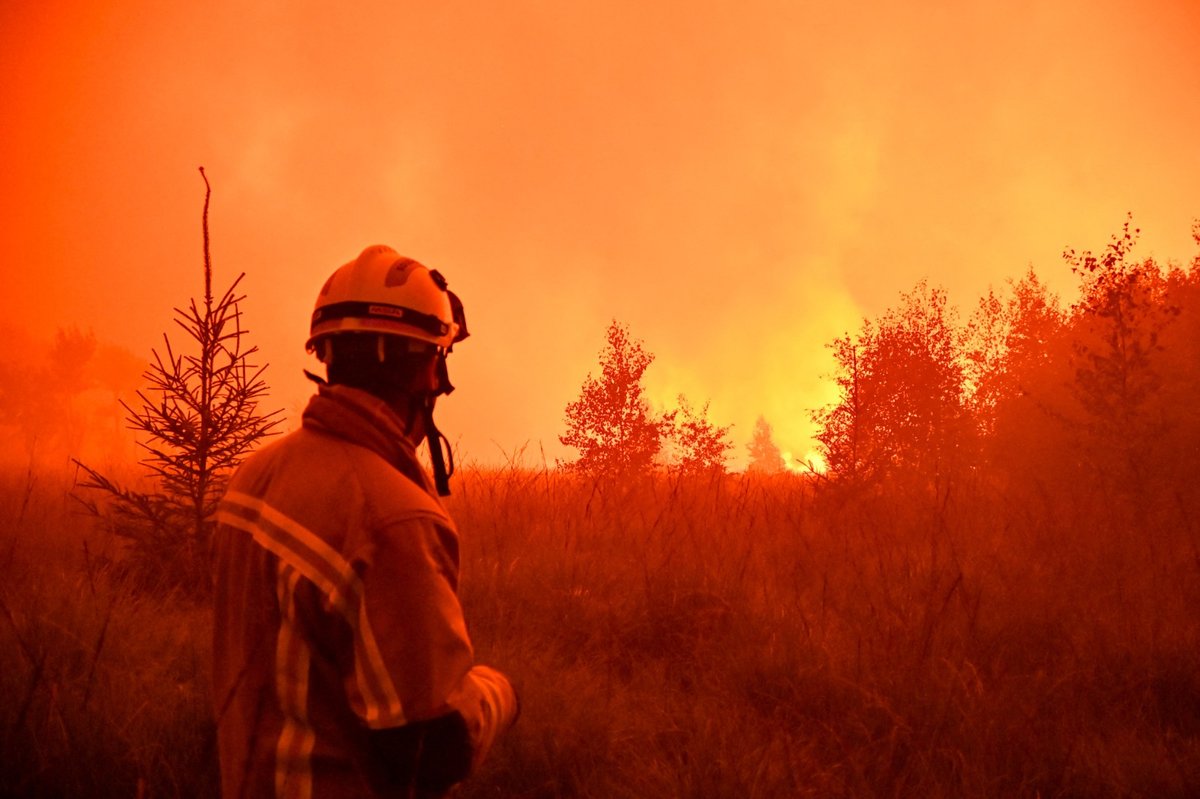
Europe is on fire. This summer the European Union has seen more than 1,750 wildfires. The flames have forced hundreds of thousands of people to evacuate across France and Spain. Belgium is currently battling its worst wildfire in a century . And in some parts of Greece, fires have forced tourism to come to a screeching halt . Some 1.5 million acres have burned so far—and the season isn’t even over yet. Worse still, this is just a taste of what’s to come.
In a new paper published in the journal Global Change Biology, scientists found that the area of Europe that is affected by fires will essentially triple within a lifetime, or by 2100, under a high-emissions scenario. The reason is simple: climate change is heating the continent up, drying the land and turning vegetation into tinder .
“The fires in France, Spain and Greece show how quickly hot, dry and windy weather conditions can stretch firefighters and their resources,” said Kirsten Thonicke, co-senior author of the study and a climate scientist at the Potsdam Institute for Climate Impact Research in Germany, in a statement . “With climate change, conditions could become so extreme that we really hit limits to what we can do to prevent and fight fires once they get to a certain size.”
If you're enjoying this article, consider supporting our award-winning journalism by subscribing . By purchasing a subscription you are helping to ensure the future of impactful stories about the discoveries and ideas shaping our world today.
The researchers compared two possible scenarios: A future in which the world reduces greenhouse gas emissions over the coming decades and a future where nothing changes. In the first scenario, in which global temperatures were predicted to rise by 1.8 degrees Celsius (3.2 degrees Fahrenheit), the area burned by wildfires in Europe every year would increase by 39 percent, the researchers found. In the worse scenario, which had a global temperature rise of about 3.6 degrees C (6.5 degrees F), Europe would see a 192 percent jump.
The study is a warning for the world —many places affected by wildfire are at high risk of those fires becoming bigger, harder to control and more frequent as a result of climate change.
Read Full Story at Scientific American →