🔬 Science
Live
Experience the Launch of NASA’s Roman Space Telescope
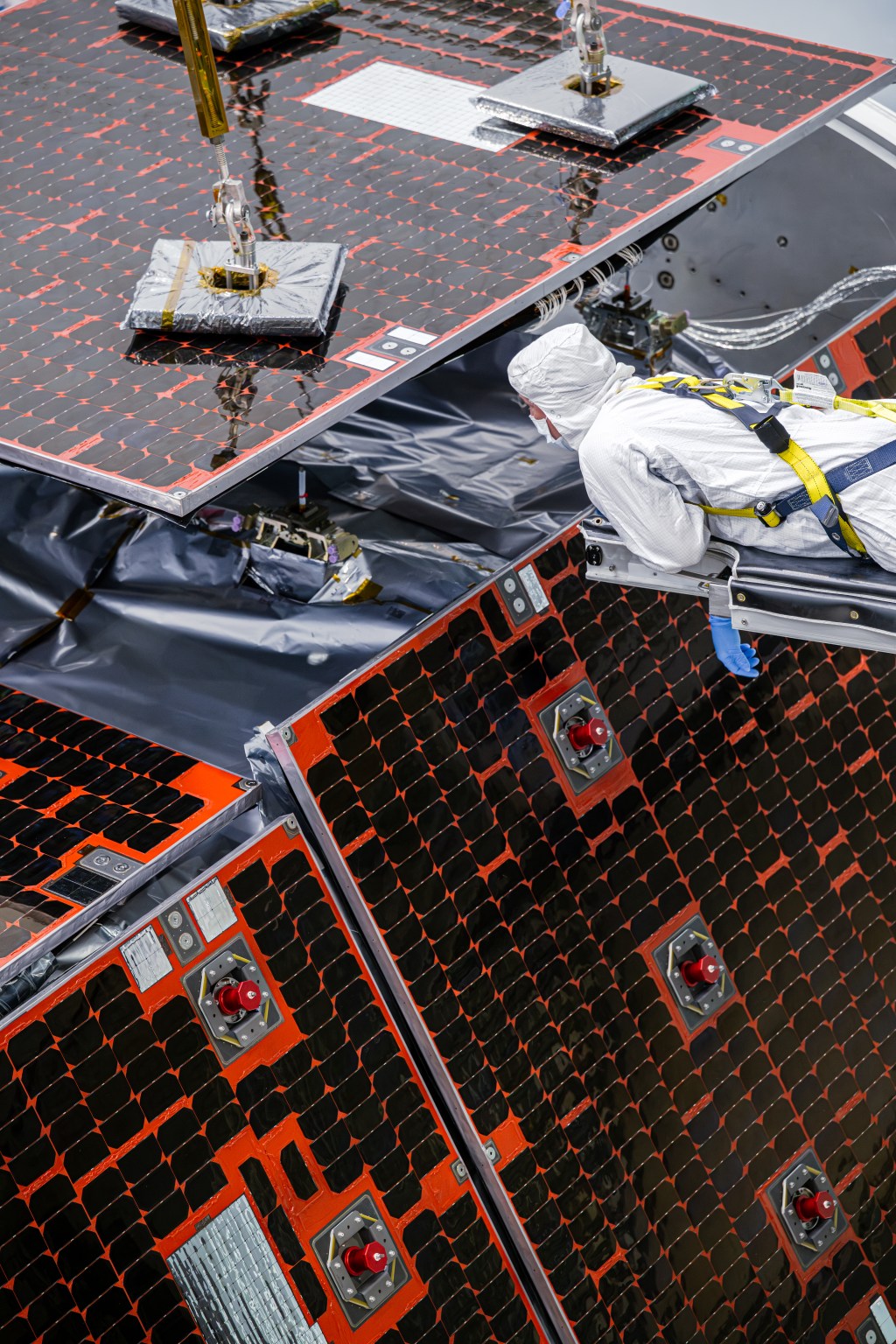
Are you ready for a new view of the universe? The Nancy Grace Roman Space Telescope will reveal distant worlds, dark energy, and the structure of the cosmos, and we want you to be a part of it! Digit…
NASA — 15 June 2026
Text:
23
0
0
Are you ready for a new view of the universe? The Nancy Grace Roman Space Telescope will reveal distant worlds, dark energy, and the structure of the
Read Full Story at NASA →
⚡ Quickyla Analysis
Original editorial context — not sourced from the article above
The upcoming launch of NASA’s Nancy Grace Roman Space Telescope marks a pivotal moment in astronomical research, one that promises to reshape humanity’s understanding of the cosmos. Unlike the James Webb Space Telescope, which focuses on high-resolution infrared imaging of distant galaxies, Roman is designed to conduct wide-field surveys with unprecedented precision. Its ability to map billions of galaxies and detect thousands of exoplanets—including those in the habitable zones of their stars—will provide critical data for scientists studying the universe’s expansion, the nature of dark energy, and the prevalence of Earth-like worlds. This mission isn’t just another step in space exploration; it’s a leap toward answering some of the most fundamental questions about the universe’s origin, fate, and our place within it.
What makes Roman particularly significant is its synergy with existing and future telescopes. While missions like the Hubble Space Telescope revolutionized deep-space observations, Roman’s wide-field capability allows it to survey vast swaths of the sky much faster, creating a treasure trove of data for astronomers to analyze. Its coronagraph instrument, designed to directly image exoplanets, could even reveal signs of life-supporting atmospheres—though this technology is still in its early stages. Additionally, Roman’s role in studying dark energy, the mysterious force accelerating the universe’s expansion, could bridge gaps left by the European Space Agency’s Euclid mission, which is already mapping cosmic structure.
As launch preparations advance, questions linger about the telescope’s long-term impact. Will its exoplanet census reveal that Earth-like planets are common or rare? How will its dark energy measurements reconcile with or challenge current cosmological models? And with the telescope’s data expected to be publicly accessible, will citizen scientists and machine-learning algorithms uncover unexpected phenomena in its vast datasets?
Roman’s launch also underscores a broader trend: the democratization of space science. By engaging the public through livestreams, educational initiatives, and open data policies, NASA is fostering a new era of collaboration between professional researchers and amateur astronomers. In a field often dominated by high-budget missions, Roman’s approach could set a precedent for future telescopes, proving that discovery is not just the domain of elite institutions but a shared human endeavor.
Sources

🔬 Science
'Astonishing': James Webb telescope spots the most chemically primitive galaxy in the ancient universe

🔬 Science
El Niño Is Underway

🔬 Science
Astronomers gaze into the 'Crystal Ball Nebula' and see a vision of our dying sun — Space photo of the week

🔬 Science
Bacteria uncover distinct strategy to import rare sugar polymers, crystal structures show

🔬 Science
NASA Awards Contract for Johnson Space Center Infrastructure

🔬 Science
Repairing DNA damage: Scientists discover a surprising new benefit of melatonin

