Rising sea levels threaten millions in Bangladesh and Maldives, experts warn.
Rising sea levels, accelerated by climate change, threaten millions globally by causing flooding, erosion, and saltwater intrusion, particularly in vulnerable areas like Bangladesh and the Maldives. …
Rising sea levels are increasingly threatening millions of people globally, reshaping economies, livelihoods, and cultural identities. The phenomenon has been significantly accelerated by climate change, which causes glaciers and polar ice sheets to melt and seawater to expand. As a result, coastal areas are facing more frequent flooding, erosion, and saltwater intrusion, which can devastate both natural ecosystems and human settlements.
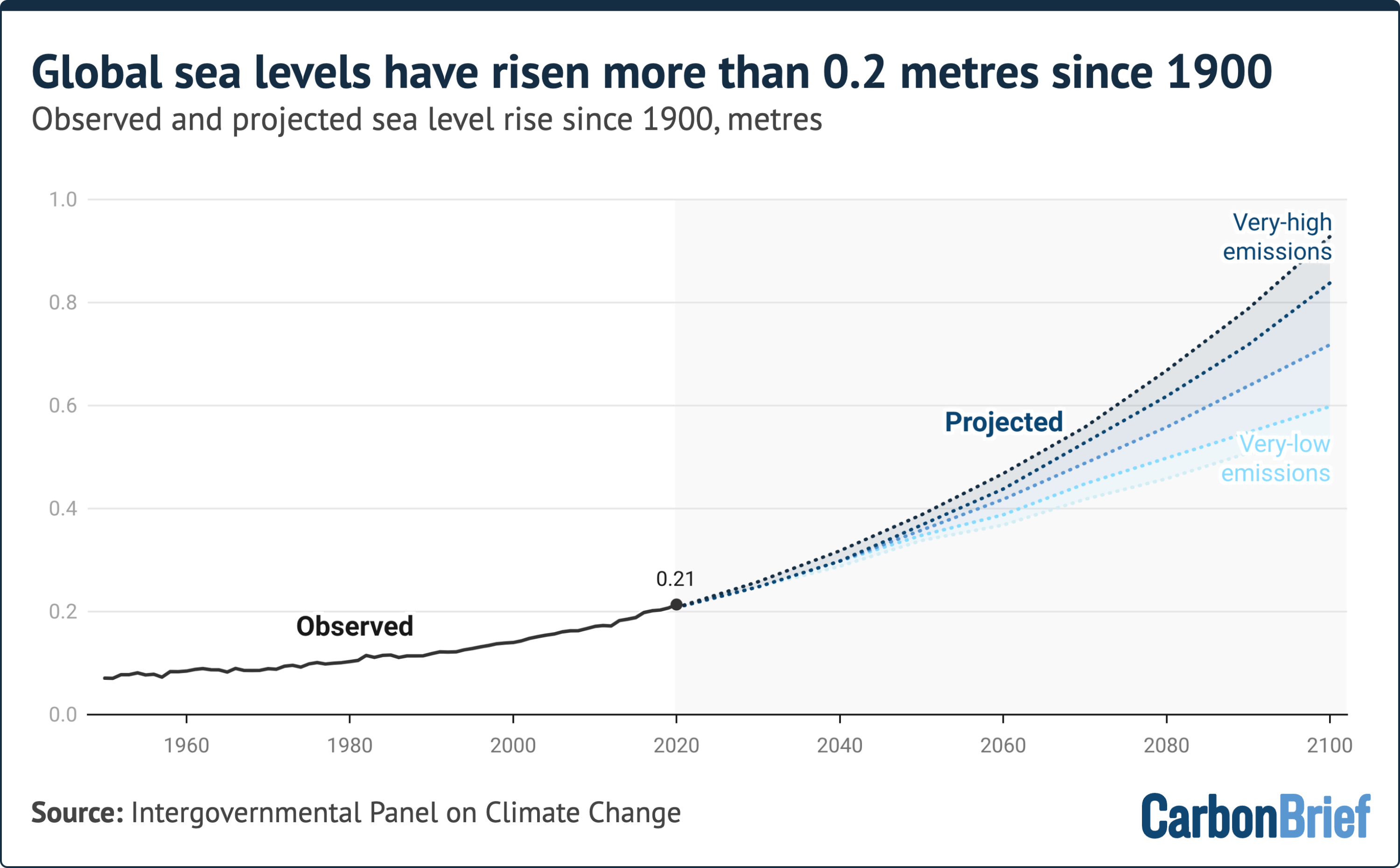
This issue is particularly urgent now as scientists report that global sea levels have risen by about 8-9 inches since 1880, with projections estimating an increase of up to 3 feet by 2100 if greenhouse gas emissions continue at their current pace. Areas like Bangladesh, the Maldives, and parts of the U.S. East Coast are already experiencing the consequences. Many communities are at risk of losing their homes, and traditional ways of life, especially for those dependent on fishing and agriculture, are under threat. The economic implications are staggering; the U.N. estimates that the cost of inaction could reach hundreds of billions of dollars annually.
In response, governments and organizations are beginning to take action. Coastal cities are investing in infrastructure improvements, such as sea walls and improved drainage systems, while others are exploring managed retreat strategies. Countries like the Netherlands are leading the way in innovative water management techniques, demonstrating that adaptation is possible. However, these measures often require significant financial resources and political will, which can be challenging to mobilize, particularly in developing nations.
Looking ahead, addressing rising sea levels is crucial for protecting both people and ecosystems. The Intergovernmental Panel on Climate Change emphasizes that immediate action to reduce greenhouse gas emissions is essential to mitigate future risks. Failure to act not only endangers human populations but also threatens biodiversity and the heritage of countless communities. The urgency of the situation demands a united global effort, as the consequences of inaction will be felt for generations.
Read Full Story at Carbon Brief →