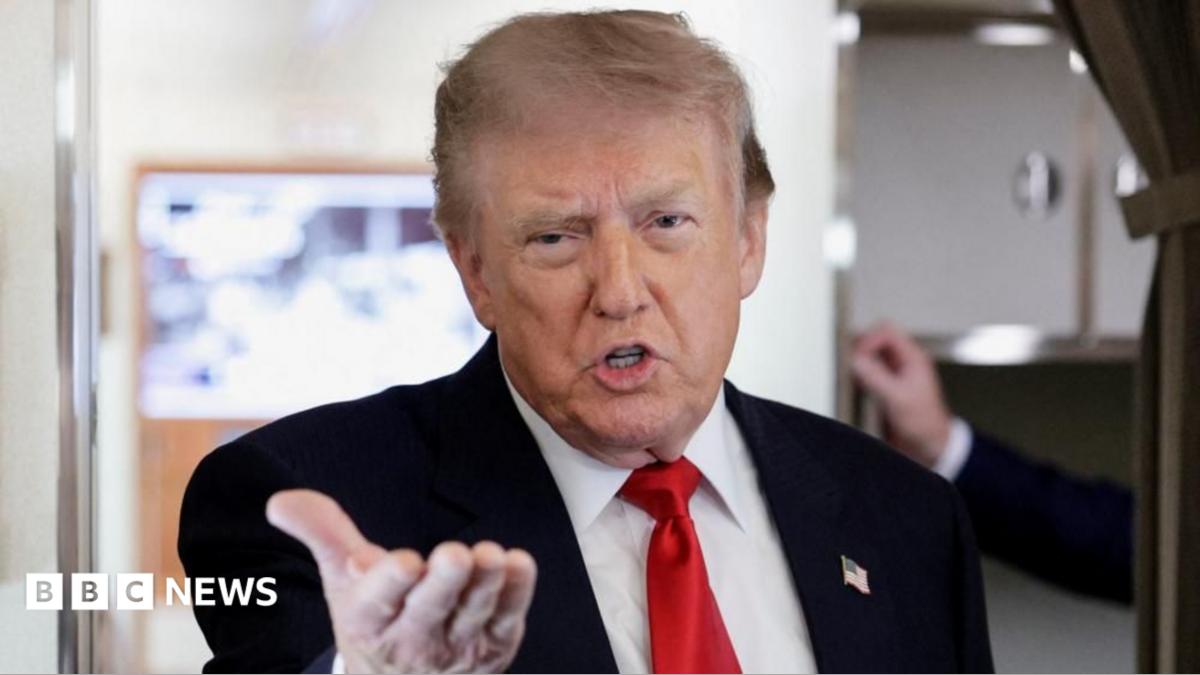
F-16s intercept planes near Trump's golf club
F-16 jets intercepted two civilian planes for entering restricted airspace near Trump’s New Jersey golf club, prompting NORAD and FAA investigations. Standard procedure ensures safety around high-pro…

Two F-16 fighter jets intercepted two civilian aircraft that entered restricted airspace near Bedminster, New Jersey, on Sunday while former President Donald Trump was attending a golf tournament at his private club. The North American Aerospace Defense Command (NORAD) confirmed the intercepts, stating the jets were scrambled to ensure the safety of the airspace around Trump’s location. The aircraft were identified as civilian planes that had not filed proper flight plans or communicated with air traffic control, prompting the military response.
This kind of intercept is standard procedure when unauthorized aircraft enter restricted zones, especially around high-profile figures or sensitive locations. Bedminster is a frequent stop for Trump, and the Secret Service, along with NORAD, maintains elevated security protocols whenever he is on-site. The restricted airspace in the area is designed to prevent potential threats, including drones or small planes that could pose risks to Trump or others at the golf club. Similar incidents have occurred before, such as in 2017 when a plane entered restricted airspace near Trump’s Mar-a-Lago resort in Florida, leading to a brief lockdown.
According to NORAD, the two aircraft were quickly escorted out of the restricted zone without further incident. The Federal Aviation Administration (FAA) later confirmed that both planes were tracked and monitored but did not pose an immediate threat. The pilots of the civilian aircraft were not identified, and no charges have been filed as of now. The FAA is investigating how the planes entered the restricted airspace without proper clearance, a violation that could lead to fines or other penalties.
What happens next will likely include a review of airspace security protocols around Trump’s properties, especially as he remains a high-profile political figure. The FAA may impose stricter monitoring or penalties for unauthorized incursions, while NORAD continues to emphasize the importance of rapid response to protect high-risk zones. These intercepts are a reminder of the ongoing security measures in place for public officials and the potential risks of lax airspace enforcement.
Read Full Story at Al Jazeera →