Failed joint jet project highlights Europe's defense dilemma
Anyone who wants to be taken seriously in the European defense industry shows up to Eurosatory, France's largest defense trade show, held every two years. This week, the industry is once again showca…
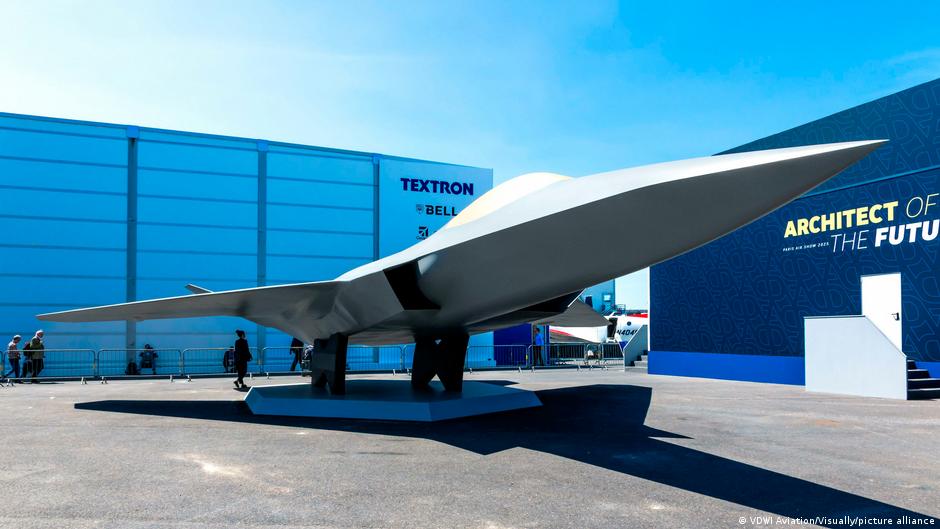
DW World — 16 June 2026
Text:
14
0
0
Anyone who wants to be taken seriously in the European defense industry shows up to Eurosatory, France's largest defense trade show, held every two ye
Read Full Story at DW World →
⚡ Quickyla Analysis
Original editorial context — not sourced from the article above
Europe’s defense dilemma is on full display at Eurosatory this week—not just in the flashy exhibits or high-stakes deals, but in the quiet absence of what was once a symbol of continental ambition: the Future Combat Air System (FCAS), the joint jet project between France, Germany, and Spain. The collapse of negotiations over industrial leadership and technology sharing isn’t just a setback for a single weapons program; it’s a microcosm of Europe’s broader struggle to project strategic autonomy in an era where Washington’s reliability is increasingly questioned and Beijing’s capabilities are rising.
The FCAS was meant to be more than a fighter jet—it was supposed to be the crown jewel of Europe’s defense-industrial renaissance, a sixth-generation aircraft designed to rival the F-35 and, eventually, China’s J-20. But the project’s unraveling reveals deeper frictions. France insists on maintaining control over critical technologies, particularly the aircraft’s stealthy airframe and next-generation engine, while Germany and Spain push for greater equity in development and production. These tensions aren’t new; they reflect a long-standing split in European defense cooperation, where national champions like Dassault and Airbus vie for dominance under the guise of collaboration. The failure to reach a deal by the Eurosatory deadline underscores a harsh truth: Europe still lacks the institutional cohesion to build complex, large-scale systems without political interference.
What happens next is uncertain. France may press ahead with a scaled-down FCAS, or it could pivot toward bilateral deals with the UK or Italy, further fragmenting Europe’s defense ecosystem. Meanwhile, Germany’s defense budget is swelling, but its political will to fund foreign-led projects remains shaky. The open question is whether this debacle will spur real reform—or simply entrench existing rivalries. Already, Brussels is pushing for a European Defense Industrial Strategy, but without binding mechanisms to enforce cooperation, such efforts risk becoming little more than aspirational declarations.
This moment matters because it highlights a paradox: Europe spends more on defense than Russia but still can’t field a single major combat system without squabbling. The FCAS failure isn’t just about jets; it’s about whether Europe can ever escape its post-war dependence on others. If the answer remains no, the continent’s security will remain hostage to the whims of its allies—and its adversaries will keep gaining ground.
Sources

🌍 World News
Man fleeing police attacked by alligator before continuing his getaway, Louisiana authorities say
🌍 World News
US crude exports hit record high in May as Iran war tightens global oil supplies

🌍 World News
Agitators outside Delaney Hall set up organized logistics operation before Newark protests began

🌍 World News
French doctors sound alarm over drinking water pollution

🌍 World News
Iran, Kuwait, Bahrain hit: Is the war in the Gulf escalating again?

🌍 World News
Four people trapped in flooded cave in Laos pulled to safety

