Fragile quiet in Lebanon as US-Iran truce leaves unanswered questions
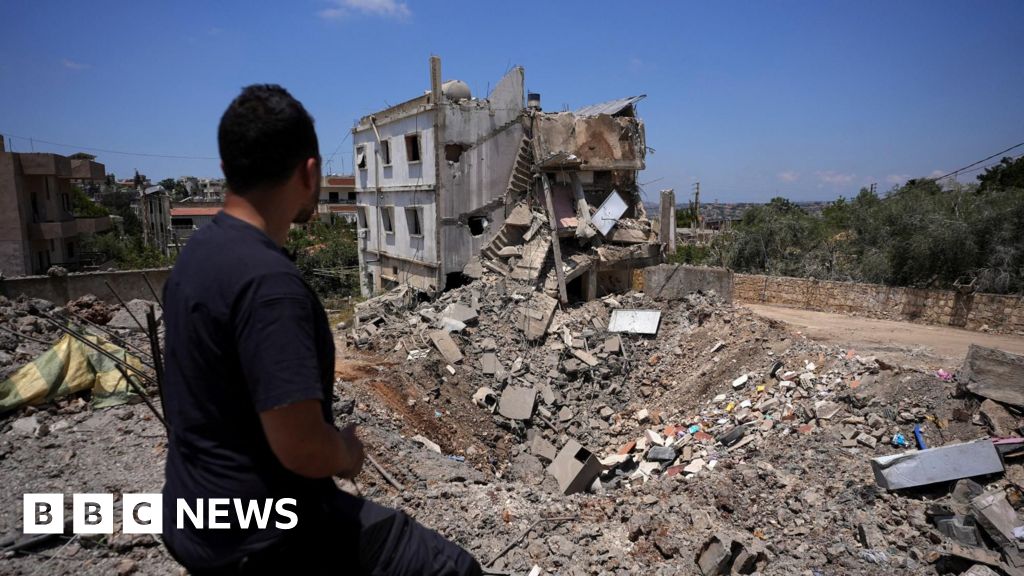
On Monday, hours after the announcement of a ceasefire agreement between the US and Iran, families that had been displaced because of the war began to return to communities in southern Lebanon, despi…
BBC World News — 16 June 2026
Text:
19
0
0
On Monday, hours after the announcement of a ceasefire agreement between the US and Iran, families that had been displaced because of the war began to
Read Full Story at BBC World News →
⚡ Quickyla Analysis
Original editorial context — not sourced from the article above
The fragile quiet settling over southern Lebanon following the latest US-Iran truce is less a resolution than a pause—one that underscores the region’s enduring volatility without addressing its root causes. The return of displaced families to border villages, while a welcome sign, reflects not stability but the precariousness of any agreement that sidesteps deeper structural tensions. For years, southern Lebanon has been a flashpoint where Iran-backed Hezbollah and Israeli forces have traded blows, often under the shadow of broader regional rivalries. A temporary halt to hostilities may ease immediate suffering, but it does little to dismantle the proxy dynamics that have turned the area into a proxy battleground for decades.
What makes this moment particularly telling is the absence of an inclusive framework. While the US and Iran may have found common ground in de-escalation, Lebanon’s government and military—already weakened by political paralysis and economic collapse—remain sidelined. The truce’s success hinges on whether it can curb Hezbollah’s actions independently of Tehran’s calculations, a prospect that grows more uncertain as regional tensions simmer elsewhere. Israel, too, has shown little appetite for long-term restraint, its recent strikes in southern Lebanon serving as a reminder that deterrence, not diplomacy, often dictates its calculus.
The broader significance here lies in what this pause reveals about the limits of backchannel diplomacy. When agreements are struck between external powers without buy-in from local stakeholders, the gains are inherently reversible. Lebanon’s fragile institutions, hollowed out by corruption and sectarian divisions, lack the capacity to enforce any sustainable calm. Meanwhile, civilians—caught in the crossfire of geopolitical posturing—are left to navigate a landscape where the next escalation could come at any moment.
The unanswered question now is whether this truce will hold beyond the immediate lull or merely delay the next crisis. For southern Lebanon, the answer may depend less on the terms of the deal than on the shifting priorities of Washington and Tehran—and the willingness of both to prioritize Lebanese lives over regional leverage.
Sources

🌍 World News
Agitators outside Delaney Hall set up organized logistics operation before Newark protests began

🌍 World News
Man fleeing police attacked by alligator before continuing his getaway, Louisiana authorities say
🌍 World News
US crude exports hit record high in May as Iran war tightens global oil supplies

🌍 World News
French doctors sound alarm over drinking water pollution

🌍 World News
Iran, Kuwait, Bahrain hit: Is the war in the Gulf escalating again?

🌍 World News
Ukraine’s Kostyuk blasts Russia stars in French Open outburst over war


