Study reveals male black widows die after mating through blackflipping behavior
A study has found that male black widow spiders perform a genetically driven behavior called "blackflipping" after mating, which often results in their death. This behavior may increase reproductive …
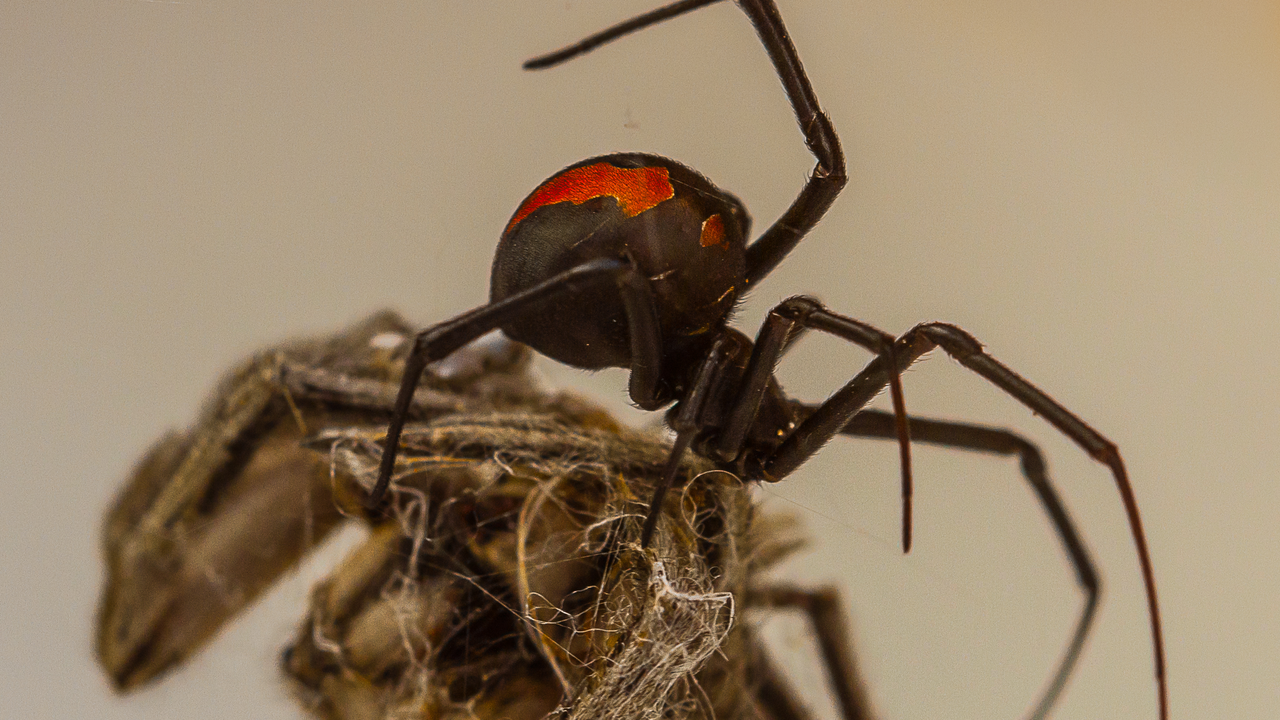
A new study reveals that male black widow spiders engage in a bizarre behavior known as "blackflipping," which often leads to their death after mating. Researchers found that this trait is genetically driven, shedding light on the complex mating strategies of these arachnids. The findings were published in a recent issue of a scientific journal and highlight the intriguing interplay between genetics and behavior.
Black widow spiders, well-known for their sexual cannibalism, exhibit a unique mating ritual where males somersault onto their backs after copulation. This behavior, though seemingly self-destructive, may play a role in increasing reproductive success. By flipping over, males may distract and disarm females, allowing for successful mating before they are consumed. Understanding this behavior is crucial as it reflects broader themes in evolutionary biology, particularly the trade-offs between reproduction and survival.
The study's researchers conducted experiments on male black widows, analyzing their genetics and behavior. They found specific genes linked to the blackflipping behavior, indicating that it may be an inherited trait. This discovery may change how scientists view sexual selection and mating strategies in spiders and other species. The implications extend beyond black widows, as it raises questions about how genetics influence behaviors that appear to be detrimental to survival.
Moving forward, researchers aim to explore the genetic mechanisms behind this behavior further. Understanding the genetic basis for such extreme behaviors could lead to insights into evolutionary processes in other animals. This study not only enriches our knowledge of black widow spiders but also enhances our understanding of the complexities of life, survival, and reproduction in nature.
Read Full Story at Live Science →