Archaeologists uncover 3,300-year-old gold hoard in Germany
Archaeologists in Germany unearthed a 3,300-year-old Bronze Age hoard near Gessel, containing over 100 gold and bronze artifacts, offering key insights into late Bronze Age wealth and trade. This rare, well-preserved hoard provides a unique snapshot of advanced metalworking and long-distance trade networks from around 1300–1200 BCE.
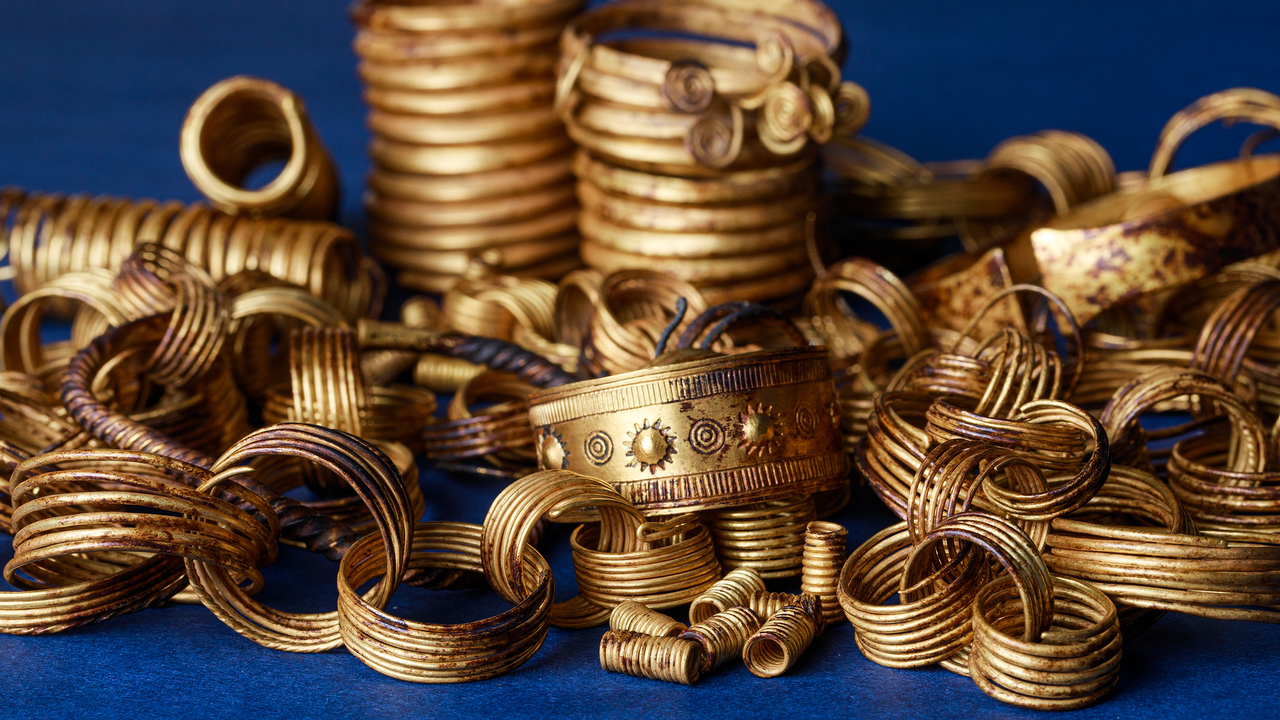
Archaeologists in Germany have uncovered a stunning Bronze Age treasure hoard—3,300 years old—containing some of the most dazzling gold and bronze artifacts ever found in Europe. The Gessel hoard, unearthed near the village of Gessel in Lower Saxony, includes ornate neck rings, arm spirals, and decorated gold bowls, along with bronze swords and tools. Experts say it's one of the largest and best-preserved deposits from the late Bronze Age on the continent, offering a rare snapshot of wealth, craftsmanship, and trade networks from around 1300–1200 BCE.
The discovery was made during routine roadwork near a construction site, not by professionals digging for treasure. Workers spotted strange lumps in the soil and called in archaeologists, who carefully excavated the site. What they found was buried in a clay vessel—likely hidden by someone of high status who never returned to reclaim it. The gold pieces are finely worked, showing advanced metalworking skills, while the bronze items reflect both function and artistry. Radiocarbon dating confirms the hoard’s age, placing it in the same era as the famous Nebra Sky Disk, another major Bronze Age find from Germany.
Experts are thrilled because such hoards are uncommon and usually smaller. The Gessel find includes over 100 individual pieces, many still gleaming despite centuries underground. “This is a truly spectacular discovery,” said one archaeologist. “It tells us a lot about how people lived, traded, and valued gold in that time.” The artifacts will go on display after conservation, giving the public a rare chance to see Europe’s Bronze Age brilliance up close.
What makes this hoard especially important is its size and completeness. Most Bronze Age deposits are disturbed or incomplete, but Gessel appears to have been buried intentionally and left untouched for millennia. It also sheds light on long-distance trade routes, as some materials likely came from as far as southern Europe. For historians and archaeologists, it’s a treasure trove—literally—that could rewrite parts of Bronze Age European culture.