Satellite captures vibrant plume from Yangtze River in East China Sea
A satellite image captured a vibrant plume from the Yangtze River in the East China Sea, revealing the environmental effects of river discharge from heavily industrialized areas. This plume's composi…
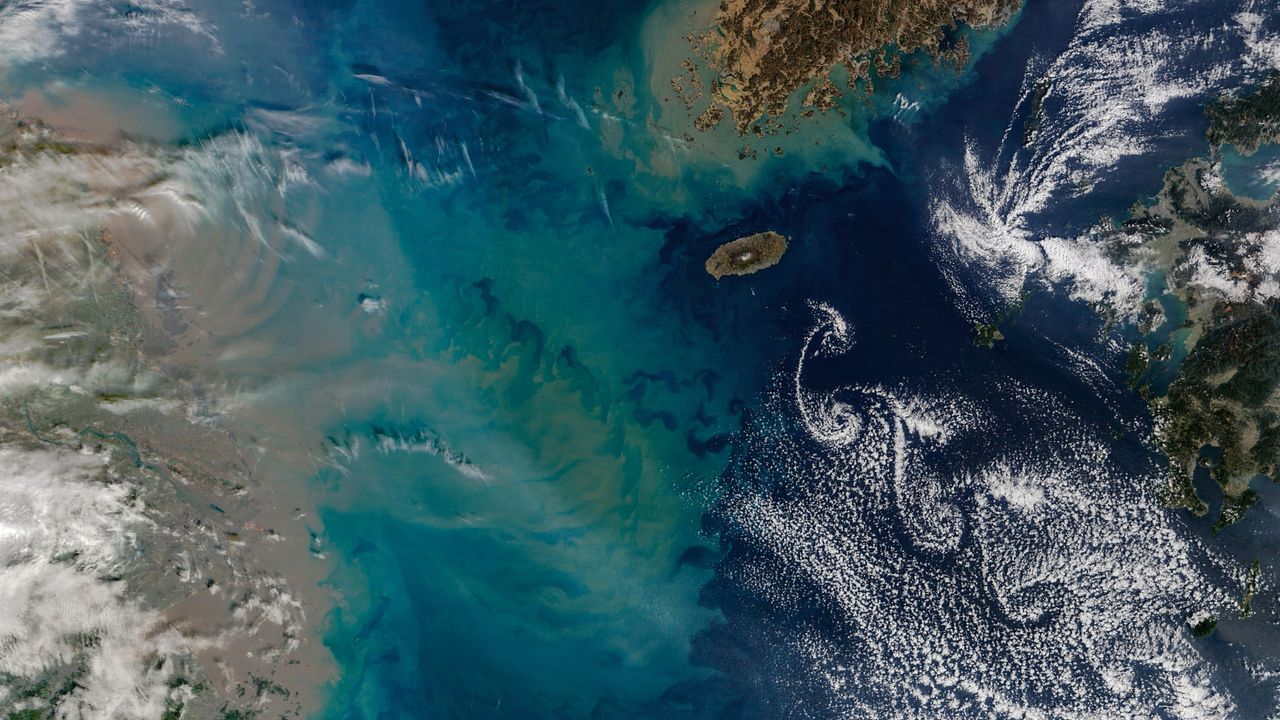
A recent satellite image has revealed a striking phenomenon in the East China Sea, showing a giant multicolor plume emanating from the Yangtze River. This plume, along with a series of clouds shaped by von Kármán vortices generated by volcanic activity on South Korea's Jeju Island, highlights the complex interactions between natural events and human activity in the region.
The appearance of the plume is particularly significant as it underscores the environmental impacts of river discharge, particularly from one of the world's busiest waterways. The Yangtze River, which flows through heavily industrialized regions of China, carries not only sediment but also pollutants and nutrients into the sea. The timing of this observation coincides with seasonal changes that can amplify river runoff, making it crucial to monitor such events for their ecological implications.
Satellite imagery can provide critical insights into these interactions. The multicolor nature of the plume indicates a mix of sediment and organic matter, which can affect marine ecosystems. Nutrient-rich plumes may promote phytoplankton blooms, which can be beneficial but may also lead to harmful algal blooms if nutrient levels become excessive. Understanding the dynamics of these plumes helps scientists assess water quality and its impact on local fisheries and biodiversity.
Moving forward, it is essential to continue monitoring the East China Sea and its surrounding areas. The data gathered from satellite images can inform environmental policies and practices, particularly as climate change and urbanization continue to alter river systems. As scientists analyze the implications of such phenomena, they will work to understand how to balance economic development with environmental stewardship in one of the world's most critical marine ecosystems.
Read Full Story at Live Science →