Harpo speaks! New recordings reveal mute Marx brother chatting with audience
The comedy legend, who adopted his silent persona because of stage nerves, did occasionally address his audience, as revealed by a new archive release G roucho was the cigar-chomping wit with the improbable moustache, Chico was the piano-playing rustic grifter and Zeppo played t
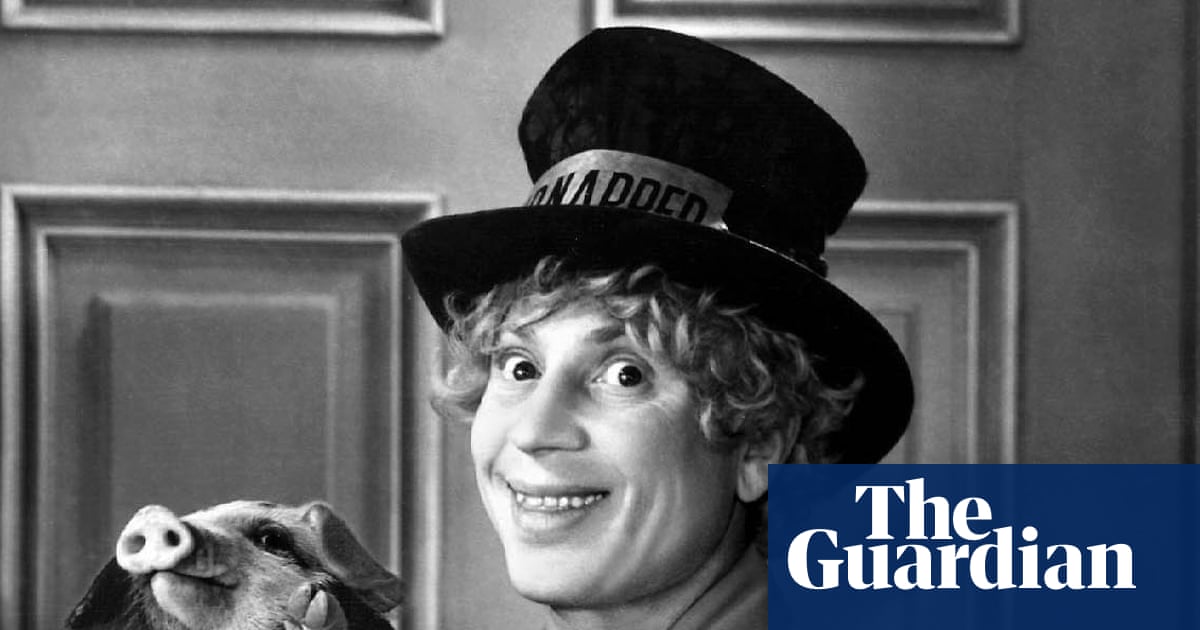
The comedy legend, who adopted his silent persona because of stage nerves, did occasionally address his audience, as revealed by a new archive release
G roucho was the cigar-chomping wit with the improbable moustache, Chico was the piano-playing rustic grifter and Zeppo played the straight man and the lover. But as any Marx Brothers fan knows, Harpo was the pantomime, who cracked up the audience without saying a word, dressed in his tattered raincoat and curly wig. His persona was childlike and mischievous but also musical – he let his harp and his taxi horn do the talking. But now we get to see, or rather hear, a new side to Harpo Marx. A very special recording has been unearthed of Harpo in 1964 speaking to an audience, in character.
Arthur “Harpo” Marx was born Adolph Marx in New York in 1888. He started performing with his brothers in 1908, and his nickname probably came about because of his instrument of choice – he was an entirely self-taught musician. By 1915, due to his nerves around speaking on stage, Harpo reinvented himself as a mute clown, and stayed that way, even when he was offered $50,000 to speak a single word (“Murder!”) in the Marx Brothers film A Night in Casablanca (1946).
Harpo did sometimes speak to his live audiences, says historian Robert Bader, author of Four of the Three Musketeers: The Marx Brothers on Stage. “If the audience was good, or if he thought it was a great show, or the mood struck him, he would come out and do this speech.” These monologues were known as Red’s Speech, and in the 1920s, famous wit Alexander Woollcott wrote Harpo some bespoke lines, turning it into a “very loquacious, crazy speech with all these fancy words in it that Harpo himself would never have used”. Harpo would step forward, unfurl an oversized scroll and begin chattering away. “He had a very soft-spoken way of speaking,” remembers his son Bill Marx. “One of his great joys was returning to his childhood, and it comes out in the way he speaks.”
But these monologues, like the speeches he made for charitable causes, were never recorded. “He had a lovely voice,” says Bader. “He should have done more. His line for years was, ‘I don’t want to tear down a character that it took me decades to build.’ So when he went and did this in front of an audience, he did it for charity.”
In the early 1960s, Harpo officially retired three times due to his health, but couldn’t resist performing. Bader says he was always looking for a loophole to get back on stage, arguing that charity gigs didn’t really count as work. “Harpo was always trying to play the angle where he wanted to go out and perform in front of people without saying it was work.”
Adverts for this particular fundraiser, for the Riverside Symphony Orchestra in southern California in March 1964, promised that the 75-year-old Harpo would speak, which was bound to get the public’s attention: “Harpo Marx will narrate Prokofiev’s Peter and the Wolf in a version written by himself and Groucho.” After the musical portion of the show, including the Toy Symphony, and two songs arranged by Bill, Harpo stepped up to the lectern and said: “Believe it or not … I’m going to talk.” That day, to an audience full of children, Harpo narrated Peter and the Wolf, which as Bill Marx explains was a family favourite: “That’s his return to childhood. He loved the story.”
Harpo also a delivered a “Red’s Speech”, mentioning two of his sons, who were there that night. He also included topical references to the Republican primaries that were then in full swing. That was his brother’s influence, says Bader: “Harpo never wore his politics on his sleeve, but Groucho did.” You can also sense Harpo responding to the audience, improvising a little.


