His wedding guests gave $6k to fund a health startup. Now it's won a $3 million prize
Genesis Whegelee (right, in vest) has been a community health worker for Last Mile Health in Rivercess County, Liberia, since 2018. He visits households to keep an eye on sick children, pregnant moms…
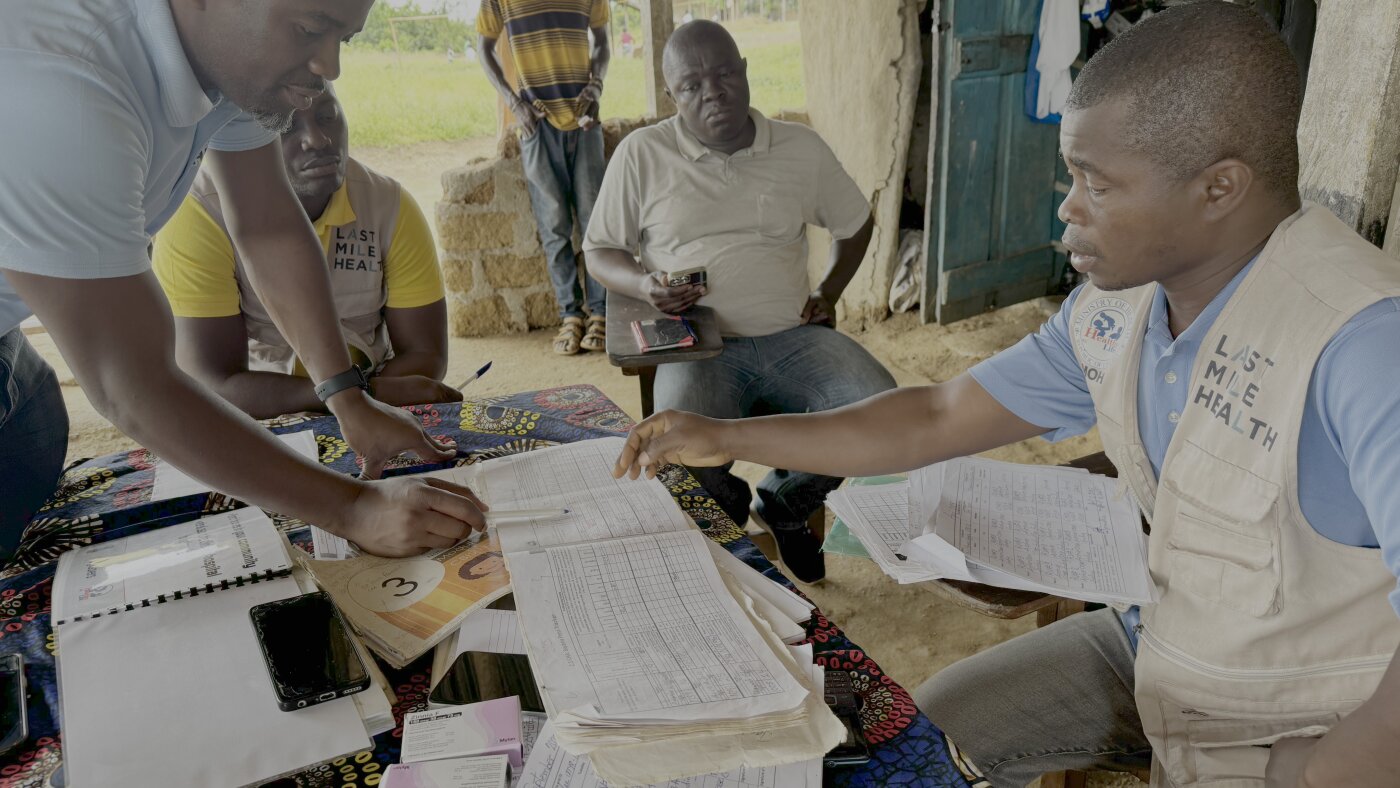
Genesis Whegelee (right, in vest) has been a community health worker for Last Mile Health in Rivercess County, Liberia, since 2018. He visits households to keep an eye on sick children, pregnant moms and anyone with a problem that needs diagnosing. Last Mile Health hide caption
In 2007, Dr. Raj Panjabi, a physician at Brigham and Women's Hospital in Boston, traveled to Liberia, where he was born. He had just been married and brought the $6,000 he had raised from wedding guests to help co-found a health initiative to provide care to those who lived in the country's most remote, inaccessible regions. The organization's name, Last Mile Health (LMH), reflected its mission: the belief that no one should be beyond the reach of life-saving medical help.
Today, Last Mile Health is receiving an honor that comes with a $3 million gift. It's the Conrad H. Hilton Humanitarian Prize, the world's largest humanitarian award to a nonprofit group. It's a resounding affirmation of how a group that started very small can go on to, according to the Hilton honor announcement, make extraordinary contributions toward alleviating human suffering.
Dr. Raj Panjabi started Last Mile Health with money donated by his wedding guests. His goal was to walk the last mile to bring healthcare to people in remote areas in Liberia, where he grew up. Last Mile Health hide caption
But how did they reach that last mile, when physicians, nurses and medical supplies were, if available at all, scarce and far away? By using community health workers.
These are individuals who typically have a primary school education. During their eight weeks of training, they learn to diagnose and treat preventable diseases in children, including malaria, pneumonia and diarrhea, as well as help pregnant mothers develop a birth plan to deliver in the clinics. The health workers are also trained to monitor any signs of new diseases or outbreaks.
The initial $6,000 raised to start the organization served to pay the organization's first 17 workers. Since then, the group has expanded its scope with funding from governments as well as philanthropic and nonprofit institutions. In 2010, LMH began caring for HIV/AIDS patients in 12 of Liberia's 15 counties, partnering with the Government of Liberia and the Global Fund to Fight Aids, Tuberculosis and Malaria.
During the 2014-16 Ebola epidemic in Liberia, LMH trained more than 1,300 community health workers to help contain the outbreak's spread. During the COVID-19 pandemic, LMH delivered 6.2 million pieces of personal protective equipment. Going door to door to persuade people to get vaccinated, they helped lead Liberia, one of the poorest countries in the world, to an 81% vaccination rate.
Read Full Story at NPR Health →